
Origins and History of the Museum
The National Museum of Western Art, located in Tokyo, Japan, emerged from a specific vision to bring European artistic traditions to a new audience. Established on June 10, 1959, the institution was founded largely through the collection of Kōjirō Matsukata. This collection of paintings and sculptures provided the essential nucleus for the museum's purpose. It remains the only national institution in Japan devoted specifically to Western art.
The foundation of the museum was deeply tied to the repatriation of Matsukata's acquisitions. These works, which had been held in France following the Second World War, were returned to Japan to form the core of this public repository. The institution was conceived to ensure that these pieces were accessible to the public, fostering a connection with Western art history within the Japanese context. The museum's existence reflects a deliberate effort to build a permanent home for these European works in Tokyo.
The Building and its Modernist Architecture
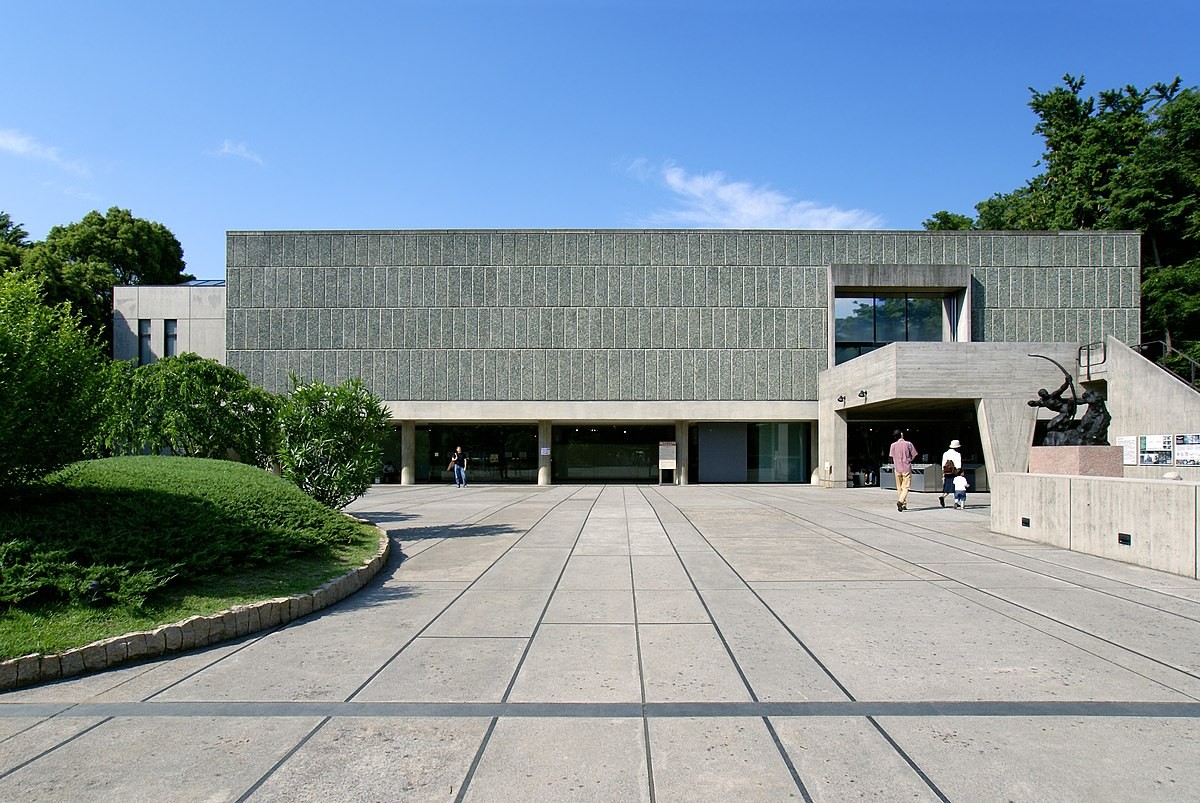
The Main Building, completed in March 1959, represents a significant presence in Tokyo. Designed by the Swiss-French architect Le Corbusier, the structure is a rare instance of his work in Asia. It is a UNESCO World Heritage Site that embodies the principles of modernist design and the brutalist style. The architecture makes a deliberate departure from traditional Japanese aesthetics, opting instead for a radical, unconventional form.
The concrete construction features a soaring silhouette defined by a distinctive cantilevered roof. Light enters the interior through expansive windows and skylights, creating an atmosphere of spaciousness. The design utilizes a squared spiral plan, where a central courtyard allows natural light to reach the various levels. This arrangement creates a specific relationship between the heavy, reinforced concrete and the light required to view the works within.
A Diverse and Rich Collection
The collection encompasses approximately 6,000 works, spanning the evolution of European art from the 14th century to the early 20th century. This breadth allows for a direct encounter with the shifts in human perception through various movements, including Mannerism, the Baroque, and Romanticism. The presence of Realism and Impressionism alongside Expressionism and Post-impressionist landscapes provides a continuous narrative of stylistic change. Each era is represented by works that reflect the specific tensions and aesthetics of their time.
Specific focus is given to the nuances of line and light through the drawing and print collections. The drawing collection centers on 18th- and 19th-century French artists, including the works of Boucher, Fragonard, Delacroix, Moreau, Rodin, and Cézanne. These works offer a more intimate view of the artist's hand. Similarly, the prints collection brings together the precision of Dürer and Holbein with the expressive qualities of Rembrandt, Callot, Piranesi, Goya, and Klinger.
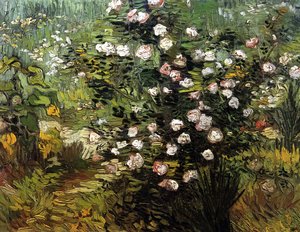
- Rosebush i Blossom, about 1899 - Vincent Willem Van Gogh
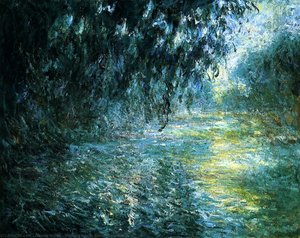
- Morning on the Seine in the Rain, 1897 - Claude Monet
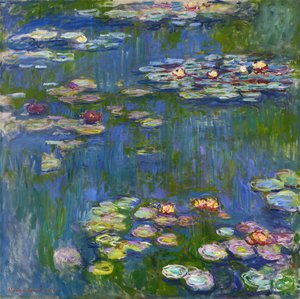
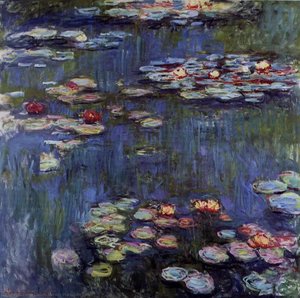
- Water-Lilies (54), 1914 - Claude Monet
- The Harem, 1872 - Pierre-Auguste Renoir
Masterpieces of the Permanent Collection
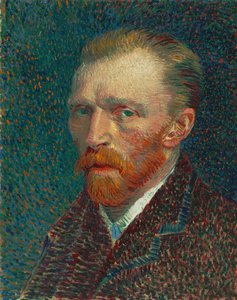
The presence of Vincent Willem Van Gogh's works within these walls is significant, representing one of the most substantial collections of his paintings outside of the Netherlands. One may find oneself lingering before Rosebush i Blossom, painted about 1899. The brushwork carries a specific weight that demands quiet observation. Nearby, the light-drenched compositions of Claude Monet offer a different rhythm, such as the 1914 work Water-Lilies (54). These canvases exist as physical records of light and atmosphere.
The collection spans several centuries, moving from the religious gravity of the Renaissance to the social observations of the 19th century. Giovanni Battista Zelotti’s Mystic Marriage of S Catherine, dating from 1547, provides a foundation of historical depth. This is met by the more modern sensibilities of Édouard Manet, whose Portrait of Monsieur Brun was executed about 1879. The transition between these eras is marked by a shift in how the human form is perceived and rendered.
Other works invite a closer study of color and texture. Pierre-Auguste Renoir’s The Harem, from about 1872, presents a specific study of light and social setting. In contrast, Gustave Moreau’s Salome in Prison, painted about 1876, offers a more intense, dramatic atmosphere. Each piece occupies its space with a distinct, unyielding character.
Exhibitions and Artistic Dialogue
The museum maintains a steady rhythm of cultural exchange, organizing a special exhibition every year. These programs frequently facilitate a global dialogue by bringing together works from prestigious international institutions. Such collaborations allow for a rare proximity between diverse collections that might otherwise remain separated by geography.
A significant moment in this history occurred in 1963, when the museum hosted an unprecedented retrospective of Marc Chagall's oeuvre. This exhibition was a massive undertaking, uniting pieces from fifteen different countries. It established a precedent for the scale of international cooperation that continues to define the institution's programming.
In January 2019, the museum welcomed over sixty paintings on loan from the National Gallery, London. This gathering allowed for a direct encounter with significant works, including Vincent van Gogh’s Sunflowers. Standing before these canvases in Tokyo provides a sense of the artist's presence that remains unchanged by the distance traveled from the original collections.