


Origins and History of the Museum
The J. Paul Getty Museum is an American art museum located in Los Angeles, California. Its foundations are rooted in the conviction that the world’s artistic heritage should be freely accessible to all. This principle guided the early development of the institution, which is operated by the J. Paul Getty Trust.
The museum's history is tied to Jean Paul Getty Sr., an American petroleum industrialist who founded the Getty Oil Company in 1942. Following his work in the industry, the J. Paul Getty Trust was established in 1953 to manage his interests and collections. The institution's capacity for growth was significantly increased in 1982, when the museum inherited US$1.2 billion.
The collection grew through the personal acquisitions of Jean Paul Getty Sr., who held a deep appreciation for beauty. His legacy remains central to the museum's mission of providing access to art through its various campuses and research initiatives.
The Architecture of the Two Campuses
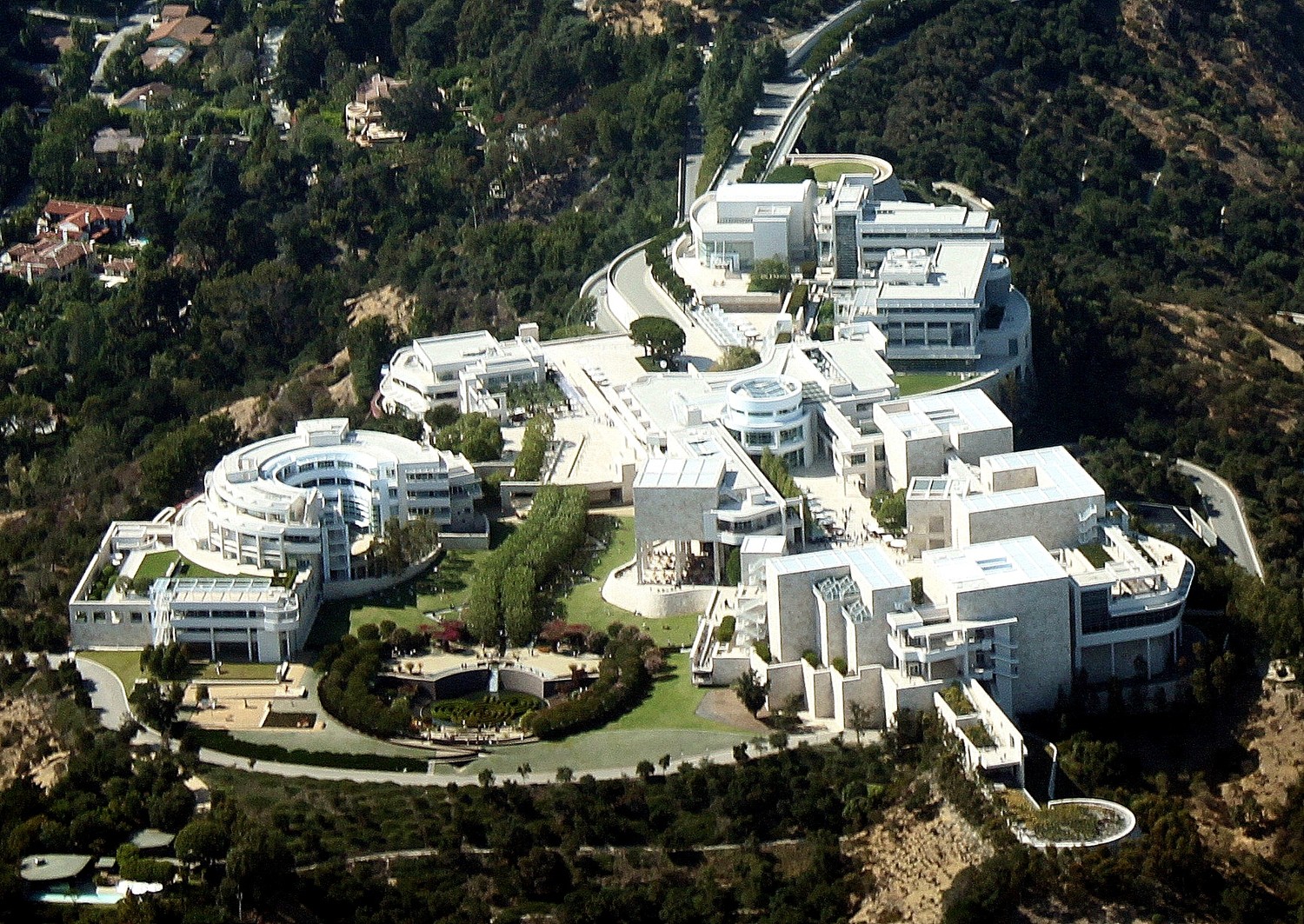
The museum operates across two distinct sites in Los Angeles. The Getty Center, situated in the Brentwood neighborhood, is a complex of six buildings designed by Richard Meier. The West Building is characterized by travertine walls and expansive glass windows that allow natural light to enter the galleries. This design emphasizes a minimalist aesthetic, intended to focus attention on the objects within the space. In contrast, the East Building, designed by Michael Graves, introduces a different architectural language through the inclusion of courtyards, gardens, and water features.
The second campus, the Getty Villa, is located in the Pacific Palisades neighborhood. Its design is a re-creation of the Villa of the Papyri at Herculaneum, Italy. This site is organized to reflect the atmosphere of an ancient Roman country house. The architecture here is intended to provide a specific context for the study of Greek, Roman, and Etruscan antiquities. While the Getty Center focuses on a modernist approach to light and stone, the Villa emphasizes historical architectural forms.
European Paintings and Decorative Arts
The Getty Center houses a significant selection of pre-20th-century European paintings. The collection reflects the specific interests of the founder, particularly a preference for works from the Renaissance and Baroque periods. These paintings are held alongside a range of drawings and illuminated manuscripts that illustrate various stages of European artistic development.
Complementing the painted works is an extensive collection of decorative arts. This assembly includes furniture of intricate craftsmanship, ceramics, and textiles. These objects provide a material context to the era of the paintings, showing the domestic and ceremonial standards of previous centuries.
- Adoration of the Magi, 1495 - Andrea Mantegna
- Dream of Pope Sergius, 1437 - Rogier van der Weyden
- Isabella of Portugal, 1500 - Rogier van der Weyden
Ancient Art and Antiquities
The Getty Villa, located in Pacific Palisades, houses a significant collection of Greek, Roman, and Etruscan antiquities. This site is a re-creation of an ancient Roman home, designed to provide a context for the objects it contains. The collection includes approximately 44,000 items dating from 6,500 BC to 400 AD. These artifacts offer a direct look at the material culture of the Mediterranean and the ancient Near East.
The holdings extend beyond classical antiquity to include ancient Near Eastern art. This portion of the collection features various sculptures and mosaics. The arrangement of these pieces allows for a study of the artistic traditions that preceded the classical era. The museum's focus remains on the preservation and presentation of these historical materials within their intended architectural settings.
- Lansdowne Heracles
- Victorious Youth
Masterpieces of the Collection
The collection contains significant works from the Renaissance and Baroque periods. Andrea Mantegna’s Adoration of the Magi (1495) and Rogier van der Weyden’s Isabella of Portugal (1500) represent the technical precision of their respective eras. These are joined by Nicolas Poussin’s Landscape with a Calm (1651), which demonstrates the structured compositions of the mid-seventeenth century. Rembrandt van Rijn’s Rembrandt Laughing (about 1628) offers a study in character and light.
Impressionist and post-Impressionist works are central to the holdings. Vincent Willem Van Gogh’s Irises (1889) is a primary example of his late style. Other notable paintings include Claude Monet’s Flowers and Fruit (1869), Pierre-Auguste Renoir’s La Promenade (1870), and Paul Cézanne’s The Eternal Woman (1877). These works reflect the evolution of light and form through the nineteenth century.
- Adoration of the Magi, 1495
- Isabella of Portugal, 1500
- Landscape with a Calm, 1651
- Rembrandt Laughing, about 1628
- Irises, 1889
- The Eternal Woman, 1877
Photography and Modern Collections
The collection includes photographs from the inception of the medium through the present day. At the Getty Center, the holdings focus on 19th-, 20th-, and 21st-century works. These pieces represent an international scope, bringing together photographic perspectives from all over the world.
The museum holds works by early pioneers such as Raja Deen Dayal. These images provide a record of social customs and daily life from the past. The breadth of the collection allows for a study of how photographic technology has evolved alongside the subjects it captures.
- License Photo Studio, New York, 1934 - Walker Evans
- The Hand of Man, 1902 - Alfred Stieglitz
Exhibitions and Scholarly Research
The museum hosts curated exhibitions designed to illuminate diverse cultures and various historical periods. These presentations often feature rarely seen works, providing fresh perspectives on established artists and introducing audiences to lesser-known masters. Through these exhibitions, the institution examines the complexities of art history and the specific contexts in which objects were created.
Scholarly understanding is furthered by the Getty Research Institute. This entity supports rigorous investigation, including research into the provenance of artworks. To facilitate this work, the museum provides digital resources that are freely available to researchers worldwide. This openness ensures that the study of the collection remains accessible to the global academic community.
Recent Projects and Future Plans
The museum continues to manage its physical sites through periods of significant transition. Following the Palisades Fire, the Getty Villa underwent remediation work and reopened to the public on June 27, 2025. This follows the previous major renovation of the Villa, which concluded in 2006. Protecting the collections from environmental risks remains a priority; in April 2025, the museum sold $500 million in bonds to secure the holdings against fire damage.
Looking toward the next decade, the Getty Center is scheduled for a period of modernization. The campus will close for these renovations on March 15, 2027, with an expected reopening in the spring of 2028. These updates are part of the ongoing institutional commitment to maintaining the facilities that house the permanent collections.