A Master of Stone and Spirit
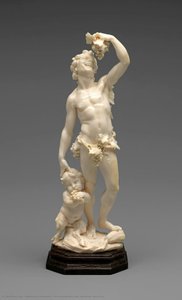
Balthasar Permoser stands as one of the most commanding figures in the history of European sculpture, a virtuoso whose hands breathed life into marble, ivory, and stone. His artistic journey was a grand odyssey across the cultural heart of Europe, beginning in Salzburg. Born in Kammer bei Waging, his early training took place within the workshop of Wolf Weißenkirchner the Younger before he moved to Vienna, where he mastered the delicate and intricate art of ivory carving. This foundational period instilled in him a precision that would later allow him to navigate the transition from the dramatic intensity of the late Baroque to the more graceful, light-filled nuances of the early Rococo.
The maturation of Permoser’s style was profoundly shaped by his long sojourn in Florence. For fourteen years, he worked within the studio of Giovanni Battista Foggini, an experience that infused his German roots with the warmth and theatricality of the Italian tradition. This period of immersion allowed him to absorb the classical elegance and emotional depth necessary to create works that were not merely decorative, but profoundly narrative. His ability to blend these diverse influences—the meticulousness of ivory carving, the structural strength of German sculpture, and the fluid grace of Italian Baroque—set the stage for his rise as a premier sculptor of his generation.
The Grandeur of Dresden and Beyond
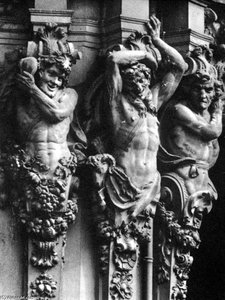
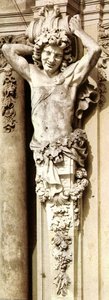
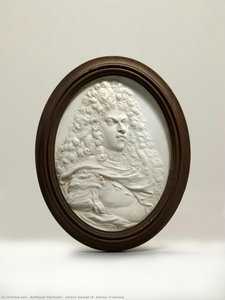
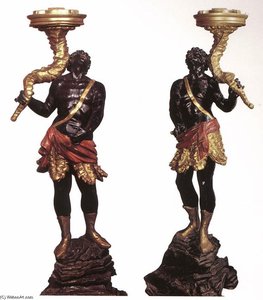
Permoser’s career reached its zenith when he was called to Dresden in 1689 by Johann Georg III, Elector of Saxony. It was here that his monumental vision found its most enduring canvas. Working alongside the architect Matthäus Daniel Pöppelmann, Permoser became a central figure in the creation of the Zwinger palace. His contributions to this architectural masterpiece are legendary; he provided the sculptural details for the Nymphenbad fountain and, most famously, sculpted the festive, flexing, and grimacing atlantes for the Wallpavillon. These figures, characterized by their muscular tension and expressive vitality, remain some of his most celebrated achievements, embodying the very essence of the Roman Baroque.
His reach extended far beyond the borders of Saxony, as evidenced by his significant works in other European centers:
- In Salzburg, he sculpted the powerful atlantes for the west doorway of the Hofstallung.
- During his time near Berlin, between 1704 and 1710, he contributed to the splendor of the Schloß Charlottenburg.
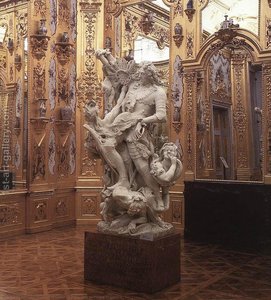
- His masterpiece, the Apotheosis of Prince Eugene, created in the early 18th century, stands as a breathtaking marble testament to his ability to orchestrate theatrical, divine events in stone.
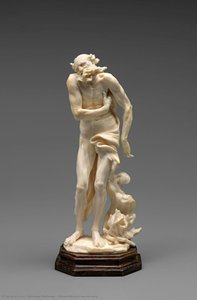
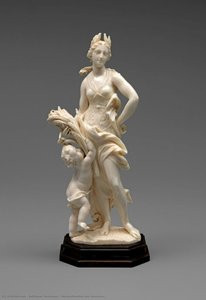
Throughout his life, Permoser’s work served as a powerful tool of political and spiritual propaganda, elevating historical figures to celestial heights. Whether capturing the agony of Marsyas or the seasonal personifications of winter, his sculptures possess an inimitable ability to capture both the physical form and the underlying emotional truth. He remains a pivotal figure whose evolving style bridged two eras, leaving behind a legacy of stone that continues to resonate with the grandeur of a bygone age.
Q&A
Balthasar Permoser은(는) 어느 시대의 작품을 남겼나요?
Balthasar Permoser은(는) Early Modern 시대에 활동했습니다. 이 시기는 역사적 맥락 속에서 작가의 예술적 위치를 보여줍니다.
Balthasar Permoser 작가의 국적은 어디인가요?
Balthasar Permoser은(는) Austria 출신입니다.