회화, 약력 및 박물관 소장품

1440 - 1500

작가 정보 요약

  • Top-ranked work: St Dominic Enthroned in Glory
  • Also known as: Bartolome Bermejo
  • Museums on APS:
    • 프라도 미술관
    • 슈타틸리체 무제엔
    • 바르셀로나 대성당
    • Cathedral
    • Parish church
  • Lifespan: 60 years
  • Art period: Renaissance
  • Topics explored: religious art
  • Copyright status: Public domain

A Flemish Echo in Spanish Renaissance

Bartolomé Bermejo stands as a pivotal figure in the transition between Gothic and Early Renaissance art, particularly within the Iberian Peninsula. His distinctive style—characterized by meticulous detail, dramatic lighting, and masterful realism—earned him recognition as one of the foremost painters of his era and cemented his legacy as a pioneer who successfully assimilated Flemish painting techniques into Spanish artistic traditions. While biographical details remain somewhat elusive due to sparse documentation, scholars agree that he flourished primarily in Valencia, Daroca, Zaragoza, and Barcelona during the latter half of the fifteenth century.

The early life and training of this master remain shrouded in a certain historical mystery. Precise information regarding Bermejo’s birthplace—Córdoba—is debated, with recent research questioning its certainty. However, his artistic activity centered around four key Spanish cities: Valencia (1468), Daroca (1474), Zaragoza (1477–84) and Barcelona (1486–1501). The exact origins of his training remain unknown, yet the exceptional command of oil glazing—a technique perfected by Flemish masters—strongly suggests direct exposure to the artistic innovations originating in Bruges and Ghent. This profound connection to the North allowed him to bring a level of technical sophistication to Spain that was previously unseen.

Mastery of Light and Texture

Bermejo’s oeuvre comprises numerous altarpieces, demonstrating his mastery of large-scale retables with multiple panels. His technique embodies the spirit of Flemish painting, prioritizing meticulous observation and rendering textures with remarkable accuracy. He skillfully employed glazing techniques—applying thin, transparent layers of oil paint—to achieve a luminous depth that seems to glow from within. This method allowed him to capture the sheen of silk, the cold hardness of jewels, and the soft warmth of human skin with an almost tactile quality.

Among his most celebrated achievements are works that showcase both his religious devotion and his technical ambition:

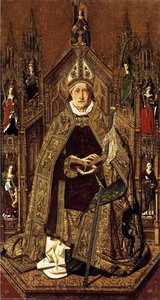
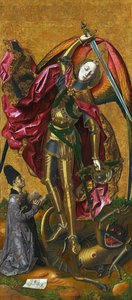
  • St Dominic Enthroned in Glory: Completed in 1474, this monumental altarpiece exemplifies the fusion of Flemish painting techniques with Spanish artistic traditions. It features a regal depiction of St. Dominic surrounded by ornate furnishings and vibrant colors, demonstrating Bermejo's unparalleled skill in capturing texture and luminosity.
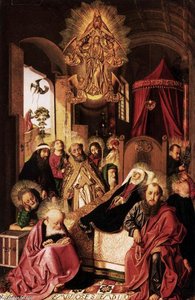
  • Death of the Virgin: Executed around 1460, this work exemplifies the Hispano-Flemish style. Drawing inspiration from masters like Hugo van der Goes, it features meticulous realism and symbolic elements—a poignant depiction of Mary's passing within a richly ornamented chapel setting.
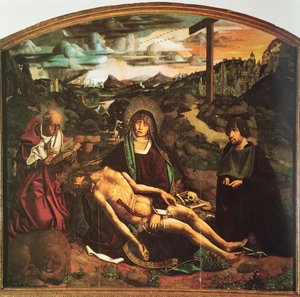
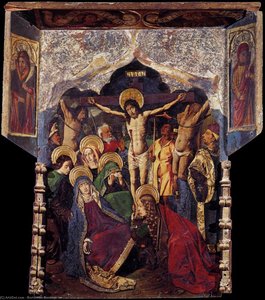
  • Pietà of Canon Luis Desplá: This poignant Pietà embodies Flemish realism blended seamlessly into Spanish Renaissance aesthetics. It presents a masterful depiction of Mary cradling Jesus amidst a dramatic mountainous landscape, inviting viewers into a moment of profound sorrow and timeless beauty.

Legacy and Historical Significance

The historical significance of Bartolomé Bermejo lies in his role as a bridge between eras and cultures. Through his monumental triptych of the Virgin of Montserrat in València and his unfinished high altar retables in Santo Domingo de Silos and Santa Anna in Barcelona, he demonstrated an unparalleled skill and ambition that pushed the boundaries of Spanish art. He did not merely copy Northern styles; he synthesized them with a local sensibility to create something entirely unique.

By integrating the intense realism and symbolic depth of the Flemish tradition into the religious landscape of the Iberian Peninsula, Bermejo helped pave the way for the subsequent flowering of the Spanish Renaissance. His ability to manipulate light and shadow to evoke emotion remains a testament to his genius, ensuring that his name continues to resonate with art historians and admirers of fine art alike.

질의응답

Bartolomé Bermejo 작가의 출신 국가는 어디인가요?

Bartolomé Bermejo은(는) Spain에서 태어났습니다.

Bartolomé Bermejo의 출생지와 출생 연도는 언제인가요?

Bartolomé Bermejo은(는) 1440년 Cordoba에서 태어났습니다.

Bartolomé Bermejo은(는) 어느 시대에 활동했나요?

Bartolomé Bermejo은(는) Renaissance 시대에 활동했습니다. 이 시기는 역사적 맥락에서 작가의 활동 위치를 보여줍니다.

Bartolomé Bermejo의 출생 도시와 국가는 어디인가요?

Bartolomé Bermejo은(는) Spain의 Cordoba에서 태어났습니다.

아트 퀴즈

각 질문의 정답은 하나뿐입니다.

문항 1:
Which artistic styles did Bartolomé Bermejo help bridge during the late fifteenth century?
문항 2:
In which Spanish city was Bermejo's artistic activity centered in 1474?
문항 3:
What technique, perfected by Flemish masters, did Bermejo use to achieve luminous depth?
문항 4:
The name 'Bermejo' is thought to possibly relate to what characteristic of the artist?
문항 5:
Which specific artwork by Bermejo portrays Mary Magdalene cradling the body of Jesus?


© 2026 mus3ums.com