The Architect of Shadows: The Life and Legacy of E.T.A. Hoffmann
Ernst Theodor Wilhelm Hoffmann, known to the world as E.T.A. Hoffmann, was a man who lived simultaneously in the structured world of Prussian law and the boundless, terrifying realms of the human imagination. Born in 1776 in the intellectual cradle of Königsberg, Hoffmann was a polymath whose creative spirit refused to be confined to a single discipline. While his professional life was anchored in the rigorous study of jurisprudence, his soul belonged to the ethereal and the uncanny. As a composer, author, and visual dreamer, he became a foundational pillar of German Romanticism, weaving a tapestry of sound, word, and image that sought to bridge the gap between the mundane reality of the nineteenth century and the dark, swirling mysteries of the subconscious.
The formative years of Hoffmann’s life were steeped in the scholarly atmosphere of his father’s home, yet it was the melodic influence of his mother and his studies under Johann Friedrich Reichardt that first awakened his artistic sensibilities. This duality—the precision of a legal mind paired with the lyricism of a composer—would become the hallmark of his entire oeuvre. His early exposure to the Classical era provided him with a structural foundation, but as the winds of Romanticism began to blow across Europe, Hoffmann embraced the movement's emphasis on emotion, individualism, and the sublime. He did not merely observe the shifting cultural tides; he became the very force that drove them toward the darker, more psychological depths of the human experience.
A Symphony of Terror and Wonder
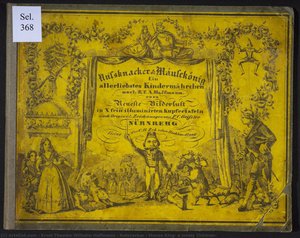
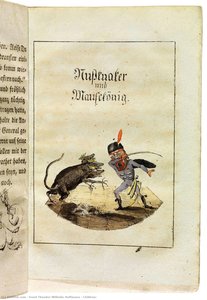
Hoffmann’s literary and artistic achievements are characterized by a unique ability to find the supernatural lurking within the everyday. He was a master of the Gothic, yet his work avoided the mere clichés of horror, opting instead for a profound exploration of psychological fragmentation. In his most celebrated tales, such as Der Sandmann and the enchanting The Nutcracker and the Mouse King, he utilized a technique of blurring the lines between dream and reality. To Hoffmann, the fantastic was not an escape from life, but a deeper layer of it—a hidden dimension where the mechanical could become animate and the domestic could turn deadly.
His contributions to the arts were remarkably diverse:
- Literary Mastery: Through collections like Die Geschichten vom Hoffmann, he pioneered the psychological ghost story, influencing generations of writers from Edgar Allan Poe to modern fantasy authors.
- Musical Innovation: As a composer, his works reflected the dramatic tensions of his narratives, blending classical structure with the evocative, often unsettling, emotional landscapes of the Romantic era.
- Visual Imagination: His influence extended into the visual arts, where his descriptions of detailed, gothic fantasies provided a blueprint for a new kind of aesthetic—one that prioritized atmosphere and the uncanny over traditional beauty.
The Enduring Shadow of a Visionary
Though his life was tragically short, ending in 1822, the impact of E.T.A. Hoffmann remains as potent today as it was during the height of the Romantic movement. He succeeded in creating a lasting vocabulary for the uncanny, providing a way for art to confront the anxieties of the modern age. His work serves as a bridge between the Enlightenment's pursuit of reason and the Romantic obsession with the irrational. By exploring the thin veil between the conscious mind and the shadows of the psyche, Hoffmann ensured that his name would forever be synonymous with the magic and the terror that reside within us all.
Today, when we experience the whimsical enchantment of a holiday classic or the chilling dread of a psychological thriller, we are walking through the landscapes first mapped by Hoffmann. He remains a singular figure in art history—a jurist who understood the law, but an artist who understood that the most profound truths often lie far beyond its boundaries.
Q&A
Ernst Theodor Wilhelm Hoffmann의 출생지와 출생 연도는 어떻게 되나요?
Ernst Theodor Wilhelm Hoffmann은(는) 1776년 Kaliningrad에서 태어났습니다.
Ernst Theodor Wilhelm Hoffmann의 출생 도시와 국가는 어디인가요?
Ernst Theodor Wilhelm Hoffmann은(는) Germany Kaliningrad에서 태어났습니다.
Ernst Theodor Wilhelm Hoffmann은(는) 어느 시대의 작품을 남겼나요?
Ernst Theodor Wilhelm Hoffmann은(는) 19th Century 시대에 활동했습니다. 이 시기는 역사적 맥락 속에서 작가의 예술적 위치를 보여줍니다.