The Lens of a Pictorial Historian
Faustin Elmer Chaudhry, affectionately known to many as Chacha, was not a painter but a pioneering photojournalist whose camera served as a vital witness to the birth and evolution of a nation. Born in Saharanpur, British India, his journey into the visual arts began unexpectedly. While he was initially engaged in teaching science at St. Anthony’s High School in Lahore, his innate passion for photography blossomed from a hobby into a profound professional calling. Through his lens, he became more than just a photographer; he emerged as a pictorial historian, capturing the raw, unvarnable essence of the Indian subcontinent during one of its most turbulent eras.Witness to Partition and National Identity
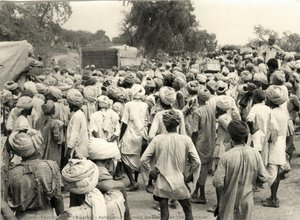
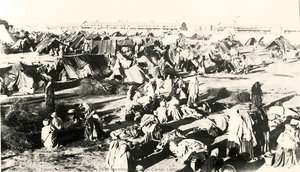
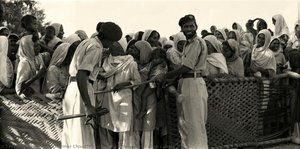
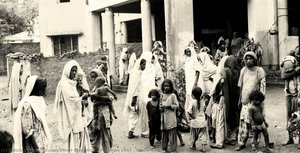
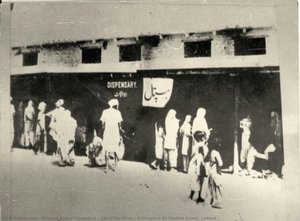
The historical significance of Chaudhry’s work is inextricably linked to the 1947 Partition. As one of the few known local Pakistani photographers present during this period, his archives provide an irreplaceable visual record of the human cost of displacement. His images do not merely document events; they evoke the profound sorrow and chaos of the era, from the sight of refugees travelling on foot to the harrowing conditions within makeshift hospitals like the Walton Camp in Lahore. He possessed a rare ability to capture the vulnerability of those caught in the crossfire of history, particularly the women and children who faced unimaginable hardships during the mass migrations. Beyond the tragedy of Partition, his career was marked by a dedication to documenting the political and cultural pulse of Pakistan. His work spanned significant milestones, including the 1940 Muslim League Session in Lahore, where the resolution for a separate Muslim state was passed. This ability to capture both monumental political shifts and the quiet, intimate details of nature, flora, and fauna established him as a master of his craft.A Legacy of Professionalism and Artistry
Throughout his long and distinguished career, which included a significant tenure with The Pakistan Times until his retirement in 1973, Chaudhry introduced innovative features to the field of photojournalism. His versatility allowed him to excel in diverse genres, ranging from sports photography to evocative cultural scenes, setting a yardstick for future generations of Pakistani photographers. His technical mastery was matched by an unwavering integrity and patriotism, earning him numerous prestigious accolades such as the Sitara-i-Imtiaz and the President’s Pride of Performance. His life and work represent a bridge between eras, documenting the transition from British India to the sovereign state of Pakistan with unparalleled clarity. Even as his career moved through various publications like the Civil and Military Gazette and the Illustrated Weekly of India, his focus remained on the truth of the moment. Today, his photographic legacy remains a cornerstone of South Asian visual history, preserving the faces, struggles, and triumphs of a people forever changed by history.Q&A
Faustin Elmer Chaudhry의 다른 이름이나 별칭에는 무엇이 있나요?
Faustin Elmer Chaudhry은(는) F.E. Chaudhry(으)로도 알려져 있습니다.
Faustin Elmer Chaudhry의 출생 도시와 국가는 어디인가요?
Faustin Elmer Chaudhry은(는) India Saharanpur에서 태어났습니다.
Faustin Elmer Chaudhry은(는) 어느 시대의 작품을 남겼나요?
Faustin Elmer Chaudhry은(는) Modern 시대에 활동했습니다. 이 시기는 역사적 맥락 속에서 작가의 예술적 위치를 보여줍니다.