The Life and Artistic Evolution of Hendrik Chabot
Hendrik Chabot was a Dutch painter and sculptor born in Sprang, Netherlands. After moving to Rotterdam as a child, he pursued his artistic training through evening classes at the Rotterdam academy of art and science, now known as the Willem de Kooning Academie. His early professional years involved the restoration of paintings, and he eventually established his own studio in the Wijnstraat. During the early twenties, Chabot traveled to Germany and Austria, visiting museums in cities such as Dresden, Munich, and Vienna. He was a member of the artists group the Branding and later joined the Kring van beeldende kunstenaars R33.
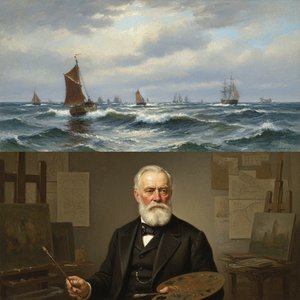
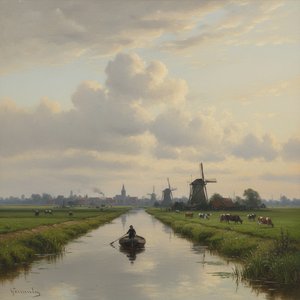
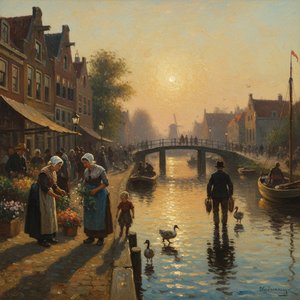
His subject matter evolved significantly over his career. In the thirties, his paintings often drew from the town life of Rotterdam and port scenery. Following a stay in Vrouwenpolder in Zeeland, his work began to include themes of the sea, farmers, cows, and horses. During World War II, specifically in 1943, he produced a series of paintings characterized by a dark color palette focused on the topic of get-away. In the years following this period, his color palette became brighter and more light-colored.
Notable Works and Legacy
Chabot's artistic output included both two-dimensional and three-dimensional works. His sculptural work includes the large concrete figure 'De Voetballer' located in Stadion Feyenoord. One of his most recognized paintings is 'Brand van Rotterdam,' which he created after witnessing the bombardment of Rotterdam from his cottage at the River Rotte. This work is owned by the municipality of Rotterdam and is on permanent loan at the Chabot Museum. The Hendrik Chabot Award was named after him.
His works are held in several public collections, including:
Q&A
Hendrik Chabot은(는) 어느 시대의 작품을 남겼나요?
Hendrik Chabot은(는) Modern 시대에 활동했습니다. 이 시기는 역사적 맥락 속에서 작가의 예술적 위치를 보여줍니다.
Hendrik Chabot의 출생지와 출생 연도는 어떻게 되나요?
Hendrik Chabot은(는) 1894년 Sprang에서 태어났습니다.
Hendrik Chabot의 출생 도시와 국가는 어디인가요?
Hendrik Chabot은(는) Netherlands Sprang에서 태어났습니다.