Thomas Alva Edison: A Life of Innovation
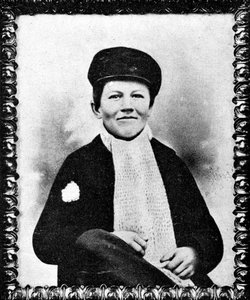
Thomas Alva Edison (February 11, 1847 – October 18, 1931) was an American inventor and businessman whose inventions profoundly shaped the modern industrialized world. He is widely considered one of history’s greatest inventors.
Early Life and Education
Born in Milan, Ohio, Edison had a limited formal education due to a hearing impairment and his mother's decision to homeschool him. This early experience fostered his self-reliance and independent learning skills. He began his career as a telegraph operator, which sparked his interest in electrical technology.
Early Inventions & Menlo Park
Edison’s inventive spirit emerged early on. While working as a telegrapher, he developed devices to improve the efficiency of communication systems. In 1876, he established his first industrial research laboratory in Menlo Park, New Jersey – often called his “invention factory.” This marked a turning point, shifting invention from individual effort to organized scientific teamwork.
Major Achievements
- The Phonograph (1877): Edison’s phonograph was the first machine capable of recording and replaying sound. It revolutionized entertainment and communication.
- The Incandescent Light Bulb (1879): While not the *first* to invent a light bulb, Edison created a practical, long-lasting incandescent lamp and an entire system for electrical power generation and distribution.
- Motion Pictures: Edison played a pivotal role in developing motion picture technology, creating both the Kinetoscope (a viewing device) and the Kinetograph (a camera). His Black Maria studio was the first film studio.
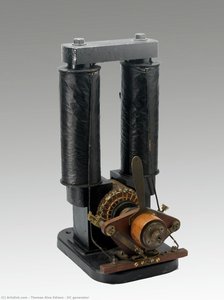
- DC Generator: Edison’s ‘Long-legged Mary-Ann’ DC generator demonstrated his mastery of electrical engineering principles.
Botanical Research & Later Years
Later in life, Edison collaborated with Henry Ford and Harvey Firestone on botanical research at a laboratory in Fort Myers, Florida, seeking alternative sources for rubber production. He continued to innovate until his death, exploring areas like cement manufacturing and ore separation.
Influences & Legacy
Edison was influenced by the scientific advancements of his time and the practical needs he observed around him. He, in turn, profoundly influenced countless inventors and engineers who followed. His emphasis on systematic research and development established a model for modern industrial laboratories.
Historical Significance
Edison’s inventions transformed daily life, ushering in the age of electricity and mass communication. He held over 1,093 US patents (and many more internationally), making him one of the most prolific inventors in history. His work laid the foundation for numerous technologies we rely on today, cementing his place as a legendary figure in American innovation.
Q&A
Thomas Alva Edison의 출생 도시와 국가는 어디인가요?
Thomas Alva Edison은(는) United States of America Milan에서 태어났습니다.
Thomas Alva Edison의 출생지와 출생 연도는 어떻게 되나요?
Thomas Alva Edison은(는) 1847년 Milan에서 태어났습니다.
Thomas Alva Edison은(는) 어느 시대의 작품을 남겼나요?
Thomas Alva Edison은(는) 19th Century 시대에 활동했습니다. 이 시기는 역사적 맥락 속에서 작가의 예술적 위치를 보여줍니다.