The Shadow of Morland
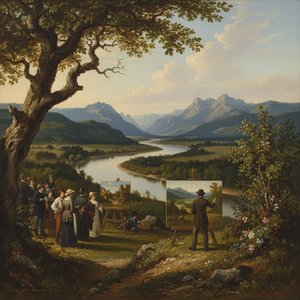
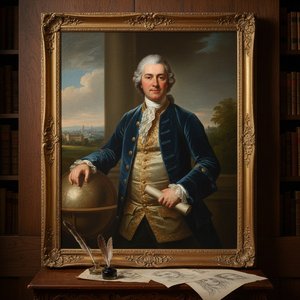
London, September 1804. The life of Thomas Hand reaches its conclusion. He leaves behind a body of work that exists in the delicate, often blurred space between original vision and imitation. To look at a Hand is to encounter the ghost of George Morland. His brushwork, his choice of subject, and his very manner were so closely aligned with Morland that his canvases frequently invited misattribution. He did not merely paint landscapes; he inhabited a specific, borrowed language of rural life.
His presence in the art world was marked by a steady, if occasional, engagement with the established institutions of the era. He moved through the London art scene with a quiet persistence, finding his way into the halls of the Royal Academy and the Incorporated Society of Artists. He was a painter of the English countryside, capturing the quietude of the rural landscape through a lens shaped by the most popular style of his day.
A Career in the English Landscape
The trajectory of Hand's career is defined by his participation in the major exhibitions of the late eighteenth and early nineteenth centuries. His work focused on the textures of the countryside, often centering on the intersection of nature and human habitation. His output includes:
- Landscape scenes featuring cottages and hilly terrain
- Rural depictions involving figures and watering places
- Works exploring the interplay of light and shadow in pastoral settings
His technical approach leaned toward realism, focusing on the tangible details of a working landscape. Whether depicting a quiet cottage or a bustling watering place, his compositions sought to replicate the atmospheric qualities of the English terrain. This commitment to a specific aesthetic ensured his place within the tradition of British landscape painting, even as he navigated the complexities of being a follower of a more famous contemporary.
The Legacy of Imitation
The historical significance of Thomas Hand lies in his ability to master a specific visual vocabulary. He was a practitioner of a style that defined an era of British art, contributing to the visual record of the period through his depictions of rural life. His works remain in various collections, preserved as evidence of the stylistic currents that flowed through London at the turn of the century. He remains a figure of study for those examining the nuances of attribution and the way an artist's style can become a shared language among contemporaries.
Q&A
Thomas Hand은(는) 어느 시대의 작품을 남겼나요?
Thomas Hand은(는) 19th Century 시대에 활동했습니다. 이 시기는 역사적 맥락 속에서 작가의 예술적 위치를 보여줍니다.
Thomas Hand 작가의 국적은 어디인가요?
Thomas Hand은(는) United Kingdom of Great Britain and Ireland 출신입니다.