
Introduction
The 1850s in France represent a profound crossroads in art history, a decade where the rigid hierarchies of the Academy began to clash with the raw, unfiltered observations of a changing world. As the country navigated the political shifts of the Second Republic and the rise of the Second Empire, the canvas became a battlefield for competing ideologies. This era saw the tension between the polished, idealized perfection of Neoclassicism and the gritty, honest textures of Realism, creating a visual language that was as much about social commentary as it was about aesthetic beauty.
During this period, artists moved away from mythological allegories to find profound meaning in the everyday. Whether it was the quiet dignity of peasant life, the dramatic intensity of historical scenes, or the atmospheric studies of the French landscape, the focus shifted toward a more direct engagement with reality. This movement laid the essential groundwork for the Impressionist revolution that would follow, making the works of this decade vital for understanding the evolution of modern vision.
The pieces selected for this curation showcase the immense diversity of French talent during these ten years. From the masterful precision of portraiture to the emotive power of social realism, these works capture a nation in transition. We invite you to explore ten significant masterpieces that define this transformative decade, featuring the distinct hands of masters such as Jean-François Millet, Gustave Courbet, and Rosa Bonheur.
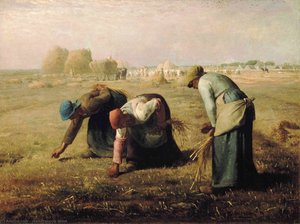
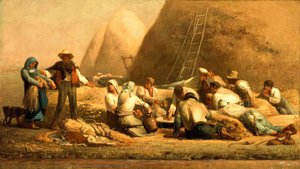
The Gleaners - Jean-François Millet
The eye is immediately drawn to the rhythmic, heavy labor of three women bent low in a vast field, their figures silhouetted against a landscape of harvest. In this 1857 masterpiece, Jean-François Millet captures the sculptural toil of the peasantry, focusing on the quiet, repetitive act of gathering leftover wheat. The composition emphasizes the physical weight of their task, using earthy tones to ground the scene in a profound sense of reality. This work is a definitive example of French art from the 1850s, a decade when the Realist movement began to challenge the idealized, romanticized depictions of nature and society.
By choosing to depict marginalized rural workers with such monumental dignity, Millet broke away from the escapist traditions of his predecessors. The painting reflects the societal tensions of mid-19th-century France, as the Industrial Revolution began to shift the landscape of traditional agrarian life. Through his masterful observation of light and form, Millet transformed a scene of humble survival into a powerful statement on human resilience, cementing his place as a leading figure of the Barbizon school.
Joséphine-Éléonore-Marie-Pauline de Galard de Brassac de Béarn (1825–1860), Princesse de Broglie - Jean-Auguste-Dominique Ingres
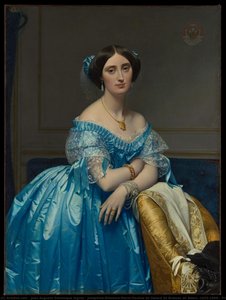 Joséphine-Éléonore-Marie-Pauline de Galard de Brassac de Béarn (1825–1860), Princesse de Broglie - Jean-Auguste-Dominique Ingres
Painted in 1851, this portrait of the Princesse de Broglie serves as a definitive example of French Neoclassicism during the 1850s. Jean-Auguste-Dominique Ingres, a master of precise contours and sculptural lines, captures the subject with a level of technical sophistication that defines the era's approach to aristocratic portraiture. The composition is centered on the Princess, who is seated with a quiet, melancholic dignity that pierces through her formal pose.
The artist’s technique relies on the meticulous layering of thin oil glazes, creating a polished, smooth surface that emphasizes the tactile reality of her opulent attire. There is a profound focus on the interplay of textures: the crispness of delicate lace, the lustrous sheen of silk, and the soft, luminous quality of skin. The palette is dominated by deep, espresso tones and muted backgrounds, which serve to push the subject forward, highlighting her refinement and status. Through controlled, organic shapes and soft, diffused lighting, Ingres achieves a balance between realistic detail and idealized beauty, a hallmark of the high French style of this decade.
The Horse Fair - Rosa Bonheur
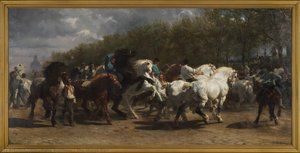 The Horse Fair - Rosa Bonheur
Completed in 1852, The Horse Fair stands as a monumental achievement of French animalier painting, capturing the raw, kinetic energy of a bustling marketplace. Rosa Bonheur’s masterpiece exemplifies the mid-19th-century shift toward a profound, scientific realism that defined much of the decade's output. The composition is a symphony of motion, where a diverse cast of equine protagonists—ranging from deep blacks and rich browns to ethereal whites and soft greys—interact amidst a crowd of observers and handlers.
Bonheur’s technical mastery is rooted in her rigorous anatomical studies, which allowed her to render every ripple of muscle and tensioned tendon with unparalleled precision. Her palette is expertly managed to convey texture; through layered oil glazes, she captures the tactile quality of horsehair, leather, and skin. This focus on the physical reality of the subject, combined with a dynamic arrangement of figures, places this work at the heart of the 1850s movement toward a more visceral and truthful representation of life. The result is a work that transcends mere documentation, offering a powerful celebration of animal vitality and human industry.
Portrait of Madame Moitessier Sitting - Jean-Auguste-Dominique Ingres
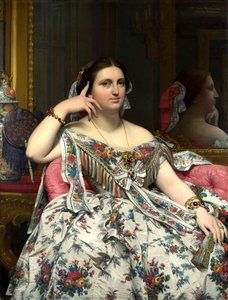 Portrait of Madame Moitessier Sitting - Jean-Auguste-Dominique Ingres
Created in 1856, this masterpiece serves as a breathtaking testament to the heights of mid-19th-century French portraiture. As a quintessential work from the 1850s, it showcases the era's fascination with aristocratic refinement and the meticulous rendering of luxury. The subject, seated with an air of effortless poise, commands the viewer's attention through a gaze that is both serene and profoundly penetrating. Clad in a flowing, luminous dress that cascades around her like liquid silk, she embodies a sense of timeless grace.
The composition is a masterclass in depth and narrative layering. While Madame Moitessier remains the undeniable focal point, Ingres subtly populates the periphery to create a rich, lived-in atmosphere. The presence of figures in the background—one standing sentinel to the left and another receding into the distance on the right—adds a layer of social complexity, suggesting a bustling, high-society milieu. The inclusion of a plush couch and a reflective mirror creates a sophisticated interplay of light and shadow, pulling the viewer deeper into the opulent interior of this mid-century salon. Through his signature precision, Ingres transforms a social portrait into a poetic meditation on beauty and status.
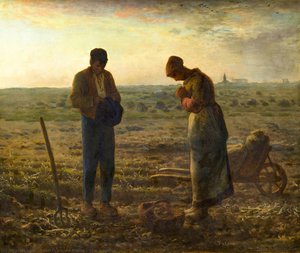
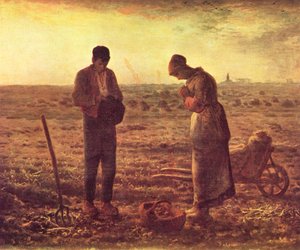
The Angelus - Jean-François Millet
Jean-François Millet's 1859 masterpiece, The Angelus, stands as a profound testament to the French Realism of the 1850s. This work captures a moment of quiet, spiritual pause amidst the heavy toil of agricultural life. A man and a woman are depicted bowing their heads in prayer over a basket of potatoes, their figures silhouetted against a vast, tranquil landscape as the distant church steeple signals the time for prayer. This scene exemplifies the Barbizon School's shift toward the dignified, unvarnished reality of rural existence.
The composition is defined by a sense of expansive peace, utilizing strong horizontal lines that connect the earth to a soft, hazy sky. Millet employs a palette of muted, earthy tones—rich ochres, browns, and khakis—that ground the figures in their environment. His technique features visible, textured brushwork that emphasizes the tactile nature of the soil and the weight of the laborers' clothing. By using atmospheric perspective to render the horizon in paler, softer hues, Millet creates a sense of immense depth, capturing the fleeting, nostalgic light of dusk that characterizes this pivotal decade of French art.
Harvest - Charles-François Daubigny
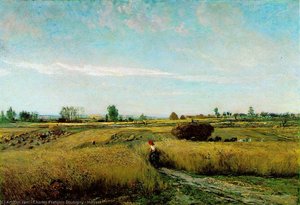 Harvest - Charles-François Daubigny
Painted in 1851, Harvest serves as a quintessential example of the shift toward naturalism that defined French art during the 1850s. As a pivotal figure of the Barbizon School, Charles-François Daubigny sought to move beyond idealized, studio-bound compositions to capture the authentic essence of the countryside. This work reflects the decade's growing interest in the direct observation of light and atmosphere, a precursor to the Impressionist movement.
The composition is characterized by a broad, horizontal expanse of wheat fields, rendered with a loose, expressive application of oil paint. A winding dirt track leads the eye through the landscape, where the soft, diffused light of an overcast day settles over the scene. Daubigny utilizes visible brushstrokes to create a tactile sense of the earth and ripening grain, emphasizing the materiality of the rural environment. Within this vast landscape, small figures engaged in agricultural labor—including a person on horseback—provide a sense of scale and highlight the profound connection between humanity and the rhythms of nature. Through this realistic yet atmospheric approach, the painting captures a moment of profound, tranquil abundance.
Young Christian Martyr - Paul Delaroche
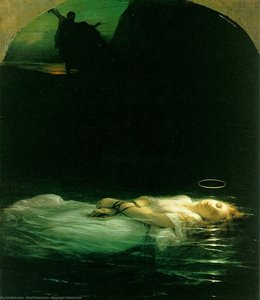 Young Christian Martyr - Paul Delaroche
Painted in 1853, Young Christian Martyr serves as a profound testament to the dramatic storytelling that defined French art during the 1850s. Paul Delaroche, a master of bridging Romanticism with Academic realism, utilizes this work to explore themes of religious martyrdom and melancholic surrender. The composition is centered on a young woman submerged in dark, tranquil waters, her pale form creating a striking contrast against a palette of deep sap greens and somber blues. This use of chiaroscuro emphasizes the stillness of the scene, evoking a sense of profound loss and spiritual transition.
The painting’s structure is framed by a receding archway, which directs the viewer's gaze toward the woman's vulnerable pose and the shadowy figure standing above on a cliff. This figure adds a layer of psychological tension, acting as a silent observer to the unfolding tragedy. Through meticulous detail and smooth brushwork, Delaroche captures the texture of flowing water and soft fabric, creating a mystical atmosphere that epitomizes the era's fascination with emotional intensity and the intersection of the physical and the divine.
The Hunt Breakfast - Gustave Courbet
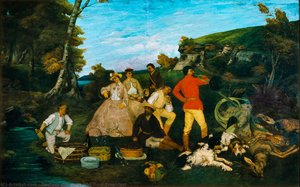 The Hunt Breakfast - Gustave Courbet
Created in 1858, The Hunt Breakfast stands as a monumental achievement in the career of Gustave Courbet and serves as a definitive example of French art from the 1850s. This large-scale genre painting captures a lively outdoor gathering of hunters and their loyal dogs enjoying a meal by a riverbank. The composition is densely populated with figures—including men in hunting attire, a woman in a pink dress, and children—all engaged in various moments of respite, from conversation to playing a horn. Such depictions of social interaction and leisure are central to the era's evolving artistic narratives.
As a pioneer of the Realism movement, Courbet utilizes a robust palette and visible brushwork to emphasize the textures of the natural world, from the roughness of bark to the smoothness of the water. The lush, green landscape and the earthy tones of the setting create a sense of pastoral beauty and rustic authenticity. By focusing on this unvarnished, tactile depiction of a hunting excursion, Courbet moved away from idealized Romanticism toward a more grounded, physical representation of life, making this work a cornerstone of mid-19th-century French painting.
Honoré Daumier Nous voulons Barabbas (Ecce Homo) We want Barabbas (Ecce Homo) - Honoré Daumier
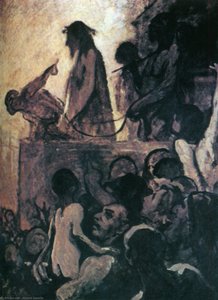 Honoré Daumier Nous voulons Barabbas (Ecce Homo) We want Barabbas (Ecce Homo) - Honoré Daumier
The viewer is immediately confronted by a dramatic and unsettling scene, where theatrical, uneven lighting creates a powerful chiaroscuro effect. Strong highlights strike pale flesh tones against a somber, dark palette of espresso, browns, and greys, plunging much of the composition into deep shadow. The figures are rendered with thick, gestural brushstrokes and an impasto-like texture, creating a sense of claustrophobia and tension through heavy vertical lines and a deliberately skewed perspective. This expressive technique emphasizes the raw emotion and psychological depth of the gathering, evoking feelings of anxiety and social critique.
Created in 1852, this work is a quintessential example of French art from the 1850s, capturing the era's shift toward intense Realism. Honoré Daumier, a master of biting social commentary, uses this biblical scene to reflect the political and social upheavals of mid-19th-century France. By focusing on human vulnerability and the tension between the crowd and the individual, the painting transcends its religious subject matter to become a profound statement on social justice and the human condition during this transformative decade.
Dante and Virgil - William-Adolphe Bouguereau
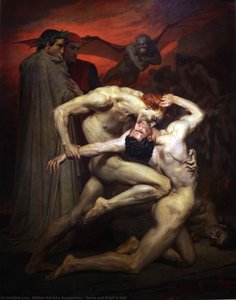 Dante and Virgil - William-Adolphe Bouguereau
Created in 1850, Dante and Virgil serves as a profound example of the dramatic intensity found in French artworks of the 1850s. In this monumental work, William-Adolphe Bouguereau moves beyond mere illustration of Dante Alighieri’s Inferno to create a theatrical tableau of terror and sublime beauty. The composition captures a pivotal moment from the eighth circle of Hell, where the poet and his guide navigate a landscape of despair.
Bouguereau, a master of Academic Realism, utilizes a striking interplay of light and shadow to heighten the sense of terribilita—a mixture of awe and horror. The figures of Dante and Virgil are rendered with sculptural precision, their musculature emphasized to amplify the visceral struggle unfolding around them. Dominant crimson hues and swirling, fiery tones evoke the heat of the underworld, while the meticulous attention to anatomical detail reflects the artist's rigorous training. By fusing classical ideals with a heightened, almost Romantic sensibility, Bouguereau transforms a literary epic into a vivid, immersive spectacle of human and divine drama.
Conclusion
The French art of the 1850s represents a profound crossroads in visual history, where the rigid elegance of Neoclassicism met the raw, emotive power of Realism and the atmospheric beginnings of Impressionism. From the soulful, peasant-focused narratives of Millet to the dramatic, sweeping compositions of Delaroche and the textured landscapes of Daubigny, this decade captured a world in transition. Whether through the meticulous anatomical precision of Ingres or the bold, social commentary of Daumier, these masters redefined how humanity perceived its own reality and its connection to the natural world.
At Mus3ums.com, we invite you to bring this transformative era into your own living space. Our artisans specialize in creating museum-quality, hand-painted oil reproductions that preserve the tactile soul and visible brushstrokes of these mid-century masterpieces. You can explore our full collection to find the perfect piece and experience the enduring beauty of 19th-century French excellence through a bespoke, handcrafted work of art.


