A Legacy Woven in Line and Texture
Born into a lineage of profound creativity in Stuttgart, Regina Relang’s journey began not behind a lens, but amidst the rich textures of her parents' studios. As the daughter of painter Paul Lang and textile designer Minna Lang-Kurz, her early years were steeped in an atmosphere where color, form, and fabric were the primary languages of expression. This foundational immersion provided her with an innate understanding of how light dances upon silk and how a single line can define a silhouette—a sensitivity that would later become the hallmark of her photographic mastery. Her formal education at the Kunstakademie Stuttgart and the Academy of Arts in Berlin further refined this painterly eye, equipping her with the compositional rigor of a fine artist before she ever turned to the ephemeral world of fashion.
The Parisian Dawn and the Vogue Era
The trajectory of Relang’s career shifted dramatically in 1938, when a serendipitous connection with photographer Willy Maywald propelled her from the academic halls of Germany to the vibrant, avant-garde heart of Paris. This move was more than a change of scenery; it was an immersion into the very epicenter of haute couture. Almost immediately, she secured a position at Vogue, where her talent for visual storytelling found its most prestigious stage. Her lens captured the essence of fashion for the French, American, and British editions, establishing her as a global voice in an era of rapid stylistic evolution. Beyond the pages of Vogue, her work graced the glossy surfaces of Die Dame, Madame, and Harper's Bazaar, weaving her name into the fabric of mid-century fashion history.
Capturing the Soul of Haute Couture
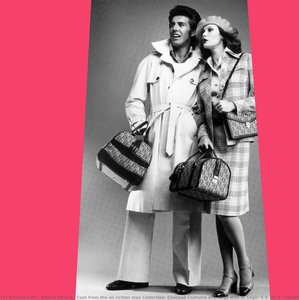
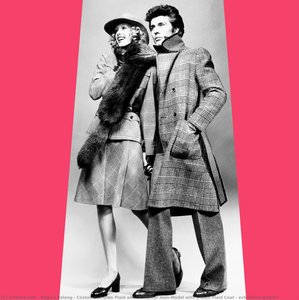
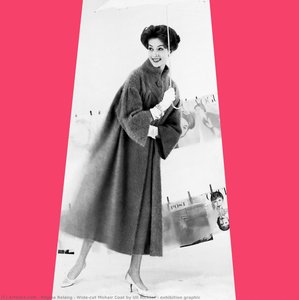
Relang’s photographic style was a sophisticated alchemy of journalistic truth and artistic embellishment. She possessed a rare ability to document the latest designs from legendary houses—such as those of Christian Dior, Pierre Cardin, and Saint Laurent—while imbuing each frame with a cinematic, almost poetic quality. Unlike photographers who sought only to display a garment, Relang sought to capture its soul. She meticulously orchestrated studio settings that mirrored reality, using the interplay of light and shadow to accentuate the structural integrity of a coat or the delicate drape of a gown. Her work often transcended mere documentation, turning a fashion spread into a narrative tableau where the subjects seemed caught in moments of profound grace or quiet introspection.
A Timeless Vision
The enduring significance of Regina Relang lies in her ability to bridge the gap between the ephemeral nature of fashion and the permanence of fine art. Her photographs remain windows into a bygone era of unparalleled sophistication, offering a glimpse into a world where elegance was both a standard and an art form. Through her mastery of monochrome tones and her respect for the craftsmanship of textiles, she created a body of work that continues to resonate with contemporary designers and historians alike. Her legacy is not merely found in the archives of fashion magazines, but in the way she taught the camera to see beauty through the lens of both reality and dream.
Klausimai ir atsakymai
Kuriame istoriniame laikotarpyje kūrė Regina Relang?
Regina Relang kūrė Modern laikotarpiu. Šis laikotarpis leidžia įvertinti kūrybinę veiklą istoriniame kontekste.
Iš kokios šalies yra Regina Relang?
Regina Relang gimė Germany.
Kokie kiti Regina Relang vardai yra žinomi?
Regina Relang taip pat žinomas (a) pavadinimais Regina Lang.