The Sacrifice of IphigeniaCharles-André Van Loo · 1757
 Acrylic On Canvas
- WallArt
- Rococo
 1757
 Metropolitano meno muziejus
A Moment Frozen in Time: Charles-André van Loo’s “The Sacrifice of Iphigenia”
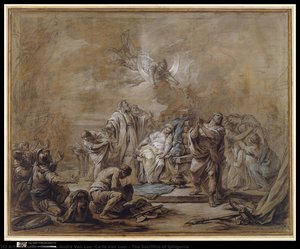
Charles-André van Loo's "The Sacrifice of Iphigenia," painted in 1757, is more than just a depiction of a tragic myth; it’s a masterclass in Baroque drama rendered with the elegance and meticulous detail characteristic of the Rococo style. Housed within The Metropolitan Museum of Art, this gouache on canvas transports us to a pivotal moment – the agonizing farewell of Agamemnon and his daughter Iphigenia before her sacrifice to appease Artemis. Van Loo doesn’t simply illustrate the event; he captures its emotional weight with an almost unbearable intensity, utilizing light, gesture, and composition to draw the viewer into the heart of the scene.
Rococo Grandeur and Baroque Intensity
Van Loo, a member of a distinguished artistic dynasty originating in the Netherlands, firmly established himself within the French court as a leading Rococo painter. However, “The Sacrifice of Iphigenia” transcends mere decorative elegance; it’s infused with the heightened drama and emotionalism often associated with Baroque painting. The composition is meticulously balanced – a vast, open space dominated by the figures, creating a sense of both grandeur and vulnerability. Notice how Van Loo employs diagonal lines, particularly in the positioning of Iphigenia and Agamemnon, to heighten the tension and direct our gaze towards the impending tragedy.
The use of color is equally significant. The cool blues and greens of the background contrast sharply with the warm tones of the figures’ clothing, emphasizing their isolation and highlighting the emotional turmoil within the scene. The subtle gradations of light and shadow – a hallmark of Baroque technique – create a sense of depth and volume, lending a palpable realism to the figures and their surroundings.
Symbolism and Mythological Resonance
The painting is steeped in symbolism, drawing upon the rich tapestry of Greek mythology. Iphigenia’s sacrifice represents a profound loss—the price of victory, the necessity of appeasing the gods, and the heartbreaking fate of innocence. The presence of the angel, a recurring motif in depictions of sacrificial scenes, underscores the divine judgment at play. Agamemnon's posture – his head bowed, hand raised in a gesture of despair – speaks volumes about his grief and acceptance of this terrible necessity. Even the details, such as the bowl and vase held by some figures, contribute to the narrative, hinting at rituals and offerings associated with Artemis.
A Window into 18th-Century French Court Life
Beyond its mythological subject matter, “The Sacrifice of Iphigenia” offers a glimpse into the artistic conventions and social dynamics of 18th-century France. Van Loo’s meticulous attention to detail—the elaborate costumes, the richly furnished background, the carefully rendered faces—reflects the opulence and sophistication of the French court. The painting served as both a historical record and a demonstration of artistic skill, intended to impress patrons and secure commissions. It's a testament to Van Loo’s ability to seamlessly blend classical mythology with the prevailing aesthetic sensibilities of his time.
Today, reproductions of “The Sacrifice of Iphigenia” continue to captivate viewers with their dramatic intensity and emotional resonance. Whether adorning a grand salon or a more intimate space, this painting serves as a powerful reminder of the enduring themes of sacrifice, loss, and the complex relationship between humanity and the divine.
Charles-André Van Loo (1705 – 1765)
Susipažinkite su Charles-André van Loo (Carle van Loo) meno, vadoviu Rokoko dailininką iš 18 am. Francijos. Žinomas iš portretų, mitologinių scenų ir aristokratiškos gyvenimo, jis buvo pirmasis dailininkas karaliui Luigui XV. Atraskite jo palikimą Mus3ums!
Metropolitano meno muziejus (Niujorkas, JAV)
Atraskite 5 000 metų meno turtą Niujorke – nuo senovės iki modernumo. Sužinokite apie šiuos pasaulinis lobius jau šiandien.
Apie šį kūrinį
- Pavadinimas: The Sacrifice of Iphigenia
- Autorius: Charles-André Van Loo
- Metai: 1757
- Formatas: Landscape
- Autorinių teisių statusas: Viešasis domenas
- Kur galima pamatyti: Metropolitano meno muziejus
- Judėjimas: Rococo
- Technika: WallArt
- Kūrybos laikotarpis: Mature Period
- Pagrindinė spalva: Gray
Trumpa informacija
- Influences: Dutch painters
- Year: 1757
- Location: Metropolitan Museum, NYC
- Artistic style: Rococo
- Medium: Gouache on canvas
Klausimai ir atsakymai
Koks yra rekomenduojamas „The Sacrifice of Iphigenia“ spausdinimo formatas – koks dydis ir orientacija?
Large dydis, Landscape orientacija: tai rekomenduojamas spausdinimo nustatymas kūriniui „The Sacrifice of Iphigenia“ – Charles-André Van Loo.
Kaip medžiaga ir judėjimas susilieja darbe „The Sacrifice of Iphigenia“?
„The Sacrifice of Iphigenia“ – Charles-André Van Loo sujungia Acrylic On Canvas techniką su Rococo stiliumi. Technika ir stilius apibūdina kūrinio gamybos būdą bei jo estetinį iš Ausdrucką.
Kokia spalvų ryškumas ir intensyvumas pasižymi „The Sacrifice of Iphigenia“ – Charles-André Van Loo?
„The Sacrifice of Iphigenia“ spalvų nasyginimas yra Subtle Color, o intensyvumas – Balanced.