A Chronicle of Wonder: The American Museum of Natural History
The American Museum of Natural History stands as a monumental testament to humanity’s ceaseless quest for knowledge—a sprawling sanctuary dedicated not merely to preserving specimens but to chronicling the unfolding drama of Earth's history and illuminating our place within its grand tapestry. Founded in 1869 by naturalist Albert S. Bickmore, driven by an unwavering conviction that scientific understanding should transcend boundaries and enrich all lives, the museum’s journey has mirrored its remarkable collection—a narrative etched into the very stone of its twenty-one interconnected buildings. From its humble beginnings nestled within Central Park's Arsenal, a deliberate architectural vision emerged, mirroring the boundless curiosity that fuels its core mission. The initial Romanesque arches, harkening back to classical scholarship and artistic ideals, intertwine seamlessly with Beaux-Arts grandeur, culminating in the Rose Center for Earth and Space’s striking silhouette—each edifice whispering tales of geological epochs and inventive design. This architectural orchestration isn't simply ornamental; it serves as a profound reflection of the museum’s expansive story—a harmonious blend of scientific rigor and enduring artistic aspiration.
-
Dinosaur Halls:
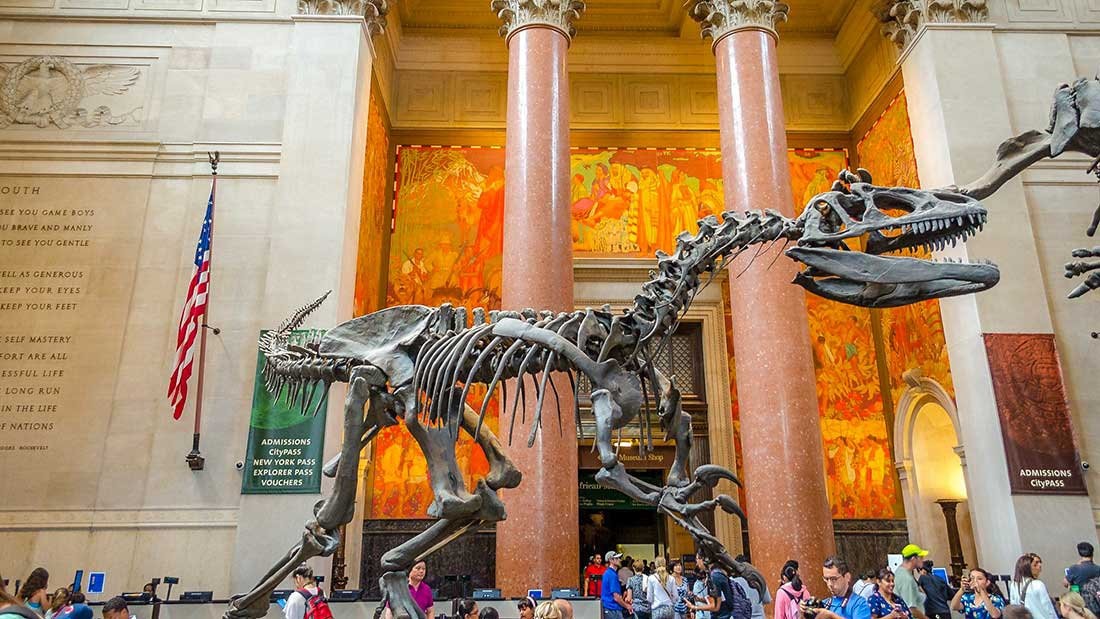
These iconic spaces dominate the museum’s landscape, housing colossal skeletons of *Tyrannosaurus rex* and *Stegosaurus*. But it is the meticulous reconstruction of these prehistoric giants – the painstaking attention to detail in their bones, the vibrant hues applied to their skin – that truly captivates visitors. The recent discovery of “Apex,” a remarkably complete *Stegosaurus*, exemplifies the museum’s unwavering commitment to paleontological research and its dedication to communicating scientific breakthroughs to the public. Knight's dinosaur paintings established a visual language for paleontology, transforming these ancient creatures into tangible realities.
-
Ocean Life:
Descending into the Hall of Ocean Life transports you to an underwater realm brimming with life—from the colossal blue whales dwarfing entire buildings to the kaleidoscopic coral reefs pulsating with color. These immersive exhibits powerfully convey the delicate balance of marine ecosystems and underscore the urgent imperative for conservation efforts.
-
Mineral Hall:
Prepare to be mesmerized by the Mineral Hall’s glittering display – a dazzling assemblage of crystals, gemstones, and minerals sourced from across the globe. Each specimen embodies a story—of volcanic eruptions reshaping landscapes, tectonic shifts shaping continents, and the slow, inexorable processes sculpting our planet's surface.
The Rose Center for Earth & Space: A Window to the Cosmos
Rising majestically above Central Park’s verdant expanse is the Rose Center for Earth and Space—a breathtaking voyage into astrophysics and cosmology conceived by Michael Graves. Its dominant geodesic sphere commands attention, inviting contemplation of the universe's immensity and fostering a deep appreciation for our minuscule yet significant role within its boundless grandeur. Inside, interactive exhibits illuminate complex scientific concepts, allowing visitors to explore stellar formation, galactic expansion, and the tantalizing possibility of extraterrestrial life—a testament to ongoing research and educational outreach. The Hayden Planetarium, housed within this spherical marvel, offers unparalleled views of the night sky—an unforgettable experience igniting wonder and fostering intellectual curiosity. This center’s commitment extends beyond mere spectacle; it nurtures a deeper engagement with scientific inquiry through captivating lectures, collaborative projects, and inspiring workshops.
A Legacy Forged in Exploration & Artistic Inspiration
The AMNH's narrative is inextricably interwoven with the spirit of exploration that characterized the 19th and 20th centuries. Early expeditions spearheaded by figures like Charles Robert Knight brought back specimens from distant corners of Earth—from the humid jungles of South America to the frozen tundra of Antarctica—fueling scientific breakthroughs and captivating public imagination. Knight’s dinosaur paintings revolutionized paleontology, transforming these ancient creatures into vivid representations accessible to all. Similarly, James Lippitt Clark's animal sculptures and wildlife filmmaking captured the essence of the natural world with remarkable fidelity, establishing new standards for artistic portrayal. The museum’s archives hold a wealth of original artwork, photographs, and field notes documenting these pioneering endeavors—offering rare glimpses into the lives and passions of those who shaped our understanding of the planet. Today, the AMNH champions diverse voices and perspectives – as evidenced in exhibitions like “Shaping the Future Through Tradition,” featuring multimedia works by Indigenous artists – reaffirming cultural preservation and artistic innovation.
Beyond the Exhibits: A Living Institution
The American Museum of Natural History transcends its role as a repository of artifacts; it functions as a dynamic institution dedicated to scientific research, education, and public engagement. Its scientists conduct groundbreaking studies spanning evolutionary biology, climate science, and more—contributing significantly to our comprehension of the natural world and addressing pressing environmental challenges. Furthermore, the AMNH plays an indispensable part in safeguarding cultural heritage through its extensive collections of ethnographic objects and archaeological relics—providing invaluable insights into the varied traditions and histories of peoples across the globe. Outreach programs designed to inspire curiosity and bolster scientific literacy resonate with audiences young and old—from captivating lectures and engaging workshops to family-friendly events and accessible digital resources.
A Unique Destination for Art & Design Enthusiasts
For art lovers, collectors, and interior designers alike, the AMNH presents a surprisingly rich source of inspiration. Its architecture – a masterful fusion of historical styles and modern design – is itself a masterpiece. The intricate detailing of Beaux-Arts buildings, combined with the bold geometric forms of the Rose Center, creates a visually stunning environment bathed in natural light—a space that stimulates creativity and fosters contemplation. Moreover, the museum’s collections encompass decorative arts spanning millennia—from ancient pottery to tribal textiles—offering invaluable references for interior design projects and illuminating diverse cultural traditions. The AMNH's commitment to storytelling through visual media – exemplified by Knight’s dinosaur illustrations and Clark’s wildlife films – imparts valuable lessons in composition, color theory, and the transformative power of imagery. A visit to the AMNH is not merely a scientific expedition; it’s an immersive artistic experience—a celebration of human curiosity and creative expression.