



Origins and History of the Museum
The Isabella Stewart Gardner Museum began with the personal vision of Isabella Stewart Gardner, who was born into a prosperous family in New York City in 1840. Following her marriage to John “Jack” Gardner in 1860, the couple began to amass a collection through extensive travels. This pursuit of beauty was a shared ambition, a dream that Isabella continued to realize even after Jack's death in 1898. The construction of the building commenced in 1899 and reached completion in 1901.
Originally opened to the public in 1903 under the name Fenway Court, the institution was designed to house the specific treasures Isabella had gathered. She remained deeply involved in the curation and life of the space until her death in 1924. The museum remains a physical manifestation of her intent to create a sanctuary for art and spirit in Boston, Massachusetts.
The Building and Its Architecture
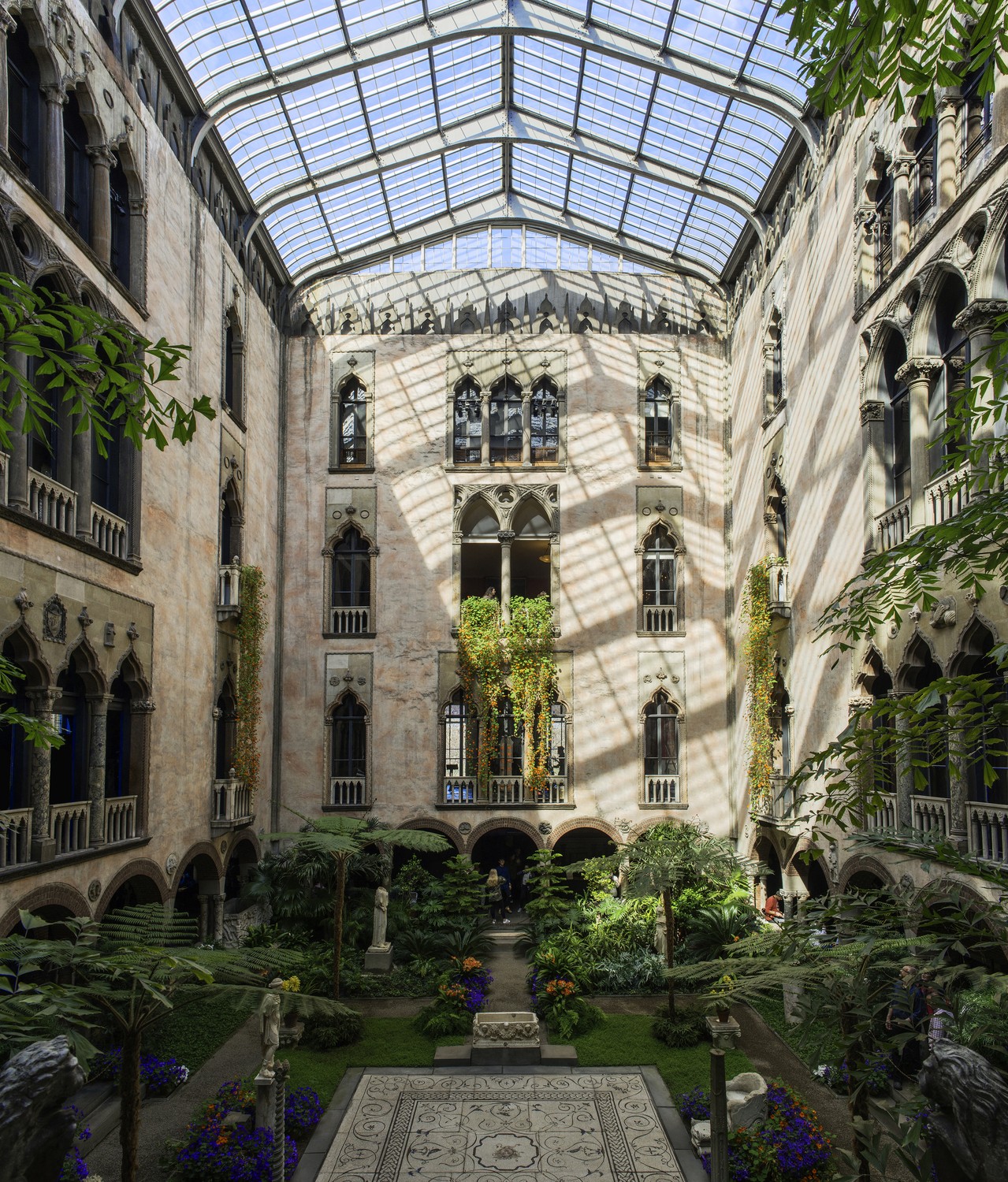
Located in the heart of Boston's Fenway neighborhood, the structure presents a deliberate immersion in a specific era of Italian design. The main building is designed in the style of a 15th-century Venetian palace, appearing as if it were pulled from a fairy tale. Under the meticulous direction of Isabella Stewart Gardner, architect Willard T. Sears translated this vision into stone and mortar. The architecture features soaring arches and intricate detailing carved from local Quincy granite, creating a sense of permanence and weight.
At the center of the design lies a plant-filled courtyard. This open space allows natural light to descend into the surrounding galleries, illuminating the textures of the stone and the various objects placed within. The arrangement of the rooms avoids a rigid chronological order, favoring a dialogue between different periods and cultures. The building functions as a living space where art and architecture are inseparable, designed to foster contemplation through its specific spatial configuration.
An Eclectic Collection of Art
The collection comprises over 2,500 objects, spanning from antiquity to the 1920s. These works arrive from Europe, Asia, the Middle East, and America, creating a presence that defies simple categorization. The holdings include paintings, sculpture, tapestries, and rare books, alongside decorative arts, textiles, and historical furniture. Glassware, ceramics, and manuscripts are also held within the walls, contributing to a sense of accumulated history.
A significant strength of the museum lies in its Asian art. This includes Chinese porcelain and meticulously crafted Japanese woodblock prints. These pieces exist alongside French paintings, drawings, and prints. The arrangement of these items—from intricate textiles to heavy sculptures—reflects a specific, personal vision of how objects from different eras and regions might inhabit the same space.
- Chinese porcelain
- Japanese woodblock prints
- Historical furniture
- Rare books
Masterpieces of the Collection
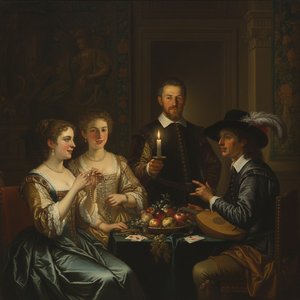
The presence of certain works remains felt even in their absence. The empty frames hanging in the galleries serve as quiet reminders of Rembrandt’s Christ in the Storm on the Sea of Galilee and Vermeer’s The Concert, both of which were taken in 1990. These voids exist alongside the works that remain, creating a dialogue between what is present and what has been lost. The collection also holds significant pieces by Degas, Manet, and El Greco, contributing to the weight of the holdings.
In other corners, the atmosphere shifts toward serenity or drama. Botticelli’s Madonna and Child with St. John offers a moment of quietude. This stillness contrasts with the energy found in Titian’s Rape of Europa, a work that explores mythology and desire through movement. Nearby, the intensity of John Singer Sargent’s El Jaleo, painted in 1882, commands the space with its particular sense of motion.
- Madonna and Child with St. John
- Rape of Europa
- El Jaleo, 1882
The Infamous 1990 Art Heist
In March 1990, a profound silence fell over the galleries when a major art heist occurred. Thirteen works vanished without a trace, leaving behind a void that remains unfilled to this day. The theft targeted significant pieces, including works by Vermeer, Rembrandt, and Degas. The total value of the stolen art is estimated at over $500 million. This event transformed the museum's narrative, adding a layer of mystery that continues to fascinate investigators decades later.
The absence of these works is physically marked within the museum. In accordance with the instructions left by Isabella Stewart Gardner, empty frames remain on display in the locations where the stolen paintings once hung. These frames serve as quiet reminders of what was lost, maintaining the integrity of the original arrangement. They exist as placeholders for the missing presence of the art, waiting for a return that has yet to happen.
The Legacy of Isabella Stewart Gardner
The museum exists because of a shared vision held by Isabella Stewart Gardner and her husband, Jack. They dreamed of creating a space where art could be experienced together, a goal that Isabella pursued with singular focus after his death. Following the completion of the building, she spent two years personally installing her wide-ranging collection throughout the galleries. This period of curation ensured that the arrangement of objects reflected her specific intent for how art and space should interact.
Isabella’s influence remains physically present through the strict mandates of her will. She left clear instructions that the museum's displays are to undergo no permanent changes, preserving the specific atmosphere she meticulously constructed. This directive maintains the integrity of the original arrangement, ensuring that the dialogue between disparate works remains exactly as she intended. Her will further stipulated that the institution should remain for the enjoyment and education of the public forever.
The permanence of the collection is felt in the quiet presence of the works that remain. Even the empty frames left in place after the 1990 theft serve as a silent part of this enduring arrangement, honoring her requirement that the museum's character remain unchanged despite the loss of certain pieces.
Recent Projects and Renovations
The physical footprint of the museum underwent a significant transformation with the completion of a major renovation in 2012. Designed by Renzo Piano, this expansion introduced a modern layer to the existing structure. The project added a music performance hall, providing a dedicated space for acoustic engagement within the institution. This addition ensures that the museum remains a site for live auditory experiences, much like the gatherings once hosted by Isabella herself.
Beyond the public halls, the renovation focused on the technical requirements of preservation and display. New exhibition space was integrated to accommodate the collection, alongside specialized conservation laboratories. These facilities allow for the meticulous care required by the various materials housed within the walls. The expansion also included the development of greenhouses, maintaining the presence of greenery that has long been a characteristic of the site's atmosphere.