Introduction
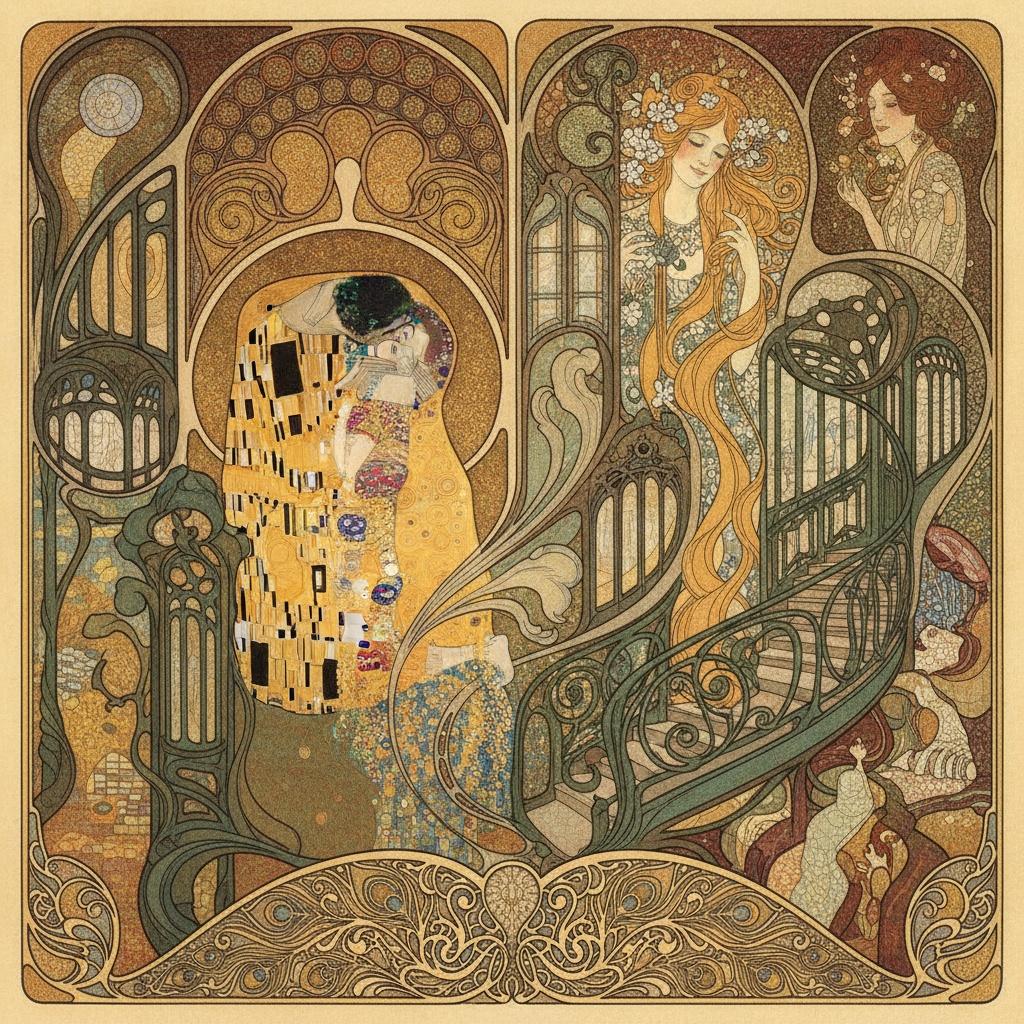
Imagine stepping into a world where the rigid lines of industry dissolve into the sinuous, rhythmic pulse of the natural world. The Art Nouveau movement was more than a mere aesthetic preference; it was a breathtaking rebellion against the mechanical coldness of the late 19th century, a period where artists sought to breathe life back into every surface, from grand canvases to the smallest piece of jewelry.
Emerging during the Belle Époque , this era celebrated the organic—the "whiplash" curve, the delicate unfurling of a lily, and the intricate dance of vines. It sought to erase the boundary between fine art and functional design, creating a unified, immersive environment where beauty was inseparable from everyday existence. This movement transformed the visual landscape of Europe, turning architecture, glass, and painting into a singular, flowing poem of light and form.
Today, these masterpieces continue to resonate, offering a timeless sanctuary of elegance in an increasingly digital age. They remind us of the profound connection between human creativity and the organic rhythms of nature. In the following selection, we invite you to explore ten definitive works that defined this era—masterpieces that captured the very soul of movement, grace, and the enduring beauty of the natural world.
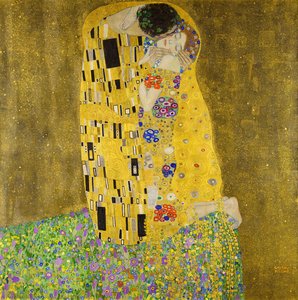
The kiss - Gustav Klimt
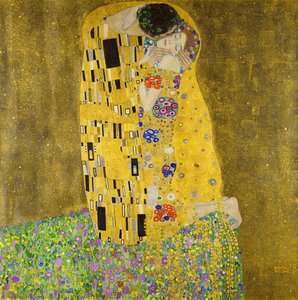 The kiss - Gustav Klimt
To behold Gustav Klimt’s The Kiss is to witness the absolute pinnacle of the Art Nouveau movement—an encounter with pure, gilded transcendence. As a definitive masterpiece of the Vienna Secession, it commands its place among the world's greatest works through its revolutionary use of gold leaf and profound symbolic depth. The composition mesmerizes with its sensory richness: the sharp, geometric patterns representing masculinity are harmoniously entwined with soft, organic floral motifs that evoke fertility and life.
For those curating sophisticated, high-end interiors, this painting offers an unparalleled opportunity to infuse a space with historical prestige and luminous beauty. Its shimmering textures and profound emotional intelligence make it a timeless anchor for any refined collection, bridging the gap between historical significance and modern luxury aesthetics. Integrating such an iconic work allows a room to transcend mere decoration, establishing a legacy of exquisite taste.
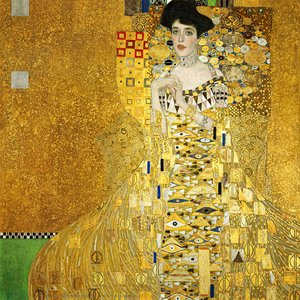
Portrait of Adele Bloch-Bauer I - Gustav Klimt
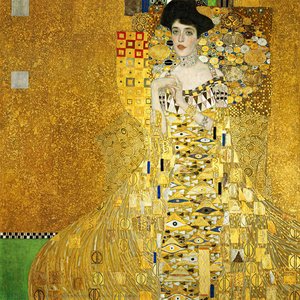 Portrait of Adele Bloch-Bauer I - Gustav Klimt
Observe the luminous, almost sculptural surface of Portrait of Adele Bloch-Bauer I by Gustav Klimt. The eye is immediately drawn to the heavy application of gold leaf, which creates a shimmering, multi-dimensional texture that transcends traditional oil painting. This masterpiece defines the Art Nouveau movement through its revolutionary fusion of organic motifs and geometric decadence. Klimt’s technique utilizes meticulous layering to transform a portrait into a Byzantine-like icon, where swirling patterns and hidden eyes emerge from a sea of gilded tessellations.
At Mus3ums, we strive to preserve this exact tactile, three-dimensional quality for the connoisseur's home. Our hand-painted reproductions capture the palpable depth of Klimt's brushstrokes and the reflective brilliance of the gold, ensuring that the soul of this Art Nouveau icon remains a vibrant, textured centerpiece in your collection.
Bildnis Fritza Riedler, 1906 - Österreichische Galerie, Vienna - Gustav Klimt
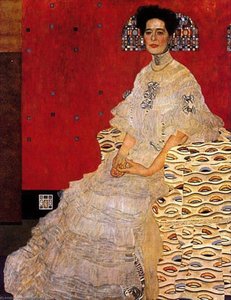 Bildnis Fritza Riedler, 1906 - Österreichische Galerie, Vienna - Gustav Klimt
In Bildnis Fritza Riedler, 1906 by Gustav Klimt , the profound, saturated crimson background immediately commands attention, casting a mood of dramatic intensity and opulent mystery. This striking use of deep red, contrasted against shimmering gold pigments and creamy whites, showcases the innovative palette that defines Klimt’s celebrated Golden Phase. As a cornerstone of the Art Nouveau movement and the Vienna Secession, this masterpiece earns its place among the top ten through its seamless fusion of organic forms and Byzantine-inspired mosaic textures.
The painting's ability to balance lavish ornamentation with an underlying sense of melancholy is unparalleled. For the modern interior, this specific color scheme offers a blueprint for sophisticated curation; integrating deep reds and metallic gold accents into a dining room or lounge can evoke a sense of historical grandeur and emotional depth. By mirroring Klimt’s dramatic contrasts, one can transform a contemporary space into a sanctuary of refined, atmospheric elegance.
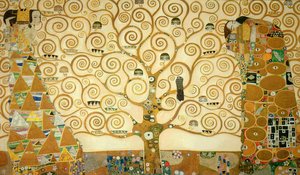
The Tree of Life - Gustav Klimt
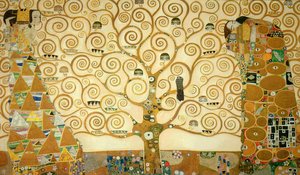 The Tree of Life - Gustav Klimt
Acquiring The Tree of Life by Gustav Klimt is far more than an aesthetic choice; it is a profound investment in a legacy of unparalleled taste. As a definitive pillar of the Vienna Secession, this 1909 masterpiece embodies the very soul of the Art Nouveau movement through its intricate, swirling motifs and organic vitality. The work’s immense historical influence and enduring market prestige—driven by Klimt's iconic "Golden Phase"—solidify its rightful position among the top ten masterpieces of all time. Through the meticulous layering of gold leaf and oil, Klimt creates a shimmering, tactile experience where light dances across gilded branches, symbolizing the eternal cycle of life. This sense of opulent grandeur finds a seamless resonance within modern luxury interiors. A high-quality reproduction carries the same commanding aesthetic authority and status, allowing the painting's luminous warmth and quiet prestige to serve as a sophisticated focal point in any contemporary space.
Beethoven Frieze; The Arts, Choir of Angels, Embracing Couple - Gustav Klimt
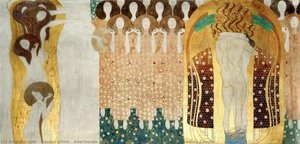 Beethoven Frieze; The Arts, Choir of Angels, Embracing Couple - Gustav Klimt
To stand before Gustav Klimt’s Beethoven Frieze is to witness a celestial procession where music and humanity converge in a gilded trance. This monumental work captures a profound sense of spiritual transcendence, as if the very soul of the Vienna Secession has been captured in a moment of divine ecstasy.
It earns its place among the definitive masterpieces of the Art Nouveau movement through its unparalleled fusion of Symbolism and decorative opulence; Klimt utilizes sinuous lines, intricate floral motifs, and a breathtaking palette of gold to transform a narrative of devotion into a rhythmic, visual symphony. The way the light seems to emanate from within the textured layers of the figures evokes an atmosphere of sacred mystery.
At Mus3ums, we believe such profound beauty should not be confined to museums. Our hand-painted oil reproductions meticulously preserve this tactile depth—from the delicate impasto brushstrokes to the luminous, metallic glow—allowing you to invite the transcendent spirit of Klimt’s golden era into your own space.
Water Serpents II (Bewegtes Wasser sfondo) - Gustav Klimt
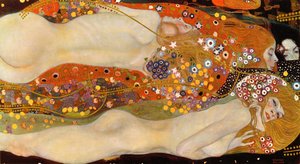 Water Serpents II (Bewegtes Wasser sfondo) - Gustav Klimt
In Water Serpents II (Bewegtes Wasser sfondo) , Gustav Klimt achieves a breathtaking mastery of light, where a warm, diffused glow seems to emanate from the very depths of the undulating water. The interplay between the luminous, golden serpentine forms and the soft shadows cast upon the reclining figure creates a mesmerizing chiaroscuro that defines the essence of the Art Nouveau movement. This command of illumination does more than just illuminate a scene; it breathes life into the symbolic, primal forces of nature, securing this work's place among the top 10 masterpieces of its era.
The way light dances across the thick, impasto textures invites a sensory immersion into Klimt’s dreamlike world. When brought into a contemporary interior, a faithful oil reproduction of this piece offers unparalleled depth and luxury. The visible brushstrokes and rich, tonal range transform a modern wall into a window of historical elegance, providing a sophisticated focal point that captures both light and imagination.
Music I - Gustav Klimt
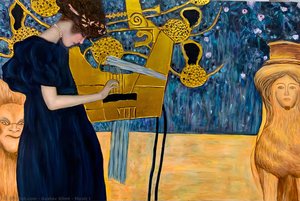 Music I - Gustav Klimt
What story does the swirling, ethereal environment in Music I by Gustav Klimt tell? Emerging from the transformative era of late 19th-century Symbolism, this 1895 masterpiece stands as a cornerstone of the Art Nouveau movement. Klimt broke traditional boundaries by weaving figurative grace with abstract, organic patterns, capturing the very essence of musical harmony and spiritual transcendence. The composition, rich with deep blues and radiant golds, pulls the viewer into a dreamlike state where the lines between reality and melody blur. For those seeking to curate an atmosphere of escape within modern interiors, this painting offers a profound sense of historical depth. Its rhythmic textures and flowing, curvilinear forms provide a sophisticated focal point, allowing collectors to invite a sense of timeless tranquility and artistic mystery into their most cherished spaces.
Poppy Field - Gustav Klimt
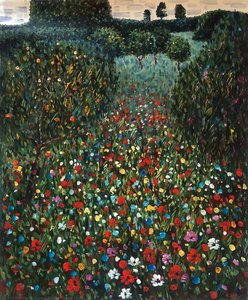 Poppy Field - Gustav Klimt
Gustav Klimt’s Poppy Field (1907) is a breathtaking explosion of color that captures the very heartbeat of the natural world. As one of the definitive masterpieces of the Art Nouveau movement, this work transcends mere landscape painting; it is an immersive sensory experience. Through thick, expressive impasto and a vibrant palette of crimson, gold, and azure, Klimt invites us into a lush, sun-drenched meadow that feels both alive and eternal.
The organic, flowing lines and the way the flowers surge through the dark hedge exemplify the movement's obsession with natural forms and rhythmic vitality. For the modern collector, this piece offers more than historical significance; its radiant energy and botanical abundance provide a perfect focal point for contemporary interiors, bringing a sense of tranquil luxury and organic warmth to any sophisticated space. It remains a timeless testament to the beauty found in life’s fleeting moments.
Judith - Gustav Klimt
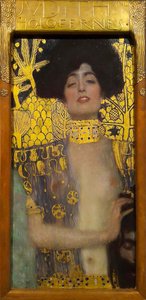 Judith - Gustav Klimt
In Judith by Gustav Klimt, the composition achieves a breathtaking equilibrium through the interplay of organic, curvilinear lines and dense, geometric ornamentation. The fluid silhouette of the central figure is masterfully balanced against a backdrop of intricate, shimmering patterns and gold leaf, creating a structural harmony that epitomizes the timeless perfection of the Art Nouveau movement. This meticulous arrangement of shapes—where soft, naturalistic forms meet rigid, decorative motifs—is what secures its place among the most enduring masterpieces in art history.
Beyond its historical significance, the artwork’s internal balance offers a striking parallel to modern minimalist design; its commanding presence acts as a sophisticated anchor, capable of grounding a clean, contemporary aesthetic with profound depth and symbolic richness. The golden textures and soft, diffused light invite a sensory journey, transforming any curated space into an encounter with the divine and the sensual.
Avenue of Schloss Kammer Park - Gustav Klimt
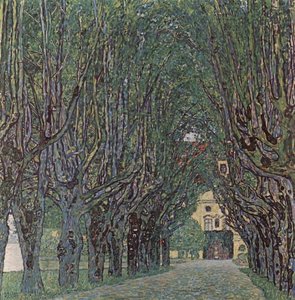 Avenue of Schloss Kammer Park - Gustav Klimt
A deep, verdant green dominates Avenue of Schloss Kammer Park by Gustav Klimt , immediately enveloping the viewer in a mood of profound tranquility and secluded peace. This mastery of a monochromatic-yet-complex palette—ranging from shadowy emerald to sun-drenched lime—is precisely why this work stands as one of the Top 10 Masterpieces That Defined the Art Nouveau Art Movement . Klimt utilizes a pointillist-inspired technique to create a shimmering, organic texture that breathes life into the vertical tree trunks and dappled light. For the modern interior, this painting serves as a sophisticated atmospheric anchor; its lush tones are ideal for calming a high-traffic living space or adding a sense of natural depth to a minimalist dining room. By introducing these cool, forest-like hues, decorators can curate an emotional lighting effect that feels both restorative and timeless, transforming a contemporary room into a private, sun-dappled sanctuary.
Conclusion
As the light fades on our journey through these Art Nouveau masterpieces, we are left with more than just images of flowing vines and rhythmic curves; we carry with us a renewed sense of how beauty can breathe life into the spaces we inhabit. These works are not merely relics of a bygone era, frozen in gilded frames, but living presences that continue to pulse with an organic energy, reminding us of the profound connection between the natural world and the human spirit. When we bring these motifs into our contemporary homes, we do more than decorate; we invite a timeless dialogue into our daily lives, allowing the elegance of the past to soften the edges of the modern world. Each line and every delicate petal serves as an echo of an eternal pursuit: the search for harmony, grace, and a deeper emotional resonance within our surroundings. To explore this full collection is to step back into that very rhythm, finding in every brushstroke a way to bridge the gap between history and the heartbeat of today.