A Pioneer of Abstraction: The Life and Legacy of Hilla Rebay
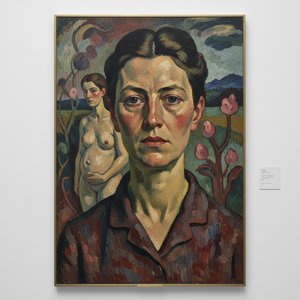
Hilla Rebay’s story is one of remarkable transformation, a journey from aristocratic beginnings in Strasbourg to becoming a pivotal figure in the burgeoning world of modern art. Born Hildegard Anna Augusta Elisabeth Freiin Rebay von Ehrenwiesen in 1890, she emerged not simply as an artist, but as a visionary who fundamentally reshaped the landscape of American art through her unwavering dedication to non-objective aesthetics and her profound connection with Solomon R. Guggenheim. Her early life, steeped in German tradition, provided a foundation for a spirit that would ultimately reject convention and embrace radical experimentation. From a young age, Rebay displayed an innate artistic sensibility, a desire to capture the essence of experience beyond mere representation – a seed that would blossom into her groundbreaking career.From Traditional Roots to Avant-Garde Visions
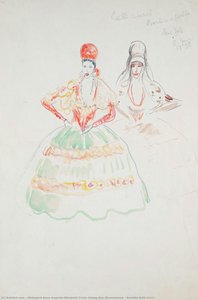
Rebay’s artistic education began in Cologne and Paris, where she honed traditional skills in landscape, portraiture, and history painting. However, it was her exposure to the vibrant energy of Munich in 1910 that truly ignited her creative fire. Here, amidst the burgeoning Jugendstil movement, she encountered Fritz Erler, whose work opened her eyes to the possibilities of modern abstraction. This encounter marked a decisive turning point, propelling her away from representational art and towards an exploration of pure form and color. She began exhibiting her work at the Cologne Kunstverein in 1912 and later gained recognition at the Salon des Indépendants in Paris in 1913, immersing herself in the circles of avant-garde artists like Archipenko, Brâncuși, and Chagall – figures who were already dismantling traditional artistic boundaries. This immersion wasn’t merely about absorbing new techniques; it was a profound intellectual and emotional shift, as Rebay grappled with the challenge of expressing inner experience without relying on external representation. She began to experiment with overlapping curved lines, planes, dots, and dense textures – a visual vocabulary that hinted at underlying energies and spiritual dimensions, reflecting her belief in art’s capacity to transcend the mundane.A Patronage Forged in Vision: Rebay and Solomon Guggenheim
The most significant chapter of Rebay's career unfolded in New York City, beginning in 1927. It was here that she encountered Solomon R. Guggenheim, a wealthy collector with an equally fervent passion for modern art. Their initial meeting sparked a remarkable partnership built on mutual respect and a shared belief in the transformative power of abstraction. Rebay quickly became Guggenheim’s trusted advisor, guiding his collecting endeavors and shaping what would become one of the most influential collections of modern art in the world. She tirelessly championed artists like Rudolf Bauer and Kandinsky, recognizing their genius and advocating for their inclusion in Guggenheim's holdings – a bold move at a time when abstract art was largely dismissed by the mainstream art establishment. This patronage wasn’t simply about acquiring artworks; it was an act of faith, a deliberate investment in the future of artistic expression. Rebay’s influence extended beyond mere acquisition; she actively fostered dialogue around non-objective art, organizing exhibitions and promoting its aesthetic principles to a wider audience. In 1939, her vision culminated in the founding of the Museum of Non-Objective Painting – later renamed the Solomon R. Guggenheim Museum – with herself as its inaugural director. This institution became a beacon for abstract artists, providing a platform for groundbreaking works and introducing American audiences to a radically new way of seeing.The Guggenheim: A Masterpiece of Architecture and Art
Rebay’s commitment to her vision was exemplified by her collaboration with Frank Lloyd Wright on the design of the museum building. Wright's spiraling structure, inaugurated in 1959, is as much a work of art as it is a repository for modern masterpieces. It perfectly embodies Rebay’s belief that architecture and art should be inextricably linked, creating an immersive experience for the viewer. The Guggenheim stands today not only as a testament to Wright's genius but also as a symbol of Rebay’s unwavering dedication to her artistic ideals – a physical manifestation of her vision for a world transformed by abstraction.A Lasting Impact: Legacy and Historical Significance
Despite facing personal challenges in later years, including a strained relationship with the Guggenheim family, Hilla Rebay's legacy remains profound. She was more than just an artist; she was a champion of non-objective art, a visionary curator, and a pivotal figure in shaping the course of modernism. Her tireless efforts to promote abstraction helped to legitimize this movement within the broader art world, paving the way for future generations of artists. Her influence extends far beyond her own artistic output, encompassing her role as advisor to Solomon Guggenheim, her founding of the Museum of Non-Objective Painting, and her commission of Frank Lloyd Wright – all of which contributed significantly to the development and recognition of modern art in America. Hilla Rebay’s story is a testament to the power of vision, dedication, and the transformative potential of art. She remains an enduring symbol of artistic courage and a pioneer who dared to challenge conventions and champion a new aesthetic language for the world.Vraag & Antwoord
In welke stad en welk land is Hilla von Rebay geboren?
Hilla von Rebay werd geboren in Straatsburg, in Frankrijk.
Waar komt Hilla von Rebay vandaan?
Hilla von Rebay werd geboren in Frankrijk.
In welke historische periode werkte Hilla von Rebay?
Hilla von Rebay werkte in de Moderne tijd-periode. Deze periode plaatst het oeuvre van de kunstenaar in een historisch kader.