A Life Bridging Worlds: The Enigmatic Baron László Mednyánszky
Baron László Mednyánszky, a figure shrouded in intriguing mystery and profound artistic sensitivity, emerged from the fading grandeur of the Austro-Hungarian Empire in 1852. He wasn’t merely a painter; he was a philosopher translating his observations into brushstrokes, an explorer charting the emotional landscapes of both nobility and peasantry, Hungary and Slovakia – a man perpetually caught between tradition and the burgeoning currents of modernity. His life unfolded against a backdrop of shifting political realities and artistic movements, marked by privilege intertwined with deep introspection, ultimately leaving behind a body of work that continues to resonate with its poignant beauty and philosophical depth. From his birth in a modest village within what is now Slovakia, Mednyánszky’s early years were shaped by exposure to both aristocratic life and the rugged landscapes of his homeland, experiences that would profoundly influence his artistic vision.An Artistic Journey Forged in Observation
Mednyánszky's artistic development wasn’t a conventional progression through established schools; instead, he cultivated a unique style largely independent of rigid doctrines. He absorbed influences—Impressionism’s handling of light and atmosphere, the grounded realism of observation—but remained fundamentally his own artist. Crucially, his extensive travels weren’t simply geographical shifts but intellectual and emotional voyages that reshaped his perspective. The landscapes surrounding his family estate at Strážky became more than just picturesque scenery; they transformed into symbolic representations of belonging, loss, and the enduring connection to a specific place. Yet, equally compelling were his encounters with those on the margins – peasants laboring in the fields, individuals etched by hardship, figures often overlooked by mainstream society. This empathetic gaze, coupled with an innate philosophical curiosity, fueled his desire to capture not just appearances but the very essence of his subjects—their place within the grand tapestry of existence. He sought to reveal the underlying truths of their lives, the quiet dignity found even in suffering, and the melancholic beauty inherent in the human condition. His formal training included lessons from Thomas Ender, a renowned landscape painter, and he later attended the Academy of Fine Arts in Munich and the École des Beaux-Arts in Paris, though his independent spirit led him to eventually break away from the Parisian institution after the death of his professor.Themes and Techniques: A Palette of Emotion
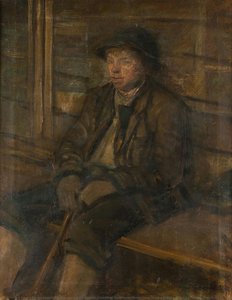
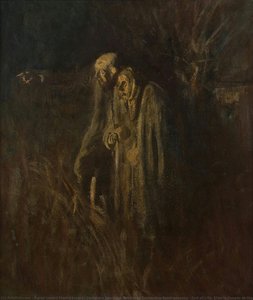
The art of Baron László Mednyánszky is characterized by a distinctive blend of styles and subject matter. Landscapes, portraits, and scenes drawn from Upper Hungarian/Slovak folklore form the core of his oeuvre. He possessed an exceptional ability to convey intense emotion through color and composition—as vividly demonstrated in *Flaming Landscape*, where fiery hues seem to mirror inner turmoil. Yet, even within moments of dramatic intensity, a sense of restraint prevails; his paintings rarely boast bombast but instead favor subtle nuances and atmospheric effects. His brushwork is expressive, sometimes loose and gestural, at other times meticulously detailed, reflecting the emotional weight of his subject matter. He frequently employed muted color palettes—dominated by grays, browns, and ochres—creating a mood of quiet contemplation. *The River Poprad at Strážky* exemplifies his landscape work, capturing not just the physical beauty of his homeland but also a sense of tranquility tinged with nostalgia. Perhaps most poignantly, works like *End of Life. Elderly Couple at Night* offer deeply moving depictions of human vulnerability and mortality, rendered with remarkable sensitivity and compassion. The recurring motif of the elderly couple, often depicted in moments of quiet reflection or shared sorrow, speaks to a universal theme of aging, loss, and the enduring power of love.Notable Works
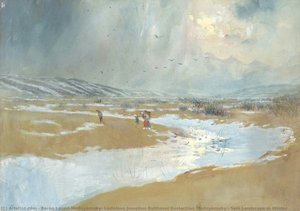
- The River Poprad at Strážky: A quintessential example of his landscape painting, capturing the serene beauty and tranquility of his homeland.
- Flaming Landscape: Demonstrates Mednyánszky’s ability to convey intense emotion through vibrant color and dynamic composition.
- End of Life. Elderly Couple at Night: A poignant and deeply moving depiction of human vulnerability, mortality, and the quiet dignity of aging.
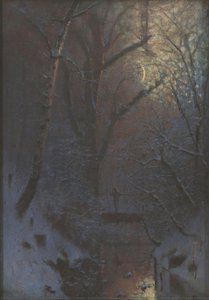
- Winter Night. Figure on the Bridge: Evokes a sense of solitude and contemplation through its atmospheric rendering of a winter landscape.
- Landscape with a Castle before a Storm: A dramatic portrayal of nature’s power, rendered in a Romantic and Symbolist style with rich impasto.
Legacy and Rediscovery: An Artist for His Time and Ours
Though not widely celebrated during his lifetime—a consequence perhaps of his unconventional lifestyle and refusal to conform to artistic norms—Baron László Mednyánszky is now recognized as one of the most significant figures in Hungarian art history. His unique vision, blending philosophical depth with artistic skill, set him apart from his contemporaries. He challenged conventional expectations by focusing on the lives of ordinary people and confronting difficult social issues. His work provides invaluable insights into the cultural and societal landscape of late 19th-century Hungary and Slovakia—a period marked by profound change and uncertainty. His paintings resonate with audiences today because they speak to universal human experiences – love, loss, suffering, and the search for meaning in a chaotic world. He remains an enigmatic figure, whose art invites contemplation and reflection, prompting us to look beyond the surface of things and consider the deeper truths that lie within. His legacy continues to grow as more scholars and art enthusiasts discover the power and beauty of his work, ensuring that this remarkable artist will be remembered for generations to come.Vraag & Antwoord
Waar komt László Mednyánszky vandaan?
László Mednyánszky werd geboren in Slowakije.
In welke historische periode werkte László Mednyánszky?
László Mednyánszky werkte in de 19e eeuw-periode. Deze periode plaatst het oeuvre van de kunstenaar in een historisch kader.
Waar en wanneer is László Mednyánszky geboren?
László Mednyánszky werd geboren in Beckov in 1852.