Early Life and Inspiration
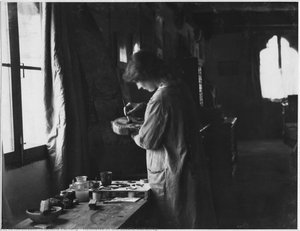
Mariano Fortuny, a name synonymous with theatrical innovation and opulent textiles, was born in Reus, Catalonia, Spain, on May 11, 1871. His early life was marked by profound loss – his father, Mariano Fortuny y Marsal, a respected genre painter, tragically passed away when the young boy was just three years old. This event spurred the family’s relocation to Paris, France, where his mother, a woman of considerable artistic sensibility, introduced him to the world of textiles and fabrics, an influence that would profoundly shape his future creative endeavors. From a remarkably young age, Fortuny demonstrated a prodigious talent for various art forms: he excelled in painting, photography, sculpting, architecture, etching, and even theatrical stage lighting design. His early years were steeped in artistic exploration, laying the foundation for his later revolutionary contributions.Artistic Talents and Revolutionary Inventions
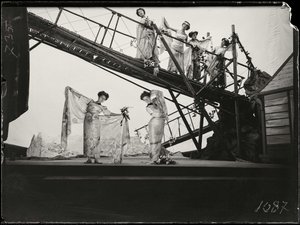
Fortuny’s artistic journey was characterized by a relentless pursuit of innovation. He quickly established himself as a skilled painter, demonstrating an ability to capture both realistic detail and evocative atmosphere. However, it was his inventive spirit that truly set him apart. Between 1901 and 1934, Fortuny patented over twenty groundbreaking inventions, fundamentally altering the landscape of theatrical design. Perhaps his most celebrated creation is the “fortuny cyclorama dome,” a quarter-dome structure constructed from plaster or cloth, ingeniously designed to diffuse light in a way that eliminated harsh shadows and created seamless transitions between scenes – a technique previously unattainable on stage. His treatise, "Eclairage Scenique" (1904), meticulously documented his revolutionary approach to lighting, detailing how reflecting light off various surfaces could dramatically alter its color, intensity, and overall effect. This wasn’t merely about illumination; it was about manipulating perception itself.Collaborations and Recognition
Fortuny's work gained significant recognition in the 1920s, catapulting him to international fame. He forged remarkable collaborations with some of the most influential figures of his time. Richard Wagner, the German composer whose operas deeply resonated with Fortuny’s artistic sensibilities, commissioned sets for the premiere of Tristan und Isolde at La Scala opera house in Milan, adapting his dome system to accommodate the theater's vast scale and even inventing a sophisticated suction fan mechanism to maintain the dome’s taut structure. His work was also celebrated by Gabriele D’Annunzio, who greatly admired Fortuny’s innovative approach to stage design. Fortuny’s influence extended beyond opera; he designed sets for numerous theatrical productions across Europe, establishing himself as a leading figure in the burgeoning field of Gesamtkunstwerk – a holistic artistic vision that sought to unify music, drama, and visual spectacle.Legacy and Lasting Influence
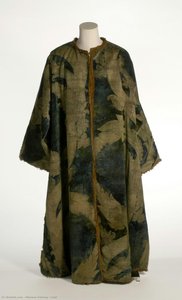
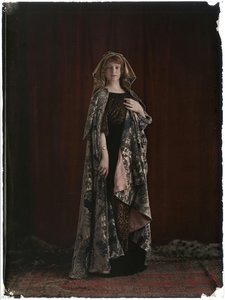
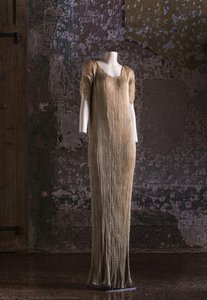
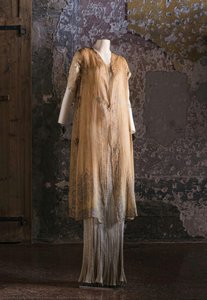
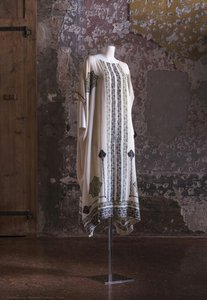
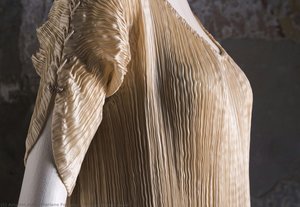
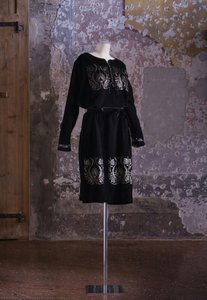
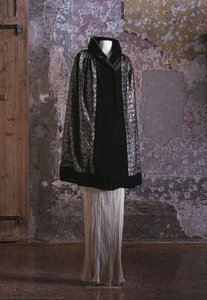
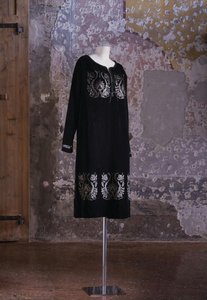
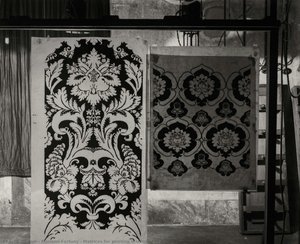
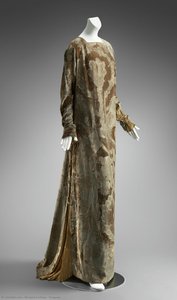
Mariano Fortuny passed away on May 3, 1949, in Venice, Italy, leaving behind a legacy that continues to inspire artists and designers today. His work profoundly influenced the French novelist Marcel Proust, who drew inspiration from Fortuny’s unique aesthetic vision. His life story was also depicted in Pere Gimferrer's novel "Fortuny," further cementing his place in cultural history. Beyond his theatrical innovations, Fortuny revolutionized the world of textiles, creating the iconic “Delphos gown,” a shimmering pleated silk creation that became a symbol of elegance and sophistication during the Art Deco era. His contributions to lighting design remain foundational, demonstrating a profound understanding of color theory, reflection, and the power of light to shape perception. Explore more about Mariano Fortuny’s inventions and designs at Mus3ums's collection – a testament to his enduring legacy as a true visionary artist.Vraag & Antwoord
In welke stad en welk land is Mariano Fortuny geboren?
Mariano Fortuny werd geboren in Reus, in Spanje.
In welke historische periode werkte Mariano Fortuny?
Mariano Fortuny werkte in de Moderne tijd-periode. Deze periode plaatst het oeuvre van de kunstenaar in een historisch kader.
Onder welke pseudoniemen of andere namen is Mariano Fortuny bekend?
Mariano Fortuny staat ook bekend als Marià Fortuny i Marsal, Marià Fortuny i de Madrazo.