


Introduction
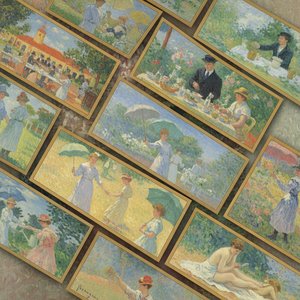
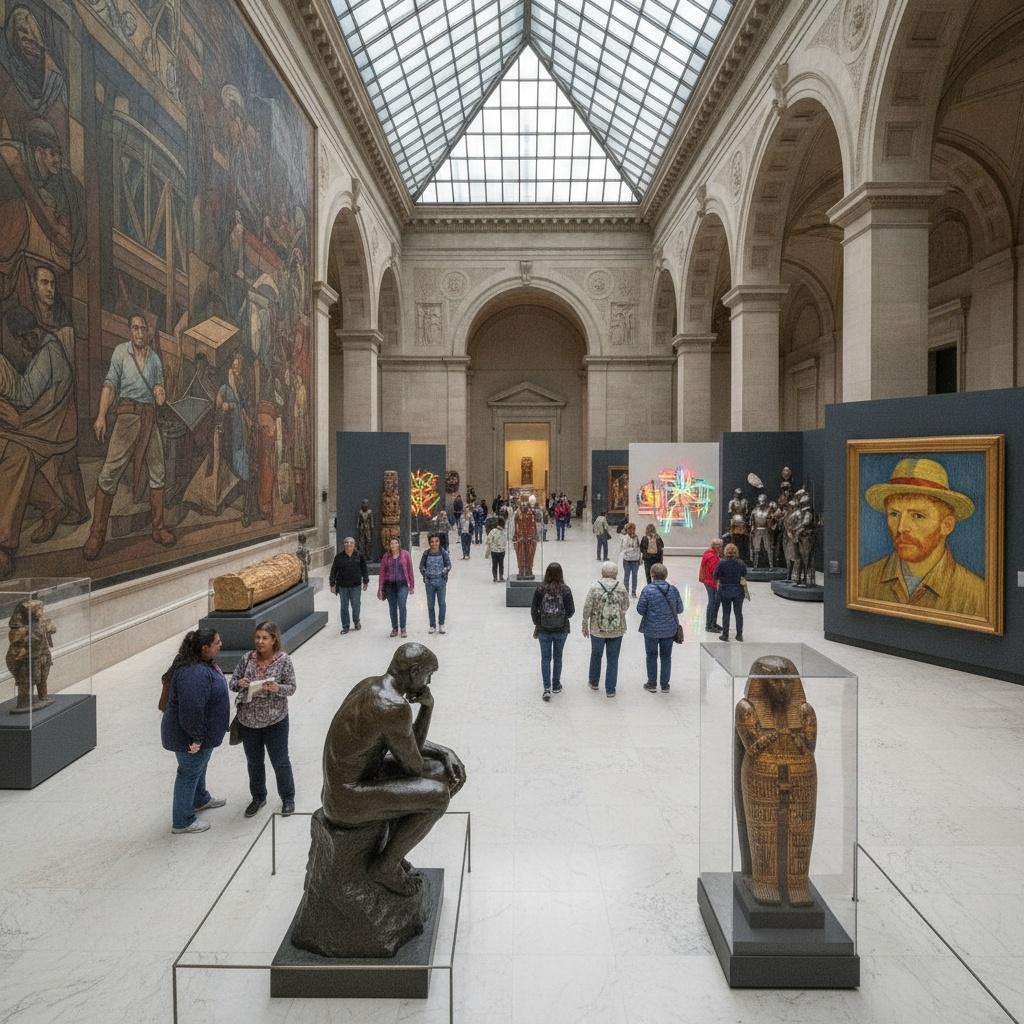
To step into the Detroit Institute of Arts is to enter a sanctuary where the industrial pulse of a great American city meets the eternal, soft whispers of human creativity. Within these soaring Beaux-Arts walls, sculpted from pristine white marble, time seems to slow, allowing the light—so carefully curated by Paul Philippe Cret—to dance across canvases that have survived decades of change. The DIA is far more than a museum; it is a living chronicle of resilience, a place where the grit of Detroit’s history finds its most delicate expression through the brushstrokes of masters.
As you wander through the grand galleries, you find yourself caught in a beautiful tension between the local and the universal. The collection breathes with the spirit of a city that has always looked outward to the world while remaining deeply rooted in its own soil. From the shimmering, light-drenched landscapes that evoke the fleeting beauty of a summer afternoon to the profound, emotive depths of European portraiture, each piece serves as a bridge between eras. These works remain profoundly meaningful today because they do not merely depict history; they capture the very essence of the human condition—our triumphs, our sorrows, and our enduring capacity to find light in the shadows.
In this curated journey, we invite you to linger among the masterpieces that define this institution. We have selected twenty-five extraordinary works that embody the soul of the Detroit Institute of Arts—pieces that resonate with a sensory richness, from the delicate textures of Impressionist light to the powerful narratives of cultural heritage. Let us begin our walk through these halls, discovering the treasures that continue to inspire, move, and illuminate the heart of Detroit.
The Nightmare - johann heinrich füssli
 The Nightmare - johann heinrich füssli
In The Nightmare by Johann Heinrich Füssli, a profound and heavy midnight indigo dominates the canvas, casting a somber, suffocating shroud over the scene that immediately pulls the viewer into a state of nocturnal unrest. This masterful use of deep, shadowy tones is precisely why this work stands as one of the top 25 artworks in Detroit Institute of Arts, Detroit ; Füssli does not merely paint a scene, he orchestrates an atmosphere of pure, visceral dread. The way the darkness clings to the reclining figure, contrasted sharply by the pale, vulnerable light hitting her skin, creates a theatrical chiaroscuro that is nothing short of hypnotic.
For those looking to curate a sophisticated yet dramatic interior, this painting offers unparalleled inspiration. Integrating a reproduction of such a moody palette can transform a modern dining room or a quiet study into a space of intense emotional depth. By echoing its dark browns and bruised blues through accent textures or soft, low-light lighting, you can evoke the same sense of mystery and sublime tension that makes this masterpiece an eternal icon of the Romantic movement.
Selene and Endymion - Nicolas Poussin
 Selene and Endymion - Nicolas Poussin
In the hallowed halls of the Detroit Institute of Arts, few works command a silence as profound as Selene and Endymion by Nicolas Poussin. To stand before this masterpiece is to step out of the industrial rhythm of Detroit and into a celestial dreamscape where time itself seems to pause. Poussin, a master of the French Baroque, invites us into an intimate, moonlit encounter between the lunar goddess and her beloved shepherd, Endymion.
The painting breathes with a serene, sculptural grace; there is no chaotic movement here, only the soft, luminous glow of moonlight guiding the eye across a landscape of mythic tranquility. Through his masterful use of chiaroscuro , Poussin sculpts light and shadow to create a sense of eternal stillness, capturing the very moment beauty meets immortality. It is not merely a depiction of Greek myth, but a sensory meditation on the sublime. For those who seek to surround themselves with genius, this work serves as a reminder that art is a gateway to the infinite, transforming any space into a true gallery of the soul.
Judith and Her Maidservant with the Head of Holofernes - Artemisia Gentileschi
 Judith and Her Maidservant with the Head of Holofernes - Artemisia Gentileschi
To stand before Artemisia Gentileschi’s Judith and Her Maidservant with the Head of Holofernes is to feel the very air thicken with tension and the scent of iron and candlelight. One does not merely observe this scene; one breathes in the visceral, pulse-pounding moment of a hero's triumph. As the shadows of Caravaggio’s tenebrism dance across the canvas, we witness Judith’s resolute face illuminated against the dark, her strength a luminous defiance against the brutality of the night.
This masterpiece earns its place among the top 25 artworks in the Detroit Institute of Arts because it transcends biblical narrative to become a profound study of human agency and resilience. The dramatic interplay of the vibrant yellow silk and the deep, blood-red drapery captures a psychological depth that remains startlingly modern. In our own hurried lives, encountering such raw, unfiltered emotion reminds us of the power of courage. Bringing the spirit of such transformative drama into our homes allows us to surround ourselves with stories of strength, turning a simple space into a sanctuary of profound meaning and historical grace.
Self Portrait II - Joan Miró
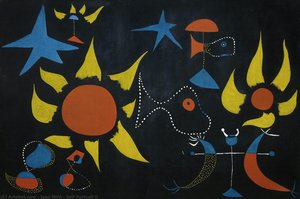 Self Portrait II - Joan Miró
In the quiet corridors of the Detroit Institute of Arts, Self Portrait II by Joan Miró exists as a vibrant window into the subconscious, where the boundaries between dream and reality softly dissolve. This masterpiece secures its place among the top 25 artworks in the Detroit Institute of Arts, Detroit, because it transcends mere representation to offer a profound, emotional encounter with the artist's inner cosmos.
The canvas breathes with a tactile, pulsating energy; Miró’s use of thick impasto creates a sculptural landscape where deep midnight blacks dance against luminous canary yellows. One can almost feel the rhythmic pulse of the celestial symbols—the radiant sun and scattered stars—that drift through an expanse punctuated by sudden, electric splashes of crimson. It is a visual poem of organic forms and geometric precision. For the modern collector, bringing the spirit of this work into a contemporary interior offers more than just decoration; it introduces a sophisticated, dynamic movement that inspires wonder and a sense of infinite, cosmic possibility.
Guerre Civile - Édouard Manet
 Guerre Civile - Édouard Manet
In the quiet corridors of the Detroit Institute of Arts, one encounters a work that does not merely depict conflict, but breathes its very tension. In Guerre Civile by Édouard Manet, the lines aren’t simply drawn; they are choreographed . This lithograph is not a static composition; it is a dance frozen in time , capturing the visceral, monochromatic heartbeat of Paris following the Franco-Prussian War and the Paris Commune.
Manet utilizes a stark, evocative palette of deep blacks and luminous whites to navigate a landscape of upheaval. The composition feels beautifully unstable, mirroring the societal fractures of 1871. As your eyes wander through the heavy hatching and gestural strokes, you feel the weight of the fallen figures and the ruggedness of the debris. It is a masterclass in making chaos feel like harmony. What if your own living room could hold that same profound balance? What if your walls could breathe rhythm through the raw, emotional depth of such an iconic masterpiece?
Young Man with Cap - Amedeo Clemente Modigliani
 Young Man with Cap - Amedeo Clemente Modigliani
To stand before Amedeo Modigliani’s Young Man with Cap is to encounter a profound, quiet intensity that lingers long after you turn away. As one of the most arresting pieces within the Detroit Institute of Arts collection, this portrait transcends mere likeness, offering instead a window into the fractured soul of the post-War era. There is a haunting mystery in the subject's gaze—an arresting directness that feels both intimate and deeply alienated.
Modigliani masterfully weaves a dialogue between Expressionism and the geometric discipline of Cubism , stretching the features into elegant, elongated forms that define his iconic aesthetic. The palette, a somber arrangement of ochre, deep browns, and midnight blacks, creates a heavy, contemplative atmosphere. Through thick, tactile impasto brushstrokes, the artist breathes life into the canvas, making the background feel as much a part of the subject's emotional landscape as his face. In our modern age of digital fragmentation, this painting remains a vital cultural touchstone, reminding us of the enduring power of human introspection and the beauty found in melancholy.
Rowing Boats on the Banks of the Oise - vincent willem van gogh
 Rowing Boats on the Banks of the Oise - vincent willem van gogh
In Rowing Boats on the Banks of the Oise , Vincent van Gogh captures a fleeting moment of summer serenity, where light and water dance in a rhythmic, eternal embrace. As one of the most breathtaking treasures within the Detroit Institute of Arts , this masterpiece stands among the top 25 artworks because it transcends mere scenery; it is a visceral experience of color and movement. The canvas breathes with the energy of Post-Impressionism, featuring bold, thick brushstrokes that lend a tactile life to the vibrant blues, lush greens, and sun-drenched yellows of the riverbank.
One can almost feel the gentle ripple of the Oise and the warmth of a late 19th-century afternoon. The figures in the boats are not just subjects, but notes in a visual symphony of leisure and light. For the modern collector, bringing the spirit of this work into a home offers more than decoration; it introduces a sense of profound tranquility and sophisticated vitality. It is a window into a soul that found immense beauty in the simple, sunlit rhythms of everyday life.
The Wedding Dance - Pieter Bruegel the Elder
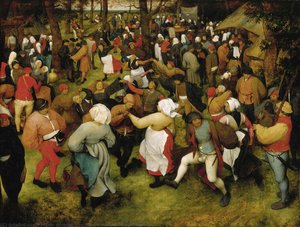 The Wedding Dance - Pieter Bruegel the Elder
There is a pulse in The Wedding Dance by Pieter Bruegel the Elder that follows you—not with judgment, but with a profound, rhythmic understanding of human joy. As one of the most captivating treasures within the top 25 artworks in Detroit Institute of Arts, Detroit , this masterpiece acts less like a window and more like a mirror . It reflects our own capacity for celebration, communal warmth, and the beautiful chaos of shared existence.
Bruegel invites us into a rustic Flemish landscape where the air feels thick with the sounds of musicians and the rustle of embroidered gowns. Through masterful chiaroscuro , light dances across the faces of the guests, illuminating textures of sturdy coats and expressive, lively gazes. To witness this work in person is to feel the heartbeat of the Northern Renaissance; to bring its spirit into your home is to be reminded that you are part of a much larger, timeless story of human connection.
Melancholy Woman - Pablo Picasso
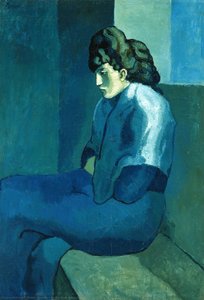 Melancholy Woman - Pablo Picasso
To stand before Pablo Picasso’s Melancholy Woman is to encounter a profound, quiet ache that transcends the decades. Painted during his formative Parisian years, this work captures a universal moment of introspection; the subject’s downward gaze and the muted, somber palette of blues and browns invite us into her private world of sorrow and stillness. It holds its place among the top 25 artworks in the Detroit Institute of Arts because it serves as a haunting bridge between naturalism and the dawn of modern experimentation.
The painting’s emotional resonance lies in its ability to make the viewer feel the weight of solitude, much like the soft, diffused light that bathes the figure. At Mus3ums.com, we believe such evocative beauty should not be confined to museum walls. Our master artists meticulously recreate the texture and soulful depth of Picasso’s brushwork on 100% cotton canvas, ensuring that the heavy, melancholic atmosphere of this masterpiece can bring a sense of cultured, contemplative grace into your own home.
Two Diggers Among Trees - vincent willem van gogh
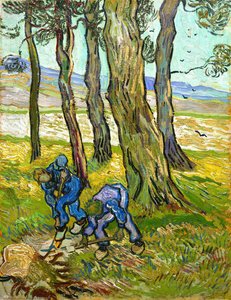 Two Diggers Among Trees - vincent willem van gogh
In the quiet corners of the Detroit Institute of Arts, one finds a profound stillness within Vincent van Gogh’s Two Diggers Among Trees . Painted in 1889 during his time at Saint-Rémy, this masterpiece does not merely depict manual labor; it captures a soulful, rhythmic connection to the earth. As you gaze upon the heavy, impasto brushstrokes, you feel the weight of the dark soil and the gentle melancholy of the figures. The earthy palette of deep greens and browns is punctuated by sudden, luminous flickers of blue and yellow, mirroring the artist's own turbulent yet deeply felt bond with nature.
This work stands as a cornerstone among the top 25 artworks in Detroit Institute of Arts, Detroit, because it serves as a universal mirror for our own moments of solitude and purpose. Bringing the textured, emotional resonance of Van Gogh’s Post-Impressionist vision into your own home can transform a personal sanctuary into a space for profound reflection. It is an invitation to find beauty in the humble, allowing the vibrant, swirling energy of his technique to breathe life and quiet prestige into your living space.
Portrait of a Bearded Man - Titian Ramsay Peale II
 Portrait of a Bearded Man - Titian Ramsay Peale II
In the quiet corners of the Detroit Institute of Arts, Portrait of a Bearded Man by Titian Ramsay Peale II stands as a profound meditation on dignity and the weight of wisdom. Though Peale was an American artist born into a legacy of scientific observation, this work breathes with the soul of the High Renaissance. The subject, captured in a moment of deep contemplation, possesses an arresting gaze that seems to pierce through the centuries, inviting us into his silent world.
The painting is a masterclass in chiaroscuro ; dramatic light spills across the man’s weathered features and flowing beard, casting deep, velvety shadows that lend the composition an almost sculptural presence. Clad in dark, heavy fabrics, he holds a rolled parchment—a subtle symbol of learning and intellect. To encounter this piece is to witness a lineage of taste where classical precision meets emotional depth. Owning such a legacy isn't merely a purchase; it is an inheritance of beauty, bringing the museum’s timeless atmosphere directly to your own walls.
Annunciatory Angel - Fra Angelico
 Annunciatory Angel - Fra Angelico
To stand before Fra Angelico’s Annunciatory Angel within the Detroit Institute of Arts is to step into a moment of breathless, sacred silence. This is not merely a painting; it is a luminous whisper from the early Renaissance. The scene unfolds with an exquisite economy of movement, where the angel’s hand rests delicately upon Mary’s lips—a gesture that captures the profound weight of a secret too holy for words. One can almost feel the stillness of the room, anchored by a simple chair bathed in a soft, diffused light that seems to emanate from the divine itself.
Executed in tempera on panel, the work possesses a pearlescent glow that only the master could achieve. The subtle, shimmering layers of pigment create a depth that invites the soul to linger, tracing the delicate blush of Mary’s cheek and the ethereal sheen of celestial wings. In this masterpiece, Fra Angelico transforms a religious encounter into a sensory experience of grace, making it a cornerstone of the DIA’s magnificent collection.
The Execution of Maximilian - Édouard Manet
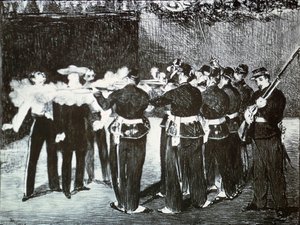 The Execution of Maximilian - Édouard Manet
What if I told you that The Execution of Maximilian by Édouard Manet was born from a moment of profound rebellion—a stroke of defiance against the romanticized illusions of his era? Standing within the Detroit Institute of Arts, this monochrome masterpiece does not merely depict a historical tragedy; it breathes with a chilling, palpable tension. Manet strips away the distraction of color to focus our souls on the stark, dramatic interplay of light and shadow, capturing the very heartbeat of political upheaval.
Its inclusion in the top 25 artworks at the DIA is essential, as it represents the pivotal bridge between Realism and the dawn of Impressionism. Through masterful tonal gradations, Manet transforms a scene of imperial collapse into an eternal study of human gravity. At Mus3ums.com, we believe such profound emotional depth should not be confined to museum walls. Imagine this hauntingly beautiful composition as a centerpiece in your own sanctuary—a sophisticated statement piece that turns any room into a space of deep reflection and timeless, cultured elegance.
Au Prado - Édouard Manet
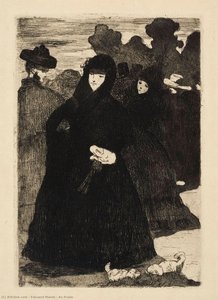 Au Prado - Édouard Manet
In the quiet corridors of the Detroit Institute of Arts, Édouard Manet’s Au Prado offers a hauntingly beautiful window into a vanished Paris. This 1869 etching serves as a profound masterclass in monochrome, capturing the rhythmic pulse of street life through a lens of understated elegance. While many celebrate the vibrant, sun-drenched canvases of his Impressionist peers, this work reveals Manet’s ability to find deep emotion within the interplay of black ink and stark light. It stands among the top 25 artworks in Detroit for its quiet rebellion; by focusing on the humble movements of pedestrians beneath a sheltering umbrella, Manet stripped away academic pretension to reveal the raw, honest beauty of the everyday.
The piece possesses a graphic, sophisticated texture that resonates deeply with modern minimalist aesthetics. The delicate hatching and cross-hatching create a sense of depth that feels remarkably contemporary, making it an inspiration for those who appreciate high-contrast, architectural design in their own homes. To behold Au Prado is to experience the soul of the Belle Époque—a moment of contemplative stillness captured amidst the shifting tides of history.
Moonmad - Max Ernst
 Moonmad - Max Ernst
In the presence of Max Ernst’s Moonmad , one is immediately struck by the dramatic interplay of light and shadow that dances across its metallic surface. The way light catches the stylized ridges of the face, casting deep, cavernous shadows within the open mouth, creates a haunting chiaroscuro effect that breathes life into the bronze. This masterful command of illumination does more than define form; it captures that precise, breathless moment of psychological shock, securing its place among the top 25 artworks in the Detroit Institute of Arts, Detroit .
As you stand before this Surrealist marvel, the shadows seem to whisper of the subconscious, pulling you into a realm of dreamlike uncertainty. For the discerning collector, bringing the essence of such a work into a home offers a profound opportunity. A faithful, hand-painted reproduction that honors these intense tonal contrasts can introduce a sense of theatrical depth and sophisticated mystery to a contemporary wall, transforming a simple space into a sanctuary of contemplative luxury and artistic wonder.
Le Crotoy, Upstream - Georges Seurat
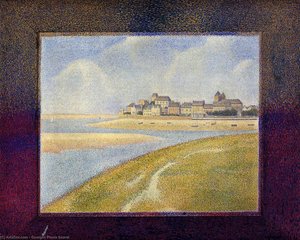 Le Crotoy, Upstream - Georges Seurat
In Le Crotoy, Upstream by Georges Seurat, we encounter a masterclass in structural harmony that secures its place among the top 25 artworks in the Detroit Institute of Arts, Detroit. Seurat orchestrates the coastal landscape through a delicate geometry; the horizontal expanse of the shimmering water meets the soft, vertical presence of distant figures and boats, creating a balanced composition that feels both expansive and intimately contained. This meticulous arrangement of shapes—the rhythmic placement of vessels against the sun-drenched shoreline—achieves a sense of timeless perfection that transcends the fleeting moment it captures.
The painting’s internal equilibrium offers a profound connection to modern minimalist design. Just as contemporary aesthetics rely on clean lines and intentional negative space to ground a room, Seurat’s controlled use of Pointillism provides a structured, serene foundation. The way the light dances across the blue and ochre dots creates a luminous texture that feels incredibly fresh, making this Neo-Impressionist treasure an ideal inspiration for bringing a sophisticated, tranquil, and contemporary soul into a modern home.
Nocturne in Black and Gold, The Falling Rocket - James Abbott McNeill Whistler
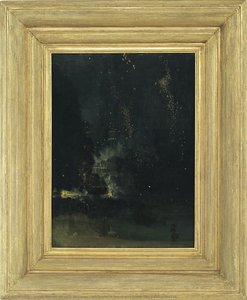 Nocturne in Black and Gold, The Falling Rocket - James Abbott McNeill Whistler
To stand before Nocturne in Black and Gold, The Falling Rocket by James Abbott McNeill Whistler is to witness a moment of pure, atmospheric alchemy. As one of the most profound treasures within the Detroit Institute of Arts , this masterpiece transcends mere representation, offering instead a sensory immersion into the ephemeral beauty of light and shadow. Whistler, a pioneer of the Aesthetic movement, moves us away from the heavy narratives of his era toward a philosophy of "art for art's sake," where the subject is not the rocket itself, but the shimmering, transient glow it leaves in its wake.
The painting’s dramatic interplay of deep, velvety blacks and luminous gold washes creates a rhythmic pulse that feels remarkably contemporary. For the discerning collector, this work embodies a refined, modern luxury; its tonal harmony and evocative depth possess a timeless elegance that anchors any sophisticated interior. It remains a cornerstone of the top 25 artworks in Detroit Institute of Arts, Detroit , reminding us that true art does not seek to instruct, but to enchant through the sheer magic of color and mood.
Mosquito Nets - John Singer Sargent
 Mosquito Nets - John Singer Sargent
In Mosquito Nets , John Singer Sargent invites us into a sanctuary of quietude, where the very air seems heavy with the scent of afternoon repose. To stand before this masterpiece is to witness the breathtaking delicacy of his brushwork; he eschews the bravado of thick impasto for translucent, ethereal layers that mimic the gossamer weight of the netting itself. One can almost feel the tactile softness of the cream-colored fabrics and the subtle, rhythmic texture of the cushions as light filters through the room in a diffused, pearlescent glow. This mastery of light and shadow—capturing the gentle drape of fabric over resting figures—is precisely why this work remains a cornerstone among the top 25 artworks in the Detroit Institute of Arts, Detroit.
At Mus3ums.com, we believe such sensory magic should not be confined to museum walls. Our mission is to preserve this three-dimensional soul for your own collection. Through our hand-painted oil reproductions, we recreate every delicate stroke and luminous layer, ensuring the physical depth and emotional intimacy of Sargent’s vision are brought vividly into the heart of your home.
Saint Jerome in His Study - Jan van Eyck
 Saint Jerome in His Study - Jan van Eyck
Step into the quiet, amber-hued sanctuary of Jan van Eyck’s Saint Jerome in His Study , where the flickering candlelight seems to dance even centuries later. As one of the most profound treasures within the Detroit Institute of Arts, this masterpiece invites you into a world of profound stillness and intellectual devotion. Van Eyck, a pioneer of the Early Netherlandish style, utilizes his revolutionary mastery of oil glazes to create a luminous depth that feels almost tactile; you can sense the weight of the parchment and the soft, heavy texture of the saint's robes.
The scene is a sensory marvel—the subtle shadows tracing Jerome’s weathered face, the meticulous detail of scattered scrolls, and the silent, watchful presence of the lion resting nearby. This painting does more than depict a scholar; it captures the very essence of contemplation. In our modern, hurried lives, bringing the spirit of such a work into one's home can serve as a powerful anchor for reflection, offering a window of serene, light-drenched beauty that inspires a slower, more mindful way of being.
The Four-Leaf Clover - Winslow Homer
 The Four-Leaf Clover - Winslow Homer
In Winslow Homer’s 1873 watercolor, The Four-Leaf Clover , a soft, luminous verdant green dominates the scene, casting a mood of profound tranquility and renewal. This gentle palette, paired with the delicate light filtering through the garden window, showcases why this work is a cornerstone among the top 25 artworks in the Detroit Institute of Arts, Detroit. Homer’s mastery lies in his ability to use watercolor to capture subtle gradations of light, turning a simple moment of a young girl admiring blossoms into an ethereal experience of American pastoral beauty.
For the discerning collector looking to curate a modern sanctuary, this painting offers exquisite inspiration. The soothing greens and floral accents can serve as a cornerstone for emotional lighting in a sun-drenched reading nook or a serene dining room, bringing a sense of organic peace to contemporary interiors. Much like the Impressionist masters we adore at Mus3ums.com, Homer uses color to evoke nostalgia and hope, making this piece a timeless guide for creating spaces that breathe with life and quiet joy.
Berthe Morisot - Édouard Manet
 Berthe Morisot - Édouard Manet
In the quiet corridors of the Detroit Institute of Arts, Édouard Manet’s Berthe Morisot lingers like a soft, whispered memory. This monochrome masterpiece does more than capture a likeness; it distills the very essence of Parisian intimacy and the contemplative soul of a woman who was herself a pioneer of the Impressionist movement. As one of the top 25 artworks in the Detroit Institute of Arts collection, this portrait stands as a profound testament to the era's shifting social tides, moving away from rigid academicism toward a more fluid, emotional realism.
Manet utilizes a muted, tonal palette that emphasizes light and shadow over vibrant color, creating a sense of timeless elegance that feels remarkably modern. The delicate interplay between the floral backdrop and Morisot’s downward gaze evokes a serene, introspective mood—a visual poetry that resonates deeply with contemporary lovers of minimalist design and understated luxury. For those seeking to bring a sense of historical grace into a home, the painting's soft textures and sophisticated monochrome tones offer an unparalleled inspiration for creating a space of quiet reflection and cultured beauty.
Marine - Édouard Manet
 Marine - Édouard Manet
To gaze upon Marine by Édouard Manet is to feel the salt spray and the restless energy of a wind-swept harbor, where the boundaries between sea and sky seem to dissolve into light. As we journey through the top 25 artworks in the Detroit Institute of Arts, this masterful etching stands as a profound testament to the dawn of modernism. Manet does not merely depict boats; he captures the very pulse of movement, using delicate aquatint and bitten tones to mimic the shimmering, turbulent surface of the water.
This work earns its place among the museum's treasures through its raw, honest portrayal of life, eschewing academic perfection for a fleeting, sensory truth. The rhythmic struggle of the sailors against the elements serves as a timeless metaphor for human resilience. At Mus3ums, we believe such profound beauty should not be confined to distant galleries. Through our high-fidelity, hand-painted oil reproductions, you can bring this transformative presence and the evocative spirit of Manet into your own home or personal gallery, allowing his luminous, dynamic energy to breathe life into your everyday surroundings.
Maternity - Pierre-Auguste Renoir
 Maternity - Pierre-Auguste Renoir
In the quietude of Pierre-Auguste Renoir’s "Maternity," we are invited into a sanctuary of profound intimacy, where the frantic pace of the world dissolves into a single, breathless moment. As one of the most cherished treasures within the Detroit Institute of Arts , this work serves as a breathtaking testament to maternal devotion. The composition centers on a woman cradling her infant, her gaze drifting toward an unseen horizon in a reverie of love. Renoir’s mastery is found in his ability to manipulate light; it does not simply strike the subjects but seems to emanate from within them, creating a luminous, velvety atmosphere that softens every edge.
Beyond its visual splendor, this piece captures the very essence of the Impressionist spirit—the ephemeral beauty of life and continuity. For those who seek to surround themselves with genius, "Maternity" offers more than mere decoration; it provides an emotional anchor. To possess such a work is to transform a room into a gallery of the soul , bringing the tender, shimmering light of Renoir into the heart of your own home.
Louis Valtat - Pierre-Auguste Renoir
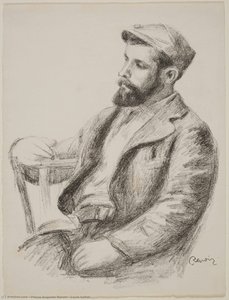 Louis Valtat - Pierre-Auguste Renoir
Before the vibrant, sun-drenched canvases of his later years captured the world's imagination, Pierre-Auguste Renoir possessed a profound ability to find soul within the shadows. In his 1904 portrait of Louis Valtat , housed within the prestigious collection of the Detroit Institute of Arts, we encounter a rare, monochromatic intimacy. This is not the Renoir of shimmering light, but a master of quiet introspection. Using only the delicate interplay of charcoal and pencil, Renoir captures his protégé in a moment of heavy, melancholic repose—his chin resting on his hand, lost in thought.
The technical brilliance lies in the rhythmic hatching and soft, diffused light that breathes life into the grayscale palette, creating a sense of volume without a single drop of pigment. This study of form and emotional depth serves as a powerful reminder of the discipline required to master the essence of a subject. Much like this evocative work, bringing such a focused, contemplative energy into a modern home office or private study can foster an atmosphere of profound creativity and sophisticated calm, allowing one to find brilliance in the quietest moments of reflection.
Detroit Industry: East Wall - Diego Rivera
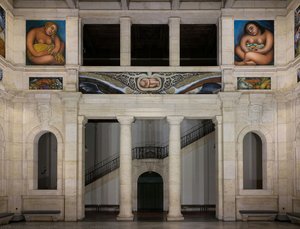 Detroit Industry: East Wall - Diego Rivera
To stand before Diego Rivera’s Detroit Industry: East Wall is to witness a monumental dialogue between the pulse of human labor and the rhythmic roar of the machine. As one of the most profound pieces among the top 25 artworks in Detroit Institute of Arts, Detroit, this fresco transcends mere historical documentation; it is a soulful, sweeping epic of industrial optimism forged during the shadows of the Great Depression. Rivera utilizes the luminous, enduring fresco technique to weave a tapestry of fiery reds and deep, mechanical blues, capturing the very heat of the furnace and the grit of the assembly line.
The mural’s philosophical depth lies in its celebration of symbiosis—the way human ingenuity and technological advancement dance together in a choreographed display of progress. In an era today often defined by digital detachment, Rivera’s visceral depiction of physical toil and collective solidarity remains a poignant cultural talking point. He invites us to find beauty in the gears and grace in the worker, reminding every visitor that the heart of any great civilization beats within the hands of those who build it.
Conclusion
As the golden hour descends upon the Beaux-Arts marble of the Detroit Institute of Arts, leaving long, soft shadows across its grand halls, one realizes that we do not merely leave a building; we step away from a conversation that has been unfolding for centuries. The masterpieces we have wandered through today—from the shimmering, light-drenched landscapes of Monet to the raw, emotive brushstrokes of Van Gogh—are far more than static relics of a bygone era. They are living, breathing presences. They carry within their layers of oil and pigment the very essence of human resilience, joy, and longing, continuing to whisper their secrets to anyone willing to listen.
These works do not belong solely to the quiet corridors of Detroit; they belong to the soul of the modern world. They possess a remarkable ability to transcend time, finding new life when they grace our private sanctuaries, transforming a simple room into a space of profound contemplation and warmth. Whether it is the tactile depth of an impasto stroke or the delicate dance of light on a canvas, these paintings remain vital forces that shape our interiors and inspire our deepest creativity.
To walk among them is to be reminded that beauty, much like the spirit of Detroit itself, is enduring. As you carry the memory of these colors and textures with you, we invite you to continue this journey of discovery and bring a piece of this timeless elegance into your own home by exploring our full collection . May the light of these masters forever illuminate your path.