
The History and Origins of Cliveden
Cliveden is an English country house and estate situated on a terrace high above the Thames. Located in Buckinghamshire on the border with Berkshire, the site is currently under the care of the National Trust. The landscape comprises gardens and woodlands overlooking the river, occupying a ridge of the Chiltern Hills.
The history of the estate is marked by successive reconstructions following significant loss. The first mansion was built by William Winde about 1674-7, but this structure was destroyed by fire in 1795. A second mansion, designed by William Burn between 1827 and 1830, was subsequently lost to fire in 1849. The current Italianate villa was built between 1850 and 1851 for the Duke of Sutherland.
By the early 20th century, the estate transitioned into a significant political and literary centre. During this period, the house hosted various influential figures, including the 2nd Viscount Astor and his wife, Nancy Astor. The residence became a focal point for social and political gatherings that shaped much of the era's discourse.
The Architecture of the Italianate Villa
The current three-storey Italianate villa was built between 1850 and 1851 for the Duke of Sutherland. This structure replaced two earlier mansions on the site, the first of which was constructed around 1674 and the second in 1827. The house is a Grade 1 listed building, encompassing the main residence, the surrounding gardens, and the woodlands. It sits on a terrace positioned high above the Thames.
In the 1890s, the interior underwent significant alterations directed by Frank Pearson for William Waldorf Astor. These modifications introduced an opulent panelled hall and a study. The dining room retains a distinct character through its Rococo boiseries by Nicolas Pineau. These architectural elements reflect the evolving tastes of the estate's successive residents.
The Cliveden Set and Social History
During the 1930s, Cliveden functioned as a central meeting point for an influential group of British figures known as the Cliveden set. This circle was centered around the 2nd Viscount Astor and his wife, Nancy Astor. As the first woman to take her seat in the House of Commons, Nancy Astor brought a significant political dimension to the estate's social gatherings. The house became a venue where the political and intellectual elite converged, often shaping the course of British foreign policy during the period preceding the Second World War.
The social life of the estate extended beyond politics into the literary and intellectual spheres. The Astors hosted a variety of prominent figures, including Winston Churchill, Henry James, and Rudyard Kipling. These gatherings established Cliveden as a significant cultural hub in the early 20th century. The atmosphere of these high-society meetings later provided the inspiration for the fictional Darlington Hall in the 1989 novel The Remains of the Day.
Masterpieces of the Collection
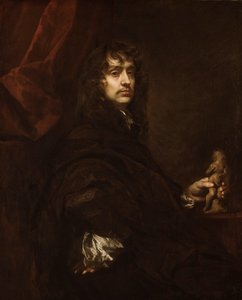
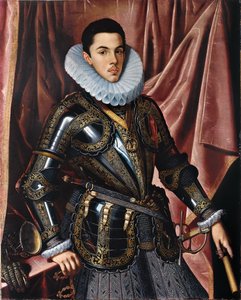
The collection at Cliveden contains significant portraiture that reflects the lineage and social connections of the estate. John Singer Sargent’s portrait of Mrs. Waldorf Astor (Nancy Langhorne), painted about 1908, remains a central work. It is accompanied by several historical figures, including Juan Pantoja de la Cruz’s 1609 depiction of Maria Anna of Hapsburg, Infanta of Spain, later Archduchess of Austria and Holy Roman Empress and Queen of Hungary. Other notable portraits include Peter Lely’s 1667 representation of Lady Anna Maria Brudenell, Countess of Shrewsbury (1642-1702), and François Jouvenet’s 1700 work, formerly identified as Louis-Auguste de Bourbon, duc de Maine (1670–1736).
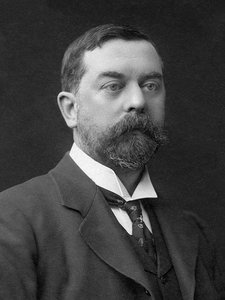
The holdings also include works by Thomas Hudson, such as his portraits of Augusta Of Saxe-gotha and Frederick Louis. Hubert von Herkomer’s portrait of William Waldorf Astor is held alongside William Corden’s 1849 depiction of Lady Harriet Elizabeth Georgiana Howard, Duchess of Sutherland (1806 – 1868), which was executed after the original by Franz Xaver Winterhalter.