
A Living Tapestry of Science and Artistry
To step into the realm of the Zoological Society of London is to enter a profound dialogue between the empirical rigor of science and the evocative beauty of the natural world. Established in 1826, this venerable institution has long served as more than a mere repository for biological specimens; it is a sanctuary where the Victorian spirit of discovery meets the modern imperative of conservation. The Society’s legacy is etched into the very fabric of London, rooted in an era when scientific curiosity was inextricably linked to artistic expression. From its inception by luminaries such as Sir Stamford Raffles, the ZSL has curated a narrative that celebrates the intricate wonders of biodiversity, inviting visitors to witness the majesty of life through both the lens of the researcher and the eye of the artist.
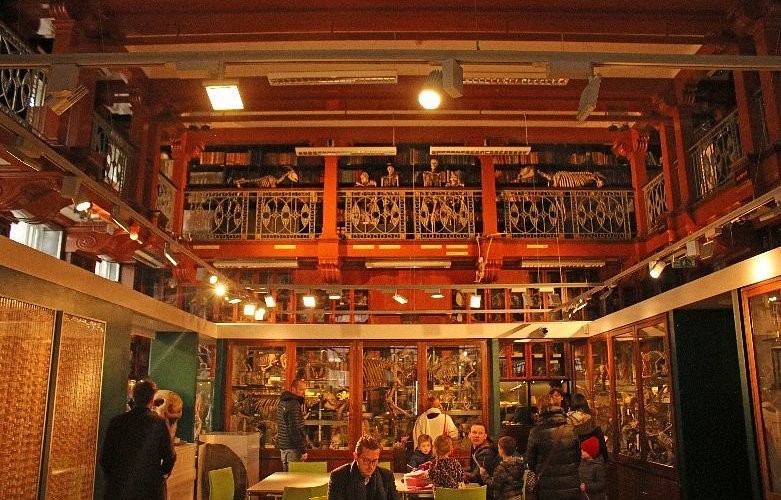
The collection itself is an unparalleled archive of global heritage, boasting over 185,000 specimens that tell the story of evolution, genetics, and the shifting landscapes of our planet. Yet, the true magic of the ZSL lies in how these scientific treasures are presented through a lens of aesthetic splendor. The archives are graced by the exquisite precision of illustrators like John Gould, whose legendary Birds of Australia captured the vibrant plumage and delicate forms of avian life with such breathtaking detail that they became foundational to our understanding of natural history. Similarly, the evocative depictions of reptiles and amphibians by Joseph Wolf remind us that documenting biodiversity is, at its heart, an act of profound artistic devotion. For the collector or lover of fine art, these works represent a pinnacle of scientific illustration, where every stroke of the brush serves the dual purpose of anatomical accuracy and aesthetic enchantment.
The architecture of the Society’s iconic sites offers a physical journey through design history, blending Victorian grandeur with the bold strokes of modernism. At London Zoo in Regent’s Park, one encounters a fascinating juxtaposition of styles, most notably seen in the Penguin Pool . Designed by Berthold Lubet and the Tecton Group in 1934, this structure stands as a masterpiece of International Modernist architecture, its clean lines and functional elegance serving as a symbol of the avant-garde movement in Britain. This architectural dialogue is further enriched by works such as Sir Hugh Maxwell Casson’s 1971 record drawing for the Elephant and Rhinoceros Pavilion. Through his masterful use of watercolor and gouache, Casson captures the meticulous planning and aesthetic sensibilities of zoological design, offering a window into a period where even the most utilitarian enclosures were approached with an eye for form and texture.
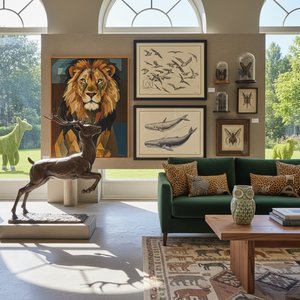
For the interior designer or art enthusiast seeking to bring a sense of organic wonder into a space, the ZSL’s influence provides endless inspiration. The institution continues to foster contemporary artistic voices, such as PD Dr. Mark Oliver Rödel, whose vibrant paintings of amphibians breathe new life into the tradition of natural history art. This enduring connection between the biological and the beautiful ensures that the Zoological Society of London remains a vital cultural landmark. It is a place where the meticulous record drawings of the past meet the vivid, contemporary celebrations of life, creating a continuous loop of inspiration that honors our planet's interconnected ecosystems and the artists who strive to immortalize them.