

The History and Origins of Woburn Abbey
Located east of the village of Woburn in Bedfordshire, England, Woburn Abbey possesses a lineage that stretches back to the twelfth century. The site was founded as a Cistercian abbey in 1145. This monastic existence continued until 1538, when the Cistercian community was dissolved by Henry VIII. Following this dissolution, the estate transitioned into the hands of the Russell family. By 1547, the property had become the seat of the Russell family and the Dukes of Bedford.
The house remains the family seat of the Duke of Bedford. As a Grade I listed building, the structure carries the weight of its long-standing occupation. The site has evolved from its religious foundations into a significant country house, maintaining its presence through centuries of continuous stewardship by the same lineage.
The Architecture and Evolution of the Estate
The foundations of the estate trace back to the construction by William Russell, 1st Baron Russell of Thornhaugh. The site underwent a significant transformation around 1630, when Francis Russell, 4th Earl of Bedford, undertook the first rebuilding of the manor house upon the monastic site. This period established the core structure that would evolve through the centuries. Later, between 1787 and 1790, the estate underwent further rework directed by Henry Holland.
The interior complexity of the house is reflected in its many spaces, including more than twenty drawing rooms. These rooms have survived various changes to the building's footprint. Following the discovery of dry rot after the Second World War, the physical scale of the Abbey was altered, and half of the building was demolished. Despite these losses, the remaining structure maintains its presence as the family seat of the Duke of Bedford.
The Art Collections of the Abbey
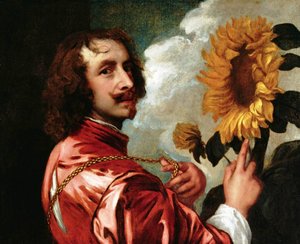
The interior of the house once contained more than twenty drawing rooms, some of which were dedicated entirely to specific collections. These spaces held significant groupings of works by Joshua Reynolds, Canaletto, and Anthony van Dyck. The presence of these paintings suggests a curated environment where art was integrated into the very fabric of the living quarters. The scale of the estate's holdings was vast, extending beyond the walls of the manor to include a collection of thirty cars.
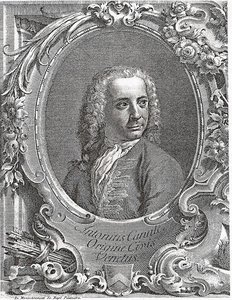
The works of Canaletto are particularly prominent within the holdings. His depictions of Venetian scenes provide a sense of light and architectural precision that defines much of the estate's visual character. Standing before these canvases, one encounters the specific atmosphere of the Italian landscape brought into the English countryside. The collection also features the portraiture of Anthony van Dyck, whose brushwork captures the likenesses of the era with a particular stillness.
- Portrait of Marguerite, princess of Lorraine, 1634 - Anthony van Dyck
- View on the Grand Canal from the Palazzo Balbi to the Bridge of Rialto, 1730 - Canaletto
- Boaz, 1643 - Rembrandt
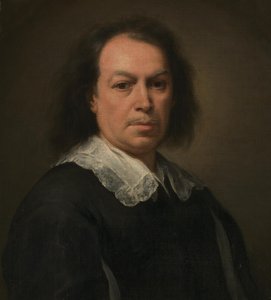
- The Virgin and Child, 1680 - Bartolomé Esteban Murillo
- A Country Festival near Antwerp - David Teniers the Younger
- Parade with Easter Ox in a village, 1700 - Abraham van Calraet
Notable Visitors and Historical Use
The estate has hosted significant figures throughout its history. In April 1786, John Adams and Thomas Jefferson visited the grounds. Their presence coincided with a period of considerable architectural and landscape refinement. Later, in March 1939, Henry Channon observed the estate, noting its well-kept state shortly before the outbreak of war.
During the Second World War, the Abbey took on a functional role beyond its life as a family seat. From 1941, the site functioned as the headquarters for the Political Warfare Executive. This organization operated its London offices from the BBC's Bush House. The use of the Abbey during this period reflects the shifting priorities of the country during the conflict.


