
The Sacrifice of IphigeniaCharles André van Loo · 1757
 Acrylic On Canvas
- WallArt
- Rococo
 1757
1757 Museu Metropolitano de Arte
A Moment Frozen in Time: Charles-André van Loo’s “The Sacrifice of Iphigenia”
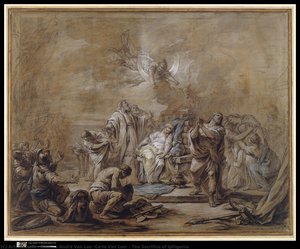
Charles-André van Loo's "The Sacrifice of Iphigenia," painted in 1757, is more than just a depiction of a tragic myth; it’s a masterclass in Baroque drama rendered with the elegance and meticulous detail characteristic of the Rococo style. Housed within The Metropolitan Museum of Art, this gouache on canvas transports us to a pivotal moment – the agonizing farewell of Agamemnon and his daughter Iphigenia before her sacrifice to appease Artemis. Van Loo doesn’t simply illustrate the event; he captures its emotional weight with an almost unbearable intensity, utilizing light, gesture, and composition to draw the viewer into the heart of the scene.
Rococo Grandeur and Baroque Intensity
Van Loo, a member of a distinguished artistic dynasty originating in the Netherlands, firmly established himself within the French court as a leading Rococo painter. However, “The Sacrifice of Iphigenia” transcends mere decorative elegance; it’s infused with the heightened drama and emotionalism often associated with Baroque painting. The composition is meticulously balanced – a vast, open space dominated by the figures, creating a sense of both grandeur and vulnerability. Notice how Van Loo employs diagonal lines, particularly in the positioning of Iphigenia and Agamemnon, to heighten the tension and direct our gaze towards the impending tragedy.
The use of color is equally significant. The cool blues and greens of the background contrast sharply with the warm tones of the figures’ clothing, emphasizing their isolation and highlighting the emotional turmoil within the scene. The subtle gradations of light and shadow – a hallmark of Baroque technique – create a sense of depth and volume, lending a palpable realism to the figures and their surroundings.
Symbolism and Mythological Resonance
The painting is steeped in symbolism, drawing upon the rich tapestry of Greek mythology. Iphigenia’s sacrifice represents a profound loss—the price of victory, the necessity of appeasing the gods, and the heartbreaking fate of innocence. The presence of the angel, a recurring motif in depictions of sacrificial scenes, underscores the divine judgment at play. Agamemnon's posture – his head bowed, hand raised in a gesture of despair – speaks volumes about his grief and acceptance of this terrible necessity. Even the details, such as the bowl and vase held by some figures, contribute to the narrative, hinting at rituals and offerings associated with Artemis.
A Window into 18th-Century French Court Life
Beyond its mythological subject matter, “The Sacrifice of Iphigenia” offers a glimpse into the artistic conventions and social dynamics of 18th-century France. Van Loo’s meticulous attention to detail—the elaborate costumes, the richly furnished background, the carefully rendered faces—reflects the opulence and sophistication of the French court. The painting served as both a historical record and a demonstration of artistic skill, intended to impress patrons and secure commissions. It's a testament to Van Loo’s ability to seamlessly blend classical mythology with the prevailing aesthetic sensibilities of his time.
Today, reproductions of “The Sacrifice of Iphigenia” continue to captivate viewers with their dramatic intensity and emotional resonance. Whether adorning a grand salon or a more intimate space, this painting serves as a powerful reminder of the enduring themes of sacrifice, loss, and the complex relationship between humanity and the divine.
Charles André van Loo (1705 – 1765)
Descubra o "Retrato da Princesa Amalia van Solms" de Rembrandt! Uma obra-prima da luz e sombra, que revela a nobreza e a alma de uma figura histórica marcante.
Museu Metropolitano de Arte (New York, United States of America)
Explore o Met! Descubra 5 mil anos de arte mundial: egípcia, grega, europeia e moderna. Uma jornada cultural imperdível em Nova York!
Sobre esta obra
- Título: The Sacrifice of Iphigenia
- Artista: Charles André van Loo
- Ano: 1757
- Formato: Landscape
- Status dos direitos autorais: Domínio público
- Onde ver: Museu Metropolitano de Arte
- Movimento: Rococo
- Contexto do corpus: family legacy, van loo dynasty
- Finalidade: Accent
- Palavras-chave: sacrifice, tragedy, charles van loo
Detalhes Rápidos
- Notable elements: Angel figure present
- Subject or theme: Greek mythology
- Medium: Gouache on canvas
- Artistic style: Rococo
- Location: Metropolitan Museum, NYC
Perguntas e Respostas
De que forma o estilo de "The Sacrifice of Iphigenia" se relaciona com a época de seu criador?
"The Sacrifice of Iphigenia" pertence ao movimento Rococo, e seu criador trabalhou na era Idade Moderna Inicial.
A obra "The Sacrifice of Iphigenia" de Charles André van Loo, pertencente ao acervo do Museu Metropolitano de Arte, pode ser reproduzida legalmente?
A obra original "The Sacrifice of Iphigenia" encontra-se no Museu Metropolitano de Arte, e a obra está em em domínio público - seus direitos autorais expiraram.
Para qual ambiente "The Sacrifice of Iphigenia" de Charles André van Loo é recomendado, considerando as suas cores?
Considerando as suas cores Earthy, "The Sacrifice of Iphigenia" é sugerida para um(a) Living Room.