A Life Forged in Flight: The World of Adriaen Pietersz van de Venne
Adriaen Pietersz van de Venne, a name resonating with the vibrant energy of the Dutch Golden Age, was more than just a painter; he was a visual storyteller, a social commentator, and a versatile artist who navigated the complex currents of 17th-century life. Born in Delft in 1589, his very origins were steeped in upheaval. His parents, fleeing religious persecution in the Southern Netherlands, instilled within him a sense of displacement that perhaps fueled his keen observation of societal fractures and human foibles. This early experience shaped not only his artistic vision but also his commitment to using art as a mirror reflecting the world around him—its joys, its sorrows, and its often-pointed ironies. Van de Venne’s education began in Leiden, where he immersed himself in the intellectual ferment of the university town, acquiring a grounding in Latin that would later serve him well in understanding classical allegories and humanist thought. His formal artistic training commenced with Simon de Valk, a master goldsmith and painter, followed by an apprenticeship with Jeronimus van Diest, honing his skills in the delicate art of grisailles—monochrome paintings executed in shades of gray, a technique that would become a hallmark of his style.From Allegory to Everyday Life: A Developing Artistic Voice
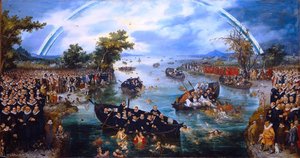
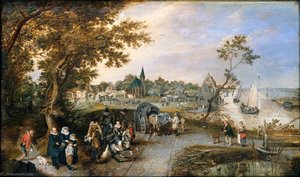
Van de Venne’s artistic journey began to truly unfold with his move to Middelburg in 1614. Here, he encountered the powerful influence of Jan and Pieter Bruegel the Elder, whose depictions of peasant life and allegorical scenes resonated deeply with his own burgeoning sensibilities. It was during this period that he created Fishing for Souls, a strikingly symbolic work commenting on the religious conflicts tearing through Europe during the Eighty Years’ War. This early masterpiece demonstrated an ability to translate complex political and theological ideas into compelling visual narratives, establishing him as an artist with something important to say. The painting powerfully illustrates the struggle between faith and reason, using biblical imagery—fishing nets representing divine providence—to convey a profound moral message about the consequences of spiritual indifference. He wasn’t merely recording life; he was interpreting it through a lens of satire and social critique. This formative experience cemented his belief that art should serve as a vehicle for conveying ethical considerations and fostering intellectual engagement.A Master of Many Trades: Beyond the Canvas
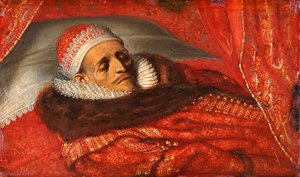
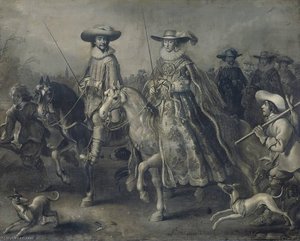
Van de Venne's talents extended far beyond painting. Throughout his career, he actively worked as a book illustrator and print designer, contributing to the flourishing literary scene of the Dutch Golden Age. This versatility was not unusual for artists of the time, but Van de Venne distinguished himself through the quality and inventiveness of his work in multiple mediums. He quickly rose through the ranks of the Guild of Saint Luke, eventually serving as its dean in 1637. This position underscored his standing within the art world and allowed him to advocate for the interests of fellow artists—a testament to his dedication to professionalizing the field and upholding artistic standards. His involvement with Confrerie Pictura exemplifies this commitment, demonstrating a desire to elevate artistic discourse and foster collaborative endeavors amongst creatives. Furthermore, he secured commissions from Frederik Hendrik, the Dutch stadholder, executing portraits and historical paintings that showcased his mastery of both formal portraiture and grand-scale narrative painting—a remarkable achievement reflecting his ambition and skill.The Gripaille Technique: A Signature Style
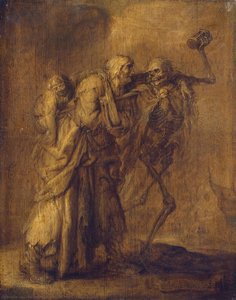
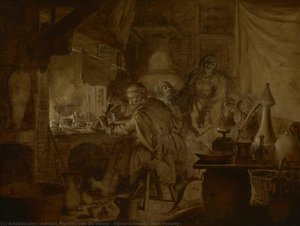
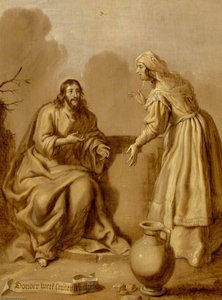
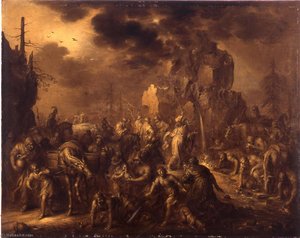
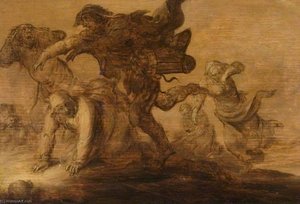
Van de Venne’s distinctive artistic style is characterized by his masterful use of grisailles—monochrome paintings executed in shades of gray. This technique, favored by Bruegel and other artists of the era, demanded exceptional precision and subtlety. Unlike color palettes that rely on visual vibrancy, grisailles focused on conveying emotion and psychological depth through tonal variations—creating a mood of solemn contemplation or highlighting dramatic contrasts. The resulting images possessed an austere beauty, emphasizing form and composition over ornamentation. This stylistic choice wasn’t merely aesthetic preference; it reflected Van de Venne's intellectual engagement with humanist thought and his desire to explore the expressive potential of monochrome painting. His grisailles often depict biblical scenes or mythological narratives, imbued with symbolic meaning—a hallmark of Renaissance artistic tradition adapted to the sensibilities of the Dutch Golden Age.Legacy and Lasting Influence
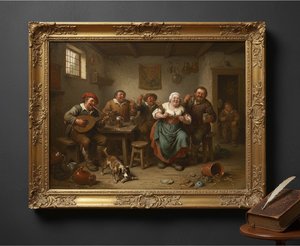
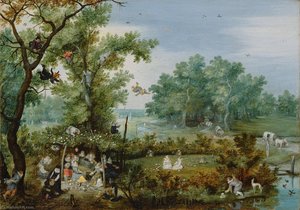
Adriaen Pietersz van de Venne’s artistic legacy is multifaceted. He was a master of allegory, genre scenes, portraits, grisailles, and satirical works—a true polymath of the Dutch Golden Age. His paintings offer invaluable insights into the social, religious, and political landscape of his time, providing a nuanced perspective on the complexities of 17th-century life. While perhaps not as widely celebrated today as some of his contemporaries like Rembrandt or Vermeer, Van de Venne’s influence persisted well after his death in The Hague in 1662. His use of grisailles and genre scenes continued to inspire artists for generations, and his satirical commentary on human nature remains relevant even now. He left behind a body of work that is not only aesthetically pleasing but also historically significant—a testament to his skill, his intellect, and his unwavering commitment to capturing the spirit of his age. His contribution to Dutch art solidified his place as one of the era’s foremost visual thinkers, ensuring that his artistic vision would endure for centuries to come.Întrebări și răspunsuri
De unde este Adriaen Pietersz van de Venne?
Adriaen Pietersz van de Venne s-a născut în Olanda.
Care sunt locul și anul nașterii lui Adriaen Pietersz van de Venne?
Adriaen Pietersz van de Venne s-a născut în Delft, în anul 1589.
Ce pseudonime sau alte nume este cunoscut Adriaen Pietersz van de Venne?
Adriaen Pietersz van de Venne apare sub numele alternative Adriaen Van De Venne.