
The Sacrifice of IphigeniaCharles André van Loo · 1757
 Acrylic On Canvas
- WallArt
- Rococo
 1757
1757 Muzeul Metropolitan de Artă
A Moment Frozen in Time: Charles-André van Loo’s “The Sacrifice of Iphigenia”
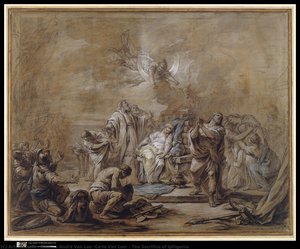
Charles-André van Loo's "The Sacrifice of Iphigenia," painted in 1757, is more than just a depiction of a tragic myth; it’s a masterclass in Baroque drama rendered with the elegance and meticulous detail characteristic of the Rococo style. Housed within The Metropolitan Museum of Art, this gouache on canvas transports us to a pivotal moment – the agonizing farewell of Agamemnon and his daughter Iphigenia before her sacrifice to appease Artemis. Van Loo doesn’t simply illustrate the event; he captures its emotional weight with an almost unbearable intensity, utilizing light, gesture, and composition to draw the viewer into the heart of the scene.
Rococo Grandeur and Baroque Intensity
Van Loo, a member of a distinguished artistic dynasty originating in the Netherlands, firmly established himself within the French court as a leading Rococo painter. However, “The Sacrifice of Iphigenia” transcends mere decorative elegance; it’s infused with the heightened drama and emotionalism often associated with Baroque painting. The composition is meticulously balanced – a vast, open space dominated by the figures, creating a sense of both grandeur and vulnerability. Notice how Van Loo employs diagonal lines, particularly in the positioning of Iphigenia and Agamemnon, to heighten the tension and direct our gaze towards the impending tragedy.
The use of color is equally significant. The cool blues and greens of the background contrast sharply with the warm tones of the figures’ clothing, emphasizing their isolation and highlighting the emotional turmoil within the scene. The subtle gradations of light and shadow – a hallmark of Baroque technique – create a sense of depth and volume, lending a palpable realism to the figures and their surroundings.
Symbolism and Mythological Resonance
The painting is steeped in symbolism, drawing upon the rich tapestry of Greek mythology. Iphigenia’s sacrifice represents a profound loss—the price of victory, the necessity of appeasing the gods, and the heartbreaking fate of innocence. The presence of the angel, a recurring motif in depictions of sacrificial scenes, underscores the divine judgment at play. Agamemnon's posture – his head bowed, hand raised in a gesture of despair – speaks volumes about his grief and acceptance of this terrible necessity. Even the details, such as the bowl and vase held by some figures, contribute to the narrative, hinting at rituals and offerings associated with Artemis.
A Window into 18th-Century French Court Life
Beyond its mythological subject matter, “The Sacrifice of Iphigenia” offers a glimpse into the artistic conventions and social dynamics of 18th-century France. Van Loo’s meticulous attention to detail—the elaborate costumes, the richly furnished background, the carefully rendered faces—reflects the opulence and sophistication of the French court. The painting served as both a historical record and a demonstration of artistic skill, intended to impress patrons and secure commissions. It's a testament to Van Loo’s ability to seamlessly blend classical mythology with the prevailing aesthetic sensibilities of his time.
Today, reproductions of “The Sacrifice of Iphigenia” continue to captivate viewers with their dramatic intensity and emotional resonance. Whether adorning a grand salon or a more intimate space, this painting serves as a powerful reminder of the enduring themes of sacrifice, loss, and the complex relationship between humanity and the divine.
Charles André van Loo (1705 – 1765)
Descoperă arta lui Charles-André van Loo (Carle van Loo), pictor rococo influent în Franța secolului XVIII. Celebrare eleganță și detalii bogate în portrete, scene mitologice și aristocrație! Vizualizează operele sale originale pe Mus3ums!
Muzeul Metropolitan de Artă (New York, United States of America)
Descoperă Metropolitan Museum of Art din NYC! O călătorie de 5000 de ani prin artă, de la artefacte egiptene la picturi impresioniste. Un muzeu global ce inspiră și fascinează!
Detalii despre această operă
- Titlu: The Sacrifice of Iphigenia
- Artist: Charles André van Loo
- An: 1757
- Format: Landscape
- Statutul drepturilor de autor: Domeniu public
- Unde poate fi văzută: Muzeul Metropolitan de Artă
- Mișcare artistică: Rococo
- Contextul corpusului: family legacy, van loo dynasty
- Scopul: Accent
- Cuvinte cheie: sacrifice, tragedy, charles van loo
Detalii rapide
- Notable elements: Angel figure present
- Subject or theme: Greek mythology
- Medium: Gouache on canvas
- Artistic style: Rococo
- Location: Metropolitan Museum, NYC
Întrebări și răspunsuri
Cum se încadrează stilul operei „The Sacrifice of Iphigenia” în contextul epocii creatorului său?
„The Sacrifice of Iphigenia” aparține mișcării Rococo, iar creatorul său a activat în epoca Epoca modernă timpurie.
Poate fi reprodusă în mod legal opera "The Sacrifice of Iphigenia" de Charles André van Loo, aflată la Muzeul Metropolitan de Artă?
Originalul „The Sacrifice of Iphigenia” se află la Muzeul Metropolitan de Artă, iar opera este în domeniul public - drepturile de autor au expirat.
Pentru ce cameră este recomandată "The Sacrifice of Iphigenia" de Charles André van Loo, având în vedere culorile sale?
Având în vedere culorile din Earthy, recomandăm pentru "The Sacrifice of Iphigenia" o Living Room.