



Origins and History of the Cathedral
The Cathedral of St Bavo is located in Gent, Belgium. Its foundations rest upon the site of the former Chapel of St. John the Baptist, a structure consecrated in 942 by Transmarus, Bishop of Tournai and Noyon. While the current edifice is primarily Gothic, traces of a Romanesque structure remain visible within the cathedral's crypt.
The transition to the present Gothic building began around 1274. This period of construction saw the expansion of the religious site as the city grew. The old Abbey of St. Bavo was dissolved in 1539 following a rebellion against Charles V. Following this dissolution, the church underwent significant changes in its ecclesiastical status. When the Diocese of Ghent was founded in 1559, the church became a cathedral.
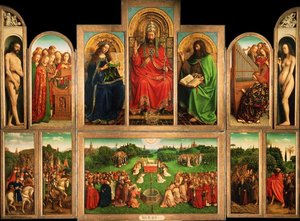
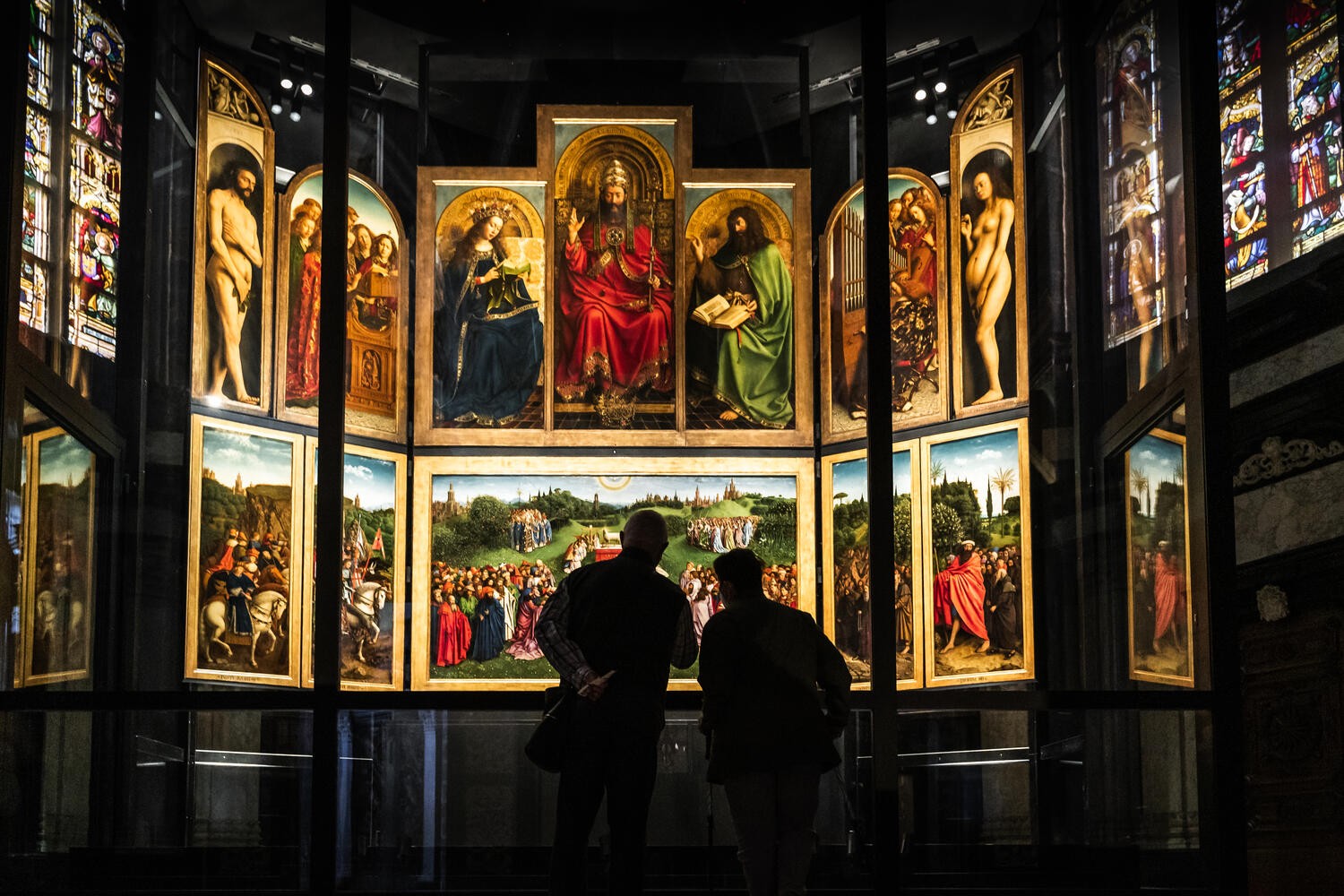
The construction of the Gothic church was considered complete on 7 June 1569. Throughout its history, the building has survived various religious upheavals, including the iconoclasm of 1566. During these raids, many artworks were destroyed, though the Ghent Altarpiece was spared. The cathedral remains an active place of worship and a repository for significant religious art.
The Architecture and Building Styles
The structure of the Cathedral of St Bavo reflects a layered history of construction and adaptation. While the current 89-metre-tall Gothic building serves as the seat of the Diocese of Ghent, its foundations reach back much further. In the crypt, one finds the physical traces of the earlier Romanesque structure. This architectural progression moves from the solid, grounded forms of the Romanesque period into the verticality of the Gothic era. The soaring nave is defined by ribbed vaults that direct the eye upward, a characteristic feature of the Gothic style. The western façade provides a dramatic display of Gothic power through its imposing scale and design.
The interior contains a deliberate accumulation of different aesthetic periods. The architectural narrative transitions from the medieval foundations into the more ornamental Baroque exuberance found in the choir. This layering of styles—Romanesque, Gothic, and Baroque—creates a complex spatial experience. The building's evolution is visible in the way different eras of craftsmanship are integrated into the single edifice.
- Baroque high altar in white, black and red flamed marble
- Rococo pulpit in oak, gilded wood and marble
- Klais organ installed in 1935
Masterpieces of the Cathedral Collection
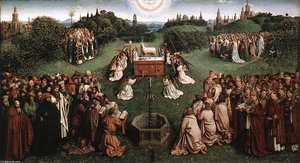
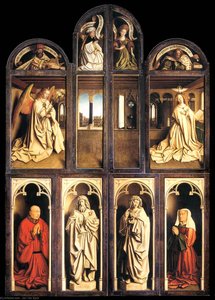
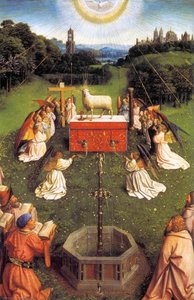
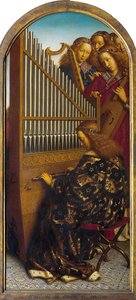
The central focus of the cathedral is Jan van Eyck’s Ghent Altarpiece (1432), a significant work of Early Netherlandish painting. Also known as the Adoration of the Mystic Lamb, this polyptych is characterized by its meticulous detail and luminous color. In the Chapel of the Holiest, the 15th-century Calvary Triptych is on display, a work attributed to Justus van Gent.
The liturgical furnishings reflect several distinct eras of craftsmanship. The Baroque high altar in the choir is constructed from white, black, and red flamed marble and features intricate marblework and gilded ornamentation. Nearby, the Rococo pulpit is composed of oak, gilded wood, and marble. The cathedral's acoustic environment is shaped by four organs, including the Klais organ installed in 1935.
Artistic and Religious Treasures
The cathedral preserves a significant collection of liturgical objects dating from the 15th century. These include various liturgical plates, vessels, and reliquaries used in sacred rites. Among the most notable reliquaries are those containing the head of Saint John the Baptist and the head of Saint Macarius. These objects remain central to the ecclesiastical life of the diocese.
In the Chapel of the Holiest, the Calvary Triptych is on display. This 15th-century work is attributed to Justus van Gent. The chapel also houses a collection of important liturgical ornaments, many of which are hand-embroidered or made of brocade. These textiles and metalworks reflect the long-standing traditions of the cathedral's liturgical practice.
The interior contains the tombs of the bishops of Ghent. These monuments are situated within the sacred space, marking the history of the local church hierarchy. The presence of these burials, alongside the various reliquaries and liturgical vessels, establishes the cathedral as a repository for the city's religious artifacts.