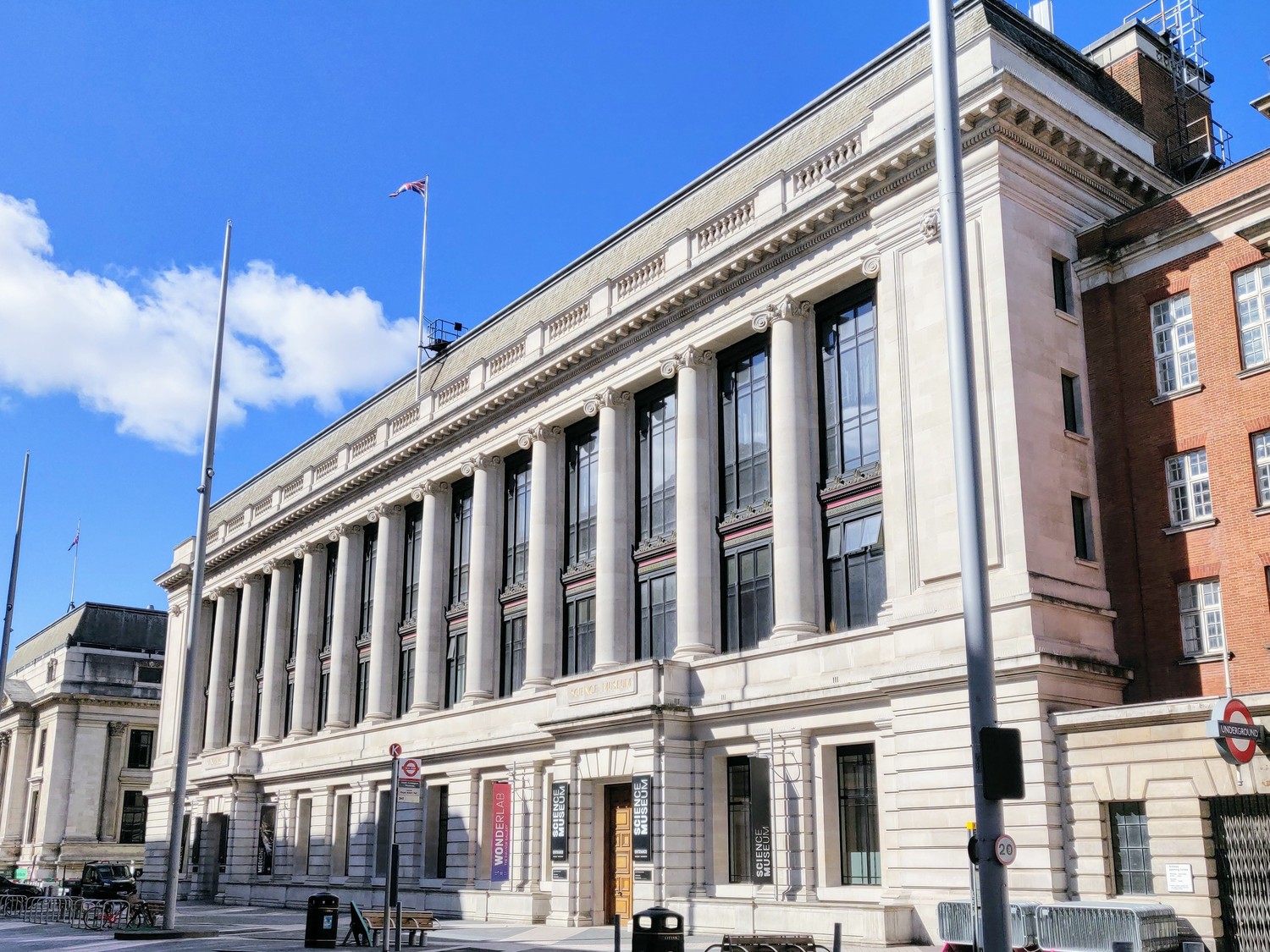
Muzeul Științei din Londra

Detalii utile

  • Mediums: acrilic pe pânză
  • Featured artists:
    • andré-adolphe-eugène disdéri
    • Philip James de Loutherbourg
    • marie-georges-jean méliès
    • Henry Pierce Bone
    • Richard Cosway
  • Alternate names:
    • Science Museum
    • Museum of Science and Industry
  • Vezi mai multe…
  • Works on APS: 44
  • Art types: artă murală
  • Location: Londra, Regatul Unit

Quiz de artă

Fiecare întrebare are un singur răspuns corect.

Întrebare 1:
În ce an a fost fondată Muzeul Științei din Londra?
Întrebare 2:
Ce eveniment important a contribuit la înființarea Muzeului Științei din Londra?
Întrebare 3:
Muzeul Științei este cunoscut pentru...
Întrebare 4:
Ce arhitectură caracterizează clădirile Muzeului Științei?
Întrebare 5:
Scopul principal al muzeului este...

A Monument to Human Ingenuity: Exploring the Science Museum

The Science Museum in London isn’t merely a building filled with objects; it's a sprawling testament to humanity’s relentless curiosity, a cathedral dedicated to the pursuit of understanding. Nestled within South Kensington’s cultural heartland, its presence is both imposing and inviting, a beacon for those drawn to the wonders of scientific discovery. Founded in 1857 from the treasures amassed during the Great Exhibition, it began as a showcase of Victorian innovation but quickly blossomed into something far grander – an immersive journey through the evolution of technology, medicine, space exploration, and our very comprehension of the universe. The museum’s architecture itself reflects this ongoing narrative; a complex of buildings constructed between 1919 and 1928, each layer representing a new era of progress, seamlessly blending historical grandeur with modern interactive design. To wander its halls is to traverse time, witnessing firsthand the breakthroughs that have shaped our world – a tangible record of human ambition and intellectual achievement. The sheer scale of the place, combined with the deliberate layering of architectural styles, creates an experience akin to walking through a living history book, each room whispering tales of invention and discovery.

Echoes of Innovation: From Steam Engines to Space Travel

The collection at the Science Museum isn’t simply about *what* was invented, but *how* those inventions transformed society. The Energy Hall stands as a powerful symbol of this legacy, dominated by the oldest surviving James Watt beam engine – a colossal machine that once fueled the British Industrial Revolution. Its rhythmic pulse, a testament to Victorian engineering prowess, seems to echo through the decades, reminding us of the ingenuity and ambition of an era defined by steam power. But the museum doesn’t dwell solely on the past. “Exploring Space” offers a thrilling glimpse into humanity's aspirations beyond Earth, showcasing rockets, satellites, and detailed accounts of pioneering missions that have expanded our horizons – from Sputnik to Apollo, each artifact a marker in our ongoing quest to understand our place among the stars. Equally compelling is "Making the Modern World," where iconic objects like Puffing Billy, the oldest surviving steam locomotive, share space with Crick’s double helix model – a tangible representation of the very building blocks of life. These aren't isolated artifacts; they are interconnected pieces of a larger story, illustrating how one discovery often leads to another, propelling us forward on an unending quest for knowledge. The careful curation highlights not just individual inventions but the intricate web of scientific and technological advancement that connects them all.

A Revolution in Learning: Engagement and Discovery

What truly sets the Science Museum apart is its commitment to interactive learning. It’s not a place where visitors passively observe; it's a space designed to ignite curiosity and encourage experimentation. The museum has deliberately moved away from static displays, embracing hands-on exhibits that make complex scientific principles accessible and engaging for all ages. “Wonderlab: The Equinor Gallery” is a prime example of this philosophy – a vibrant zone where visitors can manipulate light, explore the properties of sound, and unravel the mysteries of the human body through playful experimentation. Imagine building your own miniature volcano or designing a working circuit board – these aren’t just demonstrations; they're invitations to actively participate in the scientific process. Even nostalgia gets its due in "Power Up," an arcade offering five decades of video game history, demonstrating how technology has evolved even within the realm of entertainment. This dedication to engagement is further underscored by the museum’s free admission policy – a powerful statement about democratizing knowledge and ensuring that everyone has the opportunity to explore the wonders of science. The design itself encourages exploration, with winding pathways and strategically placed interactive elements guiding visitors through the exhibits.

A Living Legacy: From Victorian Roots to Future Frontiers

The Science Museum's story is one of continuous adaptation, evolving from a showcase of Victorian achievements to a dynamic hub for modern exploration. Its independence in 1909 solidified its role as a leading institution dedicated to advancing scientific understanding and inspiring future generations. Today, the museum actively collaborates with universities and research institutions, fostering innovation and pushing the boundaries of what’s possible. As part of the broader Science Museum Group – which includes the Science and Industry Museum in Manchester and the National Railway Museum in York – it continues to champion the spirit of discovery across the United Kingdom. The museum isn't just preserving history; it is actively shaping the future, reminding us that the pursuit of knowledge is a journey without end, one that demands curiosity, collaboration, and an unwavering belief in the power of human ingenuity. The ongoing expansion and modernization projects ensure that the museum remains relevant and engaging for generations to come, constantly reflecting on our past while looking towards the challenges and opportunities of tomorrow.

Architectural Significance & Interior Design

Beyond its remarkable collection, the Science Museum’s architecture is a significant element of its appeal. Constructed between 1919 and 1928, the buildings represent a deliberate architectural dialogue – each phase of construction reflects the technological advancements of its time. The original Victorian structures, with their ornate detailing and grand scale, stand in stark contrast to the more streamlined, functional design of the later additions. This juxtaposition creates a fascinating visual narrative, illustrating the evolution of architectural styles alongside scientific progress. Inside, the museum’s interior spaces are thoughtfully designed to maximize both educational impact and visitor flow. Natural light floods the galleries, highlighting the exhibits while creating an inviting atmosphere. The use of color, texture, and interactive displays further enhances the visitor experience, transforming the museum into a dynamic and engaging space that celebrates the wonders of science and technology.

Colecție de opere de artă

Nu au fost găsite opere de artă.

© 2026 mus3ums.com