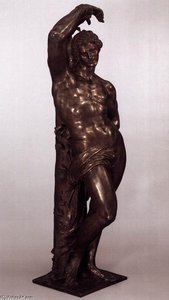
The Master of Bronze and Motion
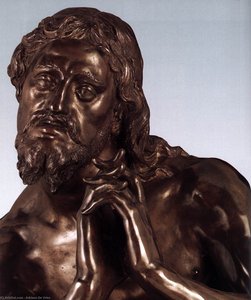
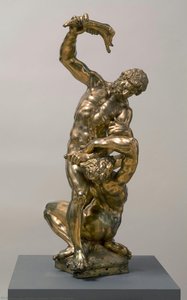
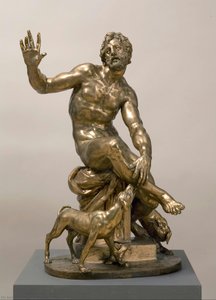
In the grand tapestry of European art history, few names resonate with the fluid elegance and technical virtuosity of Adriaen de Vries. A preeminent sculptor of the Northern Mannerist tradition, de Vries possessed a rare ability to breathe life into cold metal, transforming bronze into a medium of profound emotional intensity and kinetic energy. Born in The Hague, Netherlands, his early years were shaped by a lineage of craftsmanship, with whispers of an apprenticeship under masters like Willem Danielsz. van Tetrode or perhaps within the meticulous world of goldsmithing. This foundation in fine detail would later become the hallmark of his mature style, allowing him to manipulate patina and refined modeling with an unparalleled delicacy that bridged the gap between the intricate Mannerist aesthetic and the burgeoning drama of the Baroque.
His journey was one of constant movement across the great courts of Europe, a nomadic brilliance that saw him leave the Netherlands to seek glory in the heart of the continent. The influence of Giambologna, the legendary master he encountered in Florence, remains etched in the very sinews of his work. From this encounter, de Vries inherited a fascination with the figura serpentinata—the spiraling, twisting form that invites the viewer to circulate around the sculpture, discovering new perspectives and tensions with every step. As he moved through Milan and eventually into the service of powerful patrons like the Duke of Savoy and Emperor Rudolf II in Prague, his work became an international language of prestige, characterized by a sophisticated interplay of light and shadow across polished bronze surfaces.
A Legacy Cast in Metal
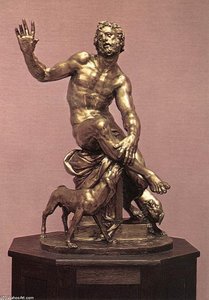
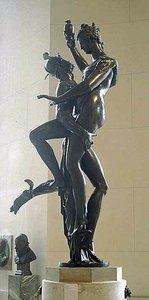
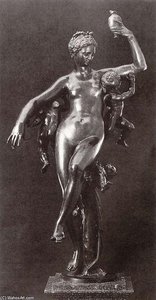
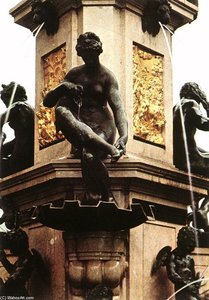
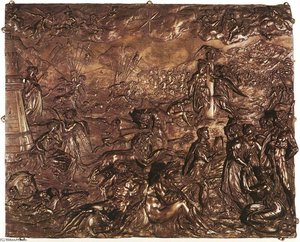
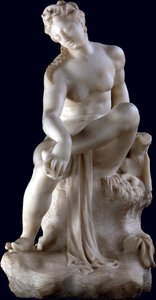
The true genius of de Vries lies in his ability to capture the ephemeral—a fleeting glance, a sudden muscular tension, or the divine transition of a soul. His sculptures are not merely static objects but frozen moments of profound narrative weight. Whether depicting the biblical tragedy of Cain killing Abel or the celestial grace of Mercury and Psyche, his work explores the depths of human impulse and mythological grandeur. In his hands, the bronze does not feel heavy; instead, it achieves an ethereal lightness, where limbs seem to float and drapery flows with a liquid grace that defies the medium's inherent rigidity.
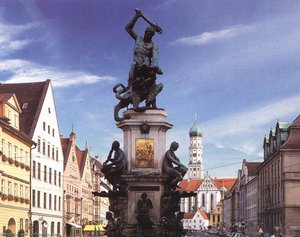
Beyond his technical mastery of casting and modeling, de Vries holds a significant place in art history as a transitional figure. His international style served as a vital link, carrying the refined complexities of Northern Mannerism into the more emotive and expansive era of the Baroque. Although the turbulent shifts of the Thirty Years' War and changing artistic tastes meant he left no direct followers to carry his specific flame, his impact remains indelible. Today, his masterpieces reside in the world's most prestigious collections, serving as enduring testaments to a sculptor who could command the very essence of motion through the permanence of bronze.
Вопросы и ответы
Где и в каком году родился Адриен Де Фриз?
Адриен Де Фриз родился в Гаага, 1556 год.
В каком городе и стране родился(ась) Адриен Де Фриз?
Адриен Де Фриз родился в городе Гаага, страна — Нидерланды.