Agnolo Gaddi: Florentine Painter and the Last Echoes of Giotto
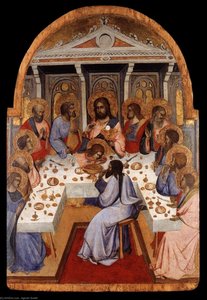
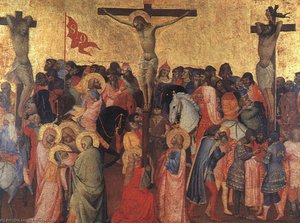
Agnolo Gaddi (c. 1350 – October 10, 1396) stands as a singular figure in the artistic panorama of Florence during the mid-XIV century—a descendant of Giotto di Bondone whose legacy transcended mere imitation, subtly reshaping the stylistic currents that would propel Florentine art toward the dawn of the Renaissance. He wasn’t merely perpetuating a tradition; he was skillfully navigating its transition, bridging the gap between Gothic grandeur and nascent humanist ideals. While often portrayed as “the last great Florentine painter descended from Giotto,” this categorization overlooks the profound complexity of his artistic journey—a journey marked by innovation tempered with respect for established conventions.A Familial Lineage Rooted in Innovation
Agnolo’s artistic lineage began with Taddeo Gaddi (1300 – 1366), himself a devoted pupil and protégé of Giotto di Bondone—the revolutionary artist who irrevocably altered the course of Western painting by introducing naturalism, emotional depth, and narrative clarity into Florentine art. This familial connection immediately positioned Agnolo within the epicenter of artistic ferment that Florence had become during Giotto’s lifetime—a city pulsating with intellectual curiosity and burgeoning economic prosperity. Taddeo's influence is palpable in Agnolo’s early works, particularly evident in his frescoes for San Jacopo tra i Fossi, where he skillfully employed dramatic lighting and expressive figures to convey the solemn grandeur of biblical narratives. This stylistic inheritance wasn’t simply a matter of copying Giotto’s techniques; it was about absorbing his spirit—a spirit that championed human emotion and sought to depict the divine within the earthly realm.The Gothic Legacy: Ornamentation, Light, and Emotional Resonance
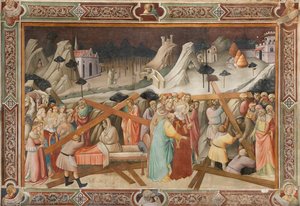
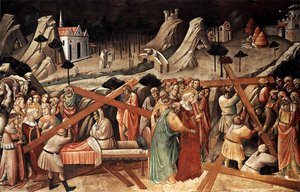
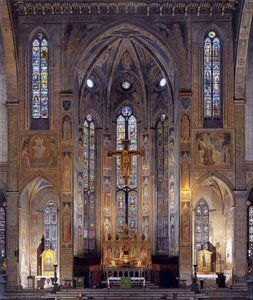
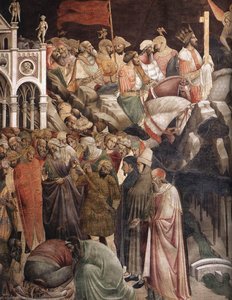
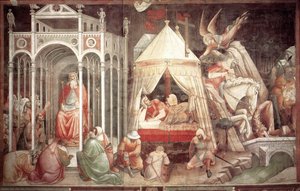
Agnolo Gaddi's artistic style bears unmistakable traces of Gothic aesthetics—a fascination for ornate decoration, luminous illumination, and profound emotional resonance. Like Giotto before him, he embraced a visual language characterized by rich textural surfaces, intricate drapery folds, and carefully calibrated color palettes. However, Agnolo distinguished himself from his teacher through a subtle refinement of these elements—a move toward elegance and sophistication that reflected the evolving tastes of Florentine society. Consider the frescoes adorning Santa Croce—particularly those depicting the Legend of the True Cross. The monumental figures are imbued with palpable emotion, conveying both sorrow and awe—qualities that resonate deeply within the viewer’s experience. This expressive impulse is further amplified by Gaddi's masterful manipulation of light—creating dramatic chiaroscuro effects that heighten the visual impact of his compositions.Santa Croce: A Masterpiece of Narrative Painting
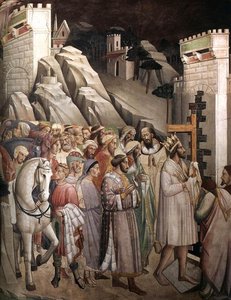
Among Agnolo Gaddi’s most celebrated achievements resides the monumental cycle of frescoes commissioned for Santa Croce—Florence’s cathedral dedicated to Saint Benedict—a project that cemented his reputation as one of Florence's foremost artists. These eight panels recount the biblical narrative of the True Cross, commencing with Michael the Archangel delivering a branch from the Tree of Knowledge to Seth—a scene rendered with breathtaking precision and imbued with palpable spiritual fervor. The frescoes exemplify Gaddi’s ability to synthesize Gothic grandeur with humanist sensibilities—capturing both the solemn majesty of religious iconography and the expressive dynamism characteristic of Early Renaissance art. Notably, Agnolo Gaddi included a portrait of himself within one of these panels—a testament to his confidence in his own artistic prowess and a poignant reminder of the artist's role as participant in the unfolding drama of Florentine culture.Beyond Santa Croce: Patronage, Technique, and Artistic Influence
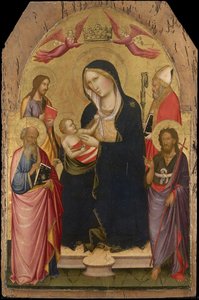
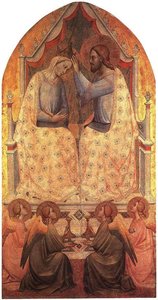
Agnolo Gaddi’s artistic career extended beyond the cathedral walls—receiving commissions from wealthy patrons throughout Florence and Venice alike. His versatility as an artist is underscored by his involvement in diverse mediums—including tempera panels, mosaics, and sculptural medallions—demonstrating a mastery of technique that rivaled the greatest masters of his time. Furthermore, Gaddi exerted considerable influence on subsequent generations of Florentine painters—particularly Cennino Cennini, whose *Il Libro dell’Arte* acknowledges Gaddi as a pivotal figure in shaping artistic sensibilities. Cennini's treatise championed realism and meticulous observation—values that mirrored Gaddi’s own approach to painting—establishing him as a cornerstone of Italian art history. Agnolo Gaddi’s legacy endures not merely as an exemplar of Gothic style but as a conduit between tradition and innovation—a testament to the enduring power of artistic vision and craftsmanship.Вопросы и ответы
Где и в каком году родился Агноло Гадди?
Агноло Гадди родился в Флоренция, 1350 год.
Из какой страны Агноло Гадди?
Агноло Гадди родился в Италия.
В какой исторический период работал(а) Агноло Гадди?
Агноло Гадди работал в период — Позднее Средневековье. Эта эпоха позволяет определить место творчества художника в истории.