Emanuel Gottlieb Leutze: Bridging Worlds, Painting the American Soul
Emanuel Gottlieb Leutze’s life unfolded as a remarkable confluence of cultures and artistic influences, a journey that ultimately shaped his distinctive contribution to both German Romanticism and the nascent American art scene. Born in 1816 in Schwäbisch Gmünd, a town nestled in the heart of Baden-Württemberg, Germany, Leutze’s early years were steeped in hardship – the untimely death of his father forced him into premature adulthood, demanding he contribute to the family's livelihood through manual labor. Yet, even amidst these challenges, a spark ignited within him: an innate artistic talent that found its initial expression not as a profession, but as a means of solace and occupation during his father’s illness. This early experimentation with drawing and painting, initially undertaken simply to fill time, gradually evolved into a genuine passion, foreshadowing the profound impact he would later have on the visual landscape of both Europe and America.The Düsseldorf School: Romanticism Takes Root
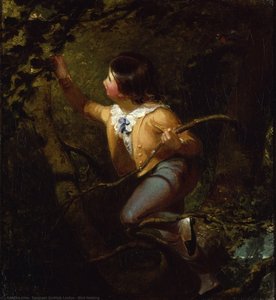
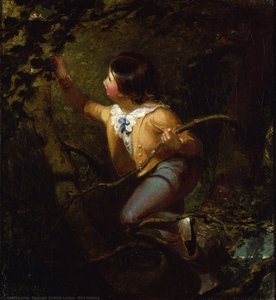
Leutze's artistic development truly blossomed during his years in Düsseldorf, beginning in 1840. This pivotal move marked not merely a change of location but a fundamental shift in his artistic philosophy. Düsseldorf was at the heart of the influential Düsseldorf School of Painting, an environment characterized by its rigorous academic training and its embrace of Romanticism – a movement that prioritized emotion, drama, and the sublime over strict adherence to classical conventions. He found himself profoundly influenced by Karl Friedrich Lessing, a leading figure within this school, whose teachings emphasized dramatic composition, emotional intensity, and a deep engagement with historical narratives. Leutze’s time in Düsseldorf wasn't simply about mastering technique; it was an immersion into a specific artistic worldview – one that celebrated the power of imagination and sought to evoke profound emotional responses through visual imagery. He diligently studied the works of masters like Titian and Michelangelo, absorbing their techniques and understanding of light, color, and form, but he didn’t merely imitate them. Instead, he synthesized these influences with his own sensibilities, forging a unique style characterized by its grand scale, dynamic movement, and evocative use of color. His early works, such as “Bird Nesting” (1837), demonstrate this burgeoning talent – a meticulous depiction imbued with a sense of quiet drama and symbolic depth.A Journey Through Europe: Seeking Inspiration
Following his success in Düsseldorf, Leutze embarked on a two-year sojourn through Germany, Italy, and Switzerland, a period crucial to the further refinement of his artistic vision. This journey was not merely a vacation; it was an active pursuit of inspiration, exposing him to diverse artistic traditions and broadening his understanding of European art history. He spent time in Venice, captivated by the light and color of the Venetian masters, and in Rome, studying the monumental works of Michelangelo – experiences that profoundly shaped his approach to composition, perspective, and the depiction of human form. He meticulously documented these influences, not through direct copying, but through a process of careful observation and critical analysis. This period solidified his commitment to historical painting as a vehicle for exploring complex themes and conveying powerful emotions.Returning to America: Painting Patriotism and National Identity
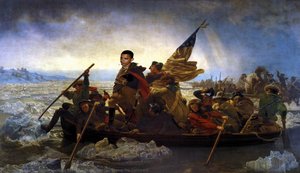
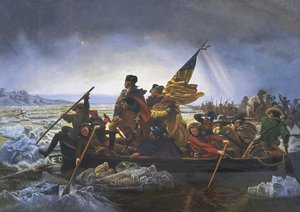
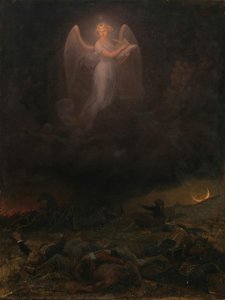
In 1859, Leutze made a momentous decision: he returned to the United States, a country that had become increasingly significant in his artistic consciousness. This return wasn’t simply a geographical relocation; it represented a deliberate commitment to dedicate his art to the burgeoning American narrative – a nation grappling with its own identity and striving to define itself on the world stage. He established studios in both New York City and Washington D.C., becoming a central figure in the American art scene. His most celebrated work, “Washington Crossing the Delaware,” completed in 1851, perfectly encapsulates this commitment. This iconic image – depicting General George Washington leading his troops across the icy waters of the Delaware River on Christmas night – became an instant symbol of American courage, leadership, and the unwavering pursuit of freedom. The painting’s dramatic composition, evocative lighting, and carefully chosen details all contribute to its enduring power as a visual representation of American ideals. Beyond “Washington Crossing the Delaware,” Leutze continued to explore themes of American heroism and sacrifice, producing works such as "Angel on the Battlefield," a poignant depiction of the devastation caused by the Civil War – a work born from the grim realities reported in newspapers and intended to evoke empathy for those who had suffered.Legacy and Enduring Influence
Emanuel Gottlieb Leutze’s legacy extends far beyond individual paintings; he played a pivotal role in establishing a distinct visual language for American history painting, creating powerful images that helped shape national identity during a period of profound social and political transformation. “Washington Crossing the Delaware” remains arguably the most recognizable image in American art – its reproduction ubiquitous across countless platforms, serving as a potent symbol of American values. His ability to seamlessly blend Romantic ideals with historical accuracy resulted in works that were both emotionally resonant and intellectually stimulating. Leutze’s paintings are now housed in prestigious institutions such as the Metropolitan Museum of Art, the Kunsthalle Bremen, and Harvard Law School, ensuring his artistic contributions will continue to be appreciated for generations to come. He wasn't simply a painter of history; he was a creator of myth, forging enduring symbols that continue to inspire dialogue about the American experience. His work stands as a testament to the transformative power of art – its ability to shape perceptions, ignite patriotism, and preserve collective memory.- Born: May 24, 1816, Schwäbisch Gmünd, Germany
- Died: July 18, 1868
- Movement: Romanticism, Düsseldorf School of Painting
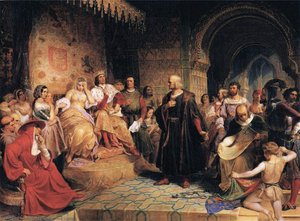
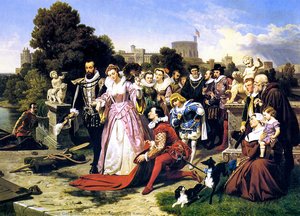
- Notable Works: Washington Crossing the Delaware, Columbus Before the Council of Salamanca, Angel on the Battlefield
Вопросы и ответы
В каком городе и стране родился(ась) Эмануэль Готтлиб Леутце?
Эмануэль Готтлиб Леутце родился в городе Швабская Гмюнде, страна — Германия.
Где и в каком году родился Эмануэль Готтлиб Леутце?
Эмануэль Готтлиб Леутце родился в Швабская Гмюнде, 1816 год.
Из какой страны Эмануэль Готтлиб Леутце?
Эмануэль Готтлиб Леутце родился в Германия.