A Flemish Vision in England: The Life and Art of Jan Siberechts
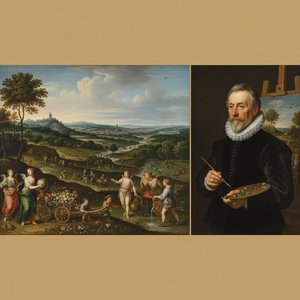
Jan Siberechts, born in Antwerp in 1627, occupies a fascinating position in the history of European art—a bridge between the vibrant traditions of Flemish painting and the burgeoning landscape tradition of England. His story is one of artistic development, fortunate patronage, and ultimately, pioneering influence. The son of a sculptor also named Jan Siberechts, he received his initial training within the family workshop, absorbing the skills and aesthetic sensibilities that would form the foundation of his career. By 1648, he had achieved master status in the prestigious Guild of Saint Luke in Antwerp, signaling his recognition as a skilled craftsman. While concrete evidence remains elusive, art historians speculate about a possible sojourn to Italy during the late 1640s or early 1650s. Though unconfirmed, this potential exposure to Italianate landscape painting—with its emphasis on classical compositions and atmospheric perspective—undoubtedly left an imprint on his evolving style, visible in the early works that showcase a delicate balance between Flemish realism and Italianate ideals.Early Training and Artistic Influences
Siberechts’ formative years were steeped in the artistic heritage of Antwerp, a city renowned for its sculptural tradition and vibrant artistic community. His father instilled in him a deep appreciation for craftsmanship and meticulous observation—skills that would prove invaluable throughout his career. The Guild of Saint Luke provided him with formal training and access to established artistic conventions, shaping his understanding of perspective, anatomy, and color theory. Notably, Siberechts’ early works demonstrate considerable influence from Dutch masters like Nicolaes Berchem and Karel Dujardin. These painters skillfully captured the serene beauty of pastoral landscapes—often populated by idealized figures engaged in peaceful activities—employing subtle tonal gradations and luminous lighting effects that mirrored Siberechts’ own artistic inclinations. The meticulous attention to detail characteristic of Berchem and Dujardin undoubtedly contributed to Siberechts’ developing stylistic sensibilities.The Italian Connection – Speculation and Potential Impact
While definitive proof remains elusive, art historians posit a plausible scenario: Siberechts undertook a journey to Italy sometime between 1647 and 1652. This voyage would have exposed him to the revolutionary landscape paintings emerging from Florence and Rome—works that championed classical ideals of harmony and grandeur while embracing innovative techniques like atmospheric perspective. Artists such as Claude Lorrain and Nicolas Poussin had pioneered a new approach to depicting landscapes, prioritizing compositional clarity and conveying an emotional sense of place. It is conceivable that Siberechts absorbed these influences, subtly integrating them into his own artistic practice—a process evident in the early canvases that reveal a nascent fascination with Italianate aesthetics. This potential encounter would have broadened his artistic horizons and solidified his commitment to exploring new expressive possibilities.From Flemish Countryside to English Estates
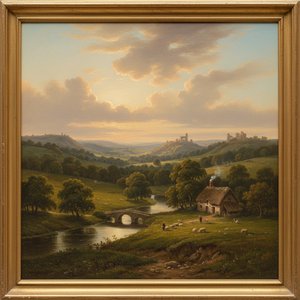
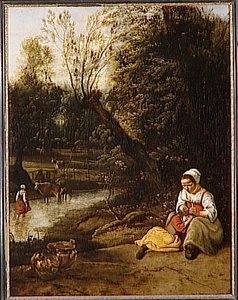
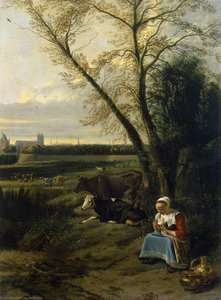
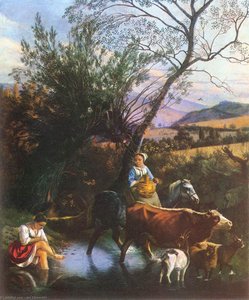
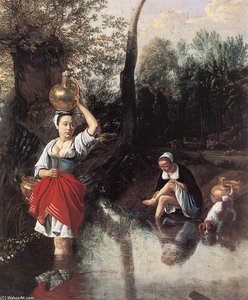
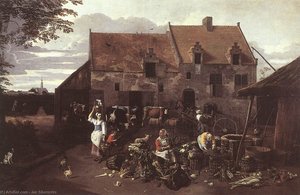
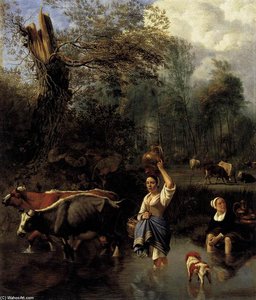
The 1660s marked a pivotal turning point in Siberechts’ artistic trajectory. He decisively shifted his focus towards the landscapes of Flanders—a region characterized by rolling hills, fertile farmland, and picturesque villages—and the rhythms of rural life. This wasn't merely topographical representation; it was an immersive portrayal designed to evoke emotion and convey a profound connection with nature. Siberechts skillfully manipulated water reflections, creating visual echoes that deepened the sense of depth within his compositions. These paintings often echoed the intimate farmyard scenes popularized by David Teniers the Younger, but Siberechts infused them with a broader scope and a more atmospheric quality. He populated his canvases with robust figures—often women engaged in everyday tasks—dressed in brilliantly colored clothing that punctuated the verdant landscapes. This vibrant palette reflected the prevailing taste for decorative color during the Baroque period and underscored Siberechts’ artistic ambition.A Patronage That Launched a Career – The Duke of Buckingham
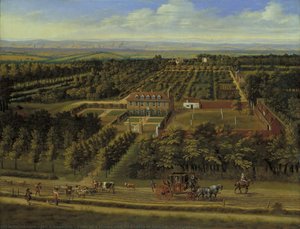
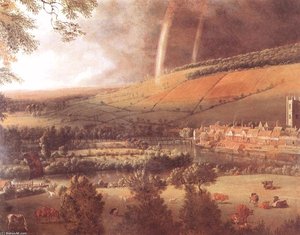
Siberechts’ burgeoning talent attracted considerable attention, culminating in an invitation from George Villiers, the Second Duke of Buckingham—a prominent figure in English aristocratic society—to undertake a monumental commission: decorating Cliveden House, Buckinghamshire. This undertaking provided Siberechts with both financial stability and an unparalleled opportunity to showcase his artistic versatility. Recognizing his exceptional skill and imaginative vision, Villiers entrusted him with transforming the stately home into a breathtaking landscape masterpiece. The resulting artwork remains one of Siberechts’ most celebrated achievements—a testament to his ability to synthesize Flemish tradition with English sensibilities. Furthermore, this commission solidified Siberechts' reputation as a leading artist among the elite, propelling him to international acclaim and securing his legacy as a pioneer of the English country house portrait genre.The Landscape Pioneer – Influence on Subsequent Artists
Jan Siberechts is rightfully regarded as a cornerstone of English landscape painting—often hailed as “the father of British landscape.” His topographical views weren’t merely records of estates; they were artistic interpretations imbued with emotion and conveying a profound connection to the natural world. He established a precedent for depicting landscapes not just as objects of observation but as subjects of contemplation—a stylistic innovation that profoundly impacted generations of artists who followed. Siberechts' meticulous attention to detail, combined with his masterful use of color and light, influenced painters such as Peter Tillemans and Hendrik Frans de Cort, fostering the development of a distinctive Flemish landscape tradition in England. His legacy extends beyond mere technique; it resides in his ability to capture the spirit of place—a quality that continues to resonate with viewers today. His paintings are more than just landscapes; they are windows into a bygone era, offering a glimpse into the lives and aspirations of those who inhabited them.Вопросы и ответы
К какой исторической эпохе относится Ян Сиберехтс?
Ян Сиберехтс работал в эпоху — Раннее Новое время. Этот период позволяет определить место творчества художника в истории.
В каком городе и стране родился(ась) Ян Сиберехтс?
Ян Сиберехтс родился в Антверпен, Бельгия.
Где и в каком году родился Ян Сиберехтс?
Ян Сиберехтс родился в Антверпен в 1627 году.