Joseph Edward Southall (1861 - 1944)
Joseph Edward Southall, born in Nottingham on August 23rd, 1861, was a quietly revolutionary figure within the British Arts and Crafts movement—a painter who looked back to the early Renaissance for inspiration while simultaneously embodying a deeply felt social and spiritual conviction. He wasn’t a flamboyant innovator eager to overturn established artistic conventions; rather, he was a dedicated revivalist, committed to tempera painting, the ideals of Ruskinian aesthetics, Quaker faith, and socialist principles. His life story is one of unwavering devotion—to mastering egg tempera, nurturing connections with fellow artists like Arthur Gaskin, and advocating for art that served both beauty and ethical responsibility.
His father, Joseph Sturge Southall (1835–1862), was a prominent Quaker and a successful grocer. Tragically, he died young, leaving his family to relocate to Edgbaston, Birmingham, where Elizabeth Maria Baker—Southall’s mother—lived with her family. This formative experience instilled in him the values of simplicity and moral integrity that would permeate his artistic vision.
After attending Ackworth School and Bootham School in York, Southall pursued architectural studies briefly but quickly recognized that formal training wouldn't satisfy his yearning for a more holistic engagement with craft. He believed an artist needed to understand painting and carving as profoundly as design and construction—a conviction that would guide him throughout his career.
His artistic journey began at Ackworth School where he was taught watercolour painting by Edwin Moore, brother of Henry Moore. Two years later he moved to Bootham School where he continued his studies under Moore’s tutelage. He enrolled in Birmingham School of Art in 1878 and quickly befriended Arthur Gaskin—a fellow student who would become a lifelong collaborator.
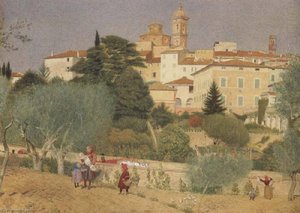
Southall's fascination with Italian Renaissance art ignited during a thirteen-week trip to Italy in 1883, where he immersed himself in the frescoes of Benozzo Gozzoli and other masters. This pilgrimage solidified his admiration for Ruskin’s vision of artistic purity—a conviction that would fuel his lifelong pursuit of tempera painting.
The Birmingham Group—formed in 1907 by Southall and Gaskin alongside Charles March Gere, Sidney Meteyard, Henry Payne, Bernard Sleigh and a handful of other artists—represented a conscious rejection of industrialization and a fervent desire for an integrated artistic life. Inspired by Carlyle, Ruskin and Morris, the group championed craftsmanship, spiritual depth, and social responsibility in art.
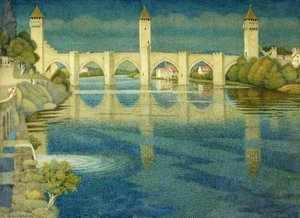
Southall’s unwavering commitment to tempera painting wasn't merely aesthetic preference; it was a philosophical statement—a belief that the medium’s inherent limitations fostered a more deliberate and thoughtful approach to art-making. He rejected the spontaneity of oil painting, prioritizing precision and meticulous planning. His work consistently reflected his Quaker faith and socialist convictions; he sought to create art that resonated with both beauty and ethical consideration.
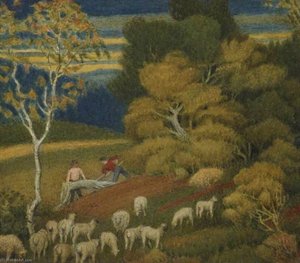
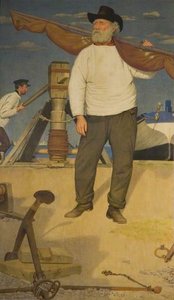
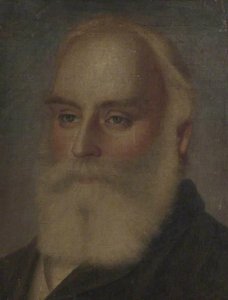
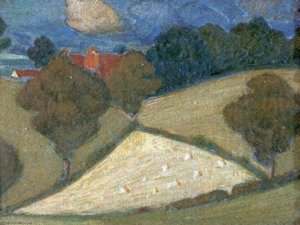
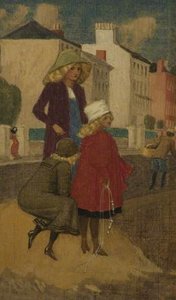
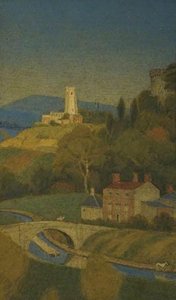
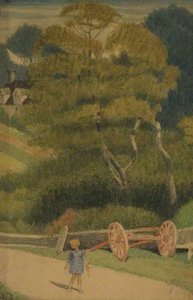
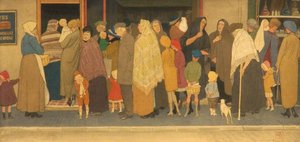
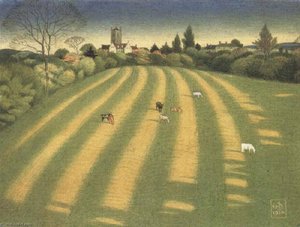
Among his most celebrated paintings were depictions of domestic interiors, landscapes imbued with symbolic resonance, and portraits capturing the dignity of ordinary people—subjects that mirrored Southall’s humanist worldview. He achieved considerable renown as a teacher, passing on his knowledge and passion for tempera to a new generation of artists.
Southall served as President of the Royal Birmingham Society of Artists from 1939 until his death in November 6th, 1944—a testament to his enduring influence within the artistic community. His legacy resides not only in his masterful paintings but also in his unwavering dedication to upholding Ruskinian ideals and advocating for art as a force for social betterment.
Key Characteristics of Southall’s Work:
- Temperament Technique: Masterful use of egg tempera, characterized by its luminosity, detail, and subtle color gradations.
- Subject Matter: Focus on domestic interiors, landscapes, portraits, and scenes of everyday life, often imbued with symbolic meaning.
- Pre-Raphaelite Influence: A discernible debt to the Pre-Raphaelites in terms of meticulous realism and romantic sensibility.
- Arts & Crafts Ideals: Embodiment of Arts and Crafts principles—emphasis on craftsmanship, simplicity, and social responsibility.
- Social Commentary: Subtle yet persistent expression of socialist beliefs and Quaker values through subject matter and artistic approach.
Вопросы и ответы
Под какими еще именами известен Юзеф Эдвард Саутхолл?
Юзеф Эдвард Саутхолл также известен как Джозеф Эдвард Соулл, J.E. Соулл, Соулл.
Из какой страны Юзеф Эдвард Саутхолл?
Юзеф Эдвард Саутхолл родился в Великобритания.
В какой исторический период работал(а) Юзеф Эдвард Саутхолл?
Юзеф Эдвард Саутхолл работал в период — XIX век. Эта эпоха позволяет определить место творчества художника в истории.