Louise Élisabeth Vigée Le Brun: A Life Painted in Light and Grace
Louise Élisabeth Vigée Le Brun, a name that echoes through the halls of 18th-century French art, was more than simply a painter; she was a chronicler of an era, a master of capturing not just likeness but also the very essence of her subjects – their spirit, their status, and their fleeting beauty. Born in Paris in 1755, into a family subtly intertwined with the artistic world, her journey from a young girl sketching on schoolbooks to becoming the official portraitist of Marie Antoinette is a testament to talent, resilience, and an uncanny ability to connect with those she depicted. Her life unfolded against the backdrop of dramatic social shifts, culminating in exile and ultimately, enduring recognition as one of France’s most celebrated artists.Early Years and Artistic Foundations
Vigée Le Brun's artistic roots were deeply embedded within her family. Her father, Louis Vigée, was a respected pastel portraitist, a member of the prestigious Académie de Saint-Luc, and instilled in his daughter an early appreciation for art and technique. This familial connection provided a crucial foundation – not just access to materials and instruction, but also a sense of belonging within the artistic community. Her mother, Jeanne Maissin, though not formally trained as an artist, recognized her daughter’s exceptional gift and actively encouraged her talent, providing her with opportunities to study under established masters like Blaise Bocquet, Pierre Davesne, and Gabriel Briard. These early influences shaped her understanding of composition, color theory, and the nuances of capturing light – skills that would later define her distinctive style. Notably, she spent considerable time studying at the royal collections, absorbing the influence of classical sculpture and the elegance of Neoclassical painting.Royal Patronage and Artistic Flourishing
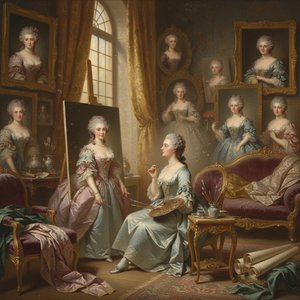
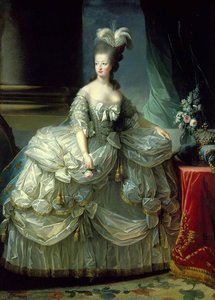
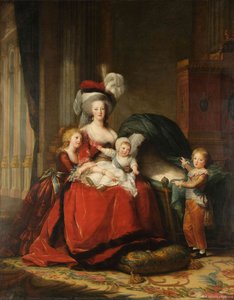
The pivotal moment in Vigée Le Brun’s career arrived with her commission to paint Marie Antoinette in 1778. This wasn't merely a portrait; it was an invitation into the heart of French society, a world of glittering courts and intricate social dynamics. The Queen, initially somewhat hesitant about sitting for a painter, quickly recognized Vigée Le Brun’s ability to portray her with both dignity and approachability – a delicate balance that few artists could achieve. This initial success propelled her onto a path of unparalleled renown. She became the official portraitist to Marie Antoinette, a position she held for nearly two decades, producing over thirty stunning portraits that captured the Queen's grace, intelligence, and evolving moods. Her studio transformed into a vibrant hub for the aristocracy, attracting nobles, actors, and writers eager to immortalize themselves on canvas. Vigée Le Brun’s success stemmed not only from her artistic skill but also from her astute understanding of courtly etiquette and her ability to forge genuine connections with her subjects.A Style Defined by Light, Emotion, and Grace
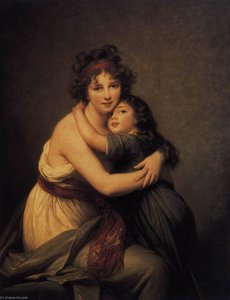
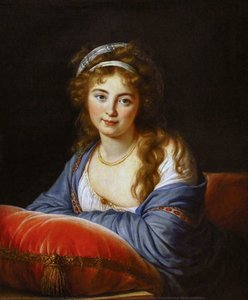
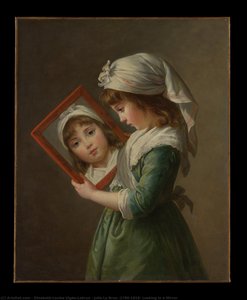
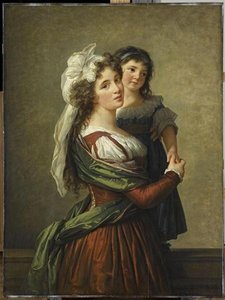
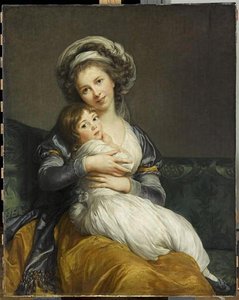
Vigée Le Brun's artistic style was characterized by a remarkable sensitivity to light, color, and the emotional lives of her sitters. She moved away from the stiff formality prevalent in earlier portraiture, favoring more natural poses and expressions that conveyed genuine feeling. Her brushwork was fluid and delicate, creating a sense of softness and luminosity – a hallmark of her distinctive style. She paid meticulous attention to detail, particularly in rendering fabrics, jewelry, and hairstyles, elements that subtly communicated status and refinement. While influenced by the Rococo’s emphasis on pastel shades and decorative flourishes, she skillfully integrated Neoclassical principles of clarity and balance, resulting in portraits that were both fashionable and timeless. Works like *Self-Portrait with Her Daughter, Julie*, reveal her ability to capture intimate moments and convey profound maternal affection. Her portraits weren't simply representations; they were windows into the souls of her subjects.Exile and Enduring Legacy
The French Revolution dramatically altered the course of Vigée Le Brun’s life. As a close associate of the royal family, she faced increasing scrutiny and ultimately fled France in 1789 to avoid persecution. This marked the beginning of a decade-long exile that took her across Europe – to Russia, Italy, England, Switzerland, and beyond. Despite the upheaval, she continued to paint, finding patronage among European aristocrats and establishing herself as an internationally renowned artist. Her travels broadened her artistic horizons, exposing her to diverse styles and techniques, which subtly influenced her later work. Upon returning to France in 1809, she resumed her career, though the political landscape had shifted dramatically. She published her memoirs, *Souvenirs*, offering a fascinating and often poignant account of her life, her art, and the tumultuous events that shaped her world. Vigée Le Brun’s legacy extends far beyond her technical skill; she remains a pioneering figure in the history of women artists, having achieved remarkable success in a field historically dominated by men. Her paintings continue to be celebrated for their beauty, elegance, and historical significance, offering a captivating glimpse into the world of 18th-century France and solidifying her place as one of its most accomplished portraitists. Her ability to capture not just appearances but also the inner lives of her sitters ensures that her work continues to resonate with audiences today.Вопросы и ответы
Известен ли Луиза Элизабет Виге де Ла Брю под какими-либо другими именами или псевдонимами?
Луиза Элизабет Виге де Ла Брю также известен под именами Елизавета Виге Ле Брюн, Луиза Элеонора Виге Ле Брюн.
Где и в каком году родился Луиза Элизабет Виге де Ла Брю?
Луиза Элизабет Виге де Ла Брю родился в Париж в 1755 году.
К какой исторической эпохе относится Луиза Элизабет Виге де Ла Брю?
Луиза Элизабет Виге де Ла Брю работал в эпоху — Эпоха раннего Нового времени. Этот период позволяет определить место творчества художника в истории.