Robert Delaunay: A Pioneer of Abstract Color
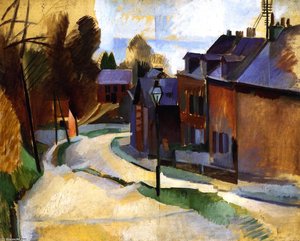
Robert Delaunay, born in Paris on April 12, 1885, emerged as a pivotal figure in the radical artistic transformations of the early twentieth century. Though initially drawn to more traditional forms of painting—particularly decorative arts—his artistic journey swiftly propelled him toward an exploration of color and light that would ultimately define his legacy and contribute significantly to the genesis of abstract art. Delaunay wasn’t merely concerned with *representing* reality; he aspired to capture its essence through a vibrant language of geometric shapes and luminous hues, co-founding the Orphism movement alongside Sonia Delaunay, Jean Metzinger, and others who shared his visionary perspective. His formative years were marked by familial instability—his parents divorced when he was young—yet this perhaps fostered an independent spirit that proved invaluable in challenging artistic conventions prevalent at the time. He commenced his artistic pursuits with a focus on theatrical design, honing his skills in composition and visual storytelling before dedicating himself to painting, debuting at the Salon des Indépendents as early as 1904, demonstrating immediate talent and ambition.Early Influences: Divisionism and Impressionism
Delaunay’s initial artistic explorations were deeply rooted in Neo-Impressionism, or Divisionism. Absorbing Henri Matisse’s pioneering approach to color theory—specifically the principle of applying small, distinct dots of pigment—he meticulously replicated optical phenomena, striving for a shimmering effect that mirrored the natural world. However, Delaunay quickly transcended mere replication; he interrogated the expressive potential inherent within color itself. This intellectual curiosity found fertile ground in his friendship with Jean Metzinger, who collaboratively investigated fragmented forms and mosaic-like compositions—a technique that would foreshadow their later involvement in Cubism. These formative collaborations established a bedrock for their subsequent explorations of Cubist aesthetics, though Delaunay ultimately distinguished himself from its more analytical tendencies. Rejecting the dissection of objects into geometric components championed by Picasso and Braque, he prioritized synthesizing disparate elements into dynamic arrangements imbued with rhythm and movement—a decisive shift that cemented his position as an innovator.The Birth of Orphism: Color as Emotion
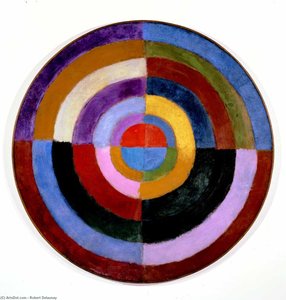
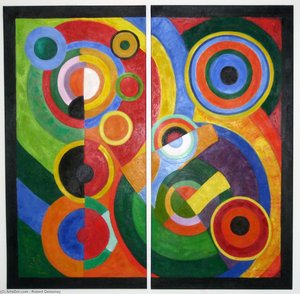
A pivotal moment in Delaunay’s artistic trajectory arrived with the emergence of Orphism—a term coined by poet Guillaume Apollinaire—which sought to liberate art from representational constraints and evoke profound emotional responses through chromatic intensity. Unlike Cubism's objective analysis, Orphism prioritized subjective experience, mirroring the burgeoning Expressionist movement. Delaunay and Sonia Delaunay established a unique artistic language characterized by bold hues, geometric abstraction, and a lyrical quality that aimed to harmonize visual elements with musical principles—a daring departure from accepted artistic norms. Their collaborative endeavors culminated in monumental murals for the 1937 Paris International Exposition, showcasing their mastery of color and architectural design. This ambitious project solidified Delaunay’s conviction that art could transcend mere visual perception, engaging viewers on an emotional level and reflecting the spirit of a transformative era.Iconic Works: The Eiffel Tower and Beyond
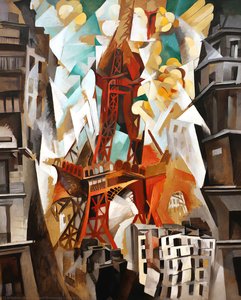
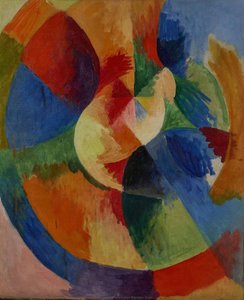
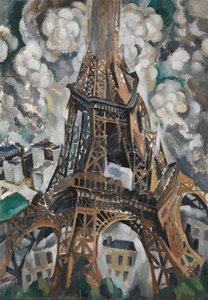
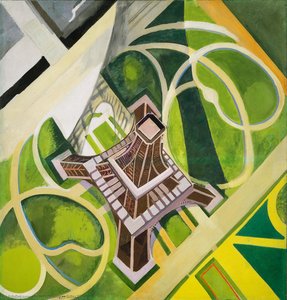
Delaunay's artistic legacy rests upon several seminal works that exemplify his distinctive style and conceptual breakthroughs. Among these stand out “The Eiffel Tower” (1909-1911) and “Simultaneous Contrasts: Sun and Moon” (1913)—pieces that encapsulate the essence of Orphism’s core tenets. In “The Eiffel Tower,” Delaunay meticulously deconstructed the iconic Parisian landmark into a network of intersecting planes—a technique reminiscent of Cubist fragmentation—yet simultaneously imbued it with vibrant hues that conveyed a sense of dynamism and movement. This masterful manipulation of color wasn't merely decorative; it served as a conduit for conveying emotional resonance, mirroring Apollinaire’s poetic vision. Similarly, “Simultaneous Contrasts” presented a complex interplay of geometric shapes and chromatic contrasts—a testament to Delaunay’s unwavering belief in the transformative power of color theory.A Lasting Influence: Shaping Modern Art
Robert Delaunay's theoretical contributions extended beyond his artistic practice, profoundly impacting subsequent generations of artists. His conviction that color possessed an active role in shaping perceptual experience resonated deeply with figures like Paul Klee, Franz Marc, August Macke, and even Russian avant-garde movements—artists who embraced abstraction and prioritized emotional expression over meticulous realism. Delaunay’s pioneering work irrevocably altered the trajectory of modern art, establishing a precedent for exploring visual forms divorced from representational conventions. His enduring influence continues to inspire artists today, reminding us that true artistic innovation lies in challenging established paradigms and embracing the boundless potential of color as a medium for conveying emotion and stimulating intellectual contemplation.Вопросы и ответы
В каком городе и стране родился(ась) Робер Делоне?
Робер Делоне родился в Париж, Франция.
К какой исторической эпохе относится Робер Делоне?
Робер Делоне работал в эпоху — Модернизм. Этот период позволяет определить место творчества художника в истории.
Где и в каком году родился Робер Делоне?
Робер Делоне родился в Париж в 1885 году.