
The Scrovegni Chapel: A Revelation of Early Renaissance Vision
Nestled within the ancient Augustinian monastery in Padua, Italy – a city steeped in artistic heritage – lies a space that transcends mere architectural structure and becomes an immersive experience: the Cappella degli Scrovegni. More than just a church, it’s a monumental fresco cycle by Giotto di Bondone, a pivotal work that irrevocably altered the course of Western art history. Stepping through its unassuming doorway is akin to entering a sacred realm, where time seems to subtly shift and every brushstroke whispers tales of faith, human emotion, and revolutionary artistic innovation. The chapel’s modest exterior belies the breathtaking spectacle within – a testament to the visionary patronage of Enrico Scrovegni, a wealthy banker who commissioned this extraordinary artistic endeavor around 1305, driven by a profound desire to honor his family lineage and express his deep spiritual convictions.
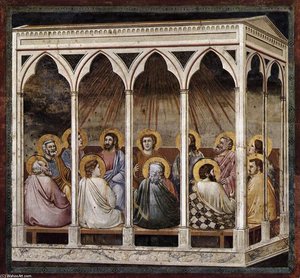
The story surrounding the chapel is as captivating as the art itself. Enrico, a man deeply committed to both commerce and piety, sought to create not simply a place of worship but a visual narrative designed to illuminate the path of salvation. He recognized Giotto’s burgeoning talent – an artist already challenging the established conventions of medieval painting with his innovative approach – and entrusted him with this monumental task. The resulting frescoes, completed over two years between 1303 and 1305, depict scenes from the life of Christ and the Virgin Mary, but they are far more than mere illustrations of biblical stories. Giotto imbued these narratives with an unprecedented sense of realism, emotional depth, and human drama – a radical departure from the stylized figures and distant perspectives that characterized earlier Byzantine and Gothic art. He brought to his subjects a remarkable ability to capture their gestures, expressions, and inner lives, creating images that feel startlingly alive and profoundly moving.
The heart of the chapel’s impact lies in Giotto's groundbreaking techniques. His pioneering use of perspective – a concept still relatively new at the time – creates an illusion of depth and space that draws the viewer into the scenes. He masterfully employed atmospheric perspective, using muted tones for distant figures and brighter hues for those closer to the viewer, mimicking the way light and color behave in the natural world. But it’s not just perspective; Giotto revolutionized the depiction of the human form. His figures are no longer flattened and stylized; they possess volume, weight, and a remarkable degree of naturalism – a shift that marked the beginning of what we now recognize as the Renaissance. The faces of his characters convey a spectrum of emotions—joy, sorrow, fear, and hope—with an intensity previously unseen in religious art.
The Architectural Setting: A Foundation for Artistic Grandeur
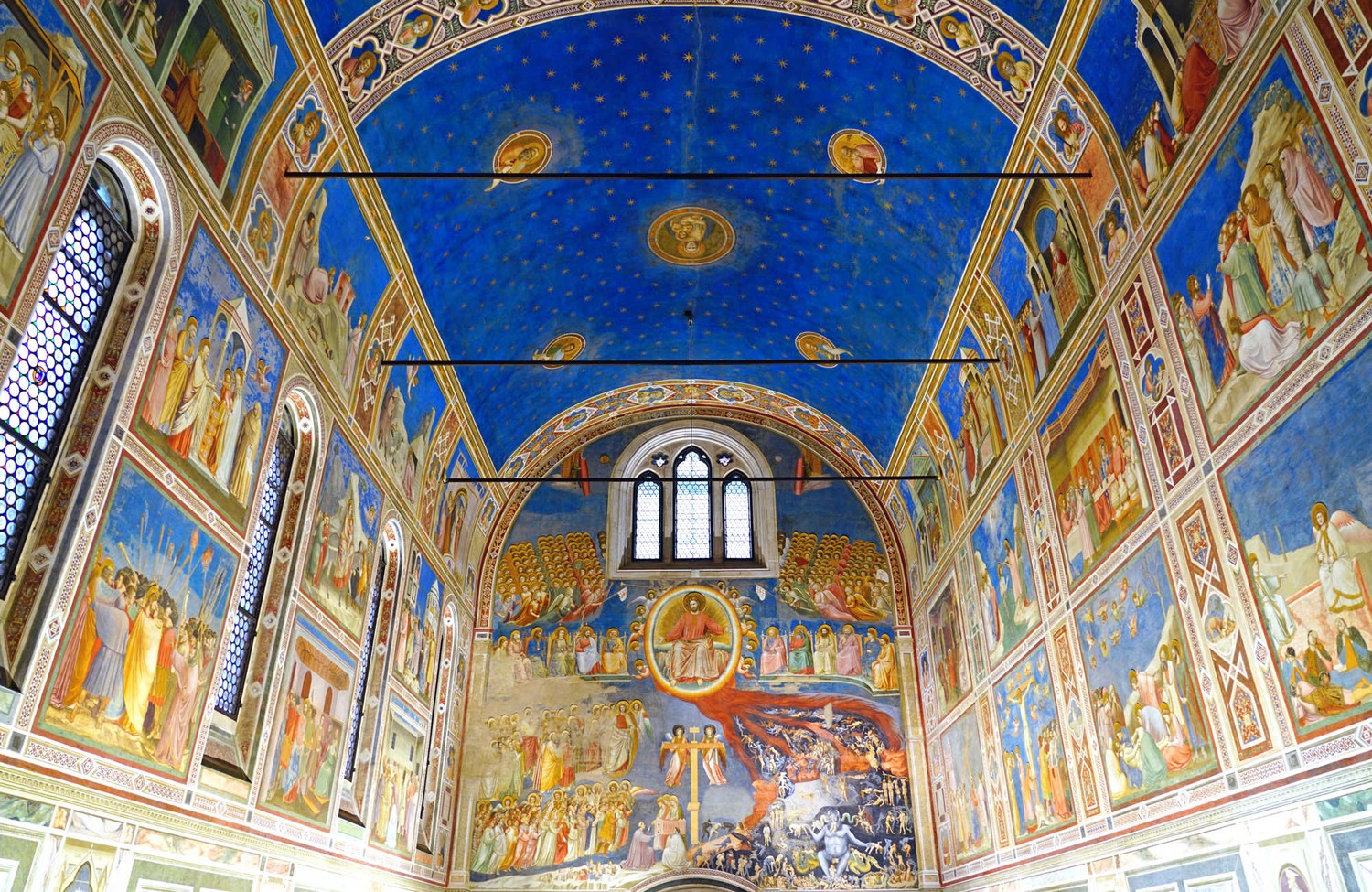
The Cappella degli Scrovegni is not merely adorned with frescoes; it’s housed within a remarkable architectural structure itself. Designed by Arnolfo di Cambio, the chapel's Romanesque design provides the perfect, understated backdrop for Giotto’s monumental work. The building’s simple yet elegant proportions and harmonious balance allow the frescoes to command attention without distraction, creating an atmosphere of reverence and contemplation. Notice the subtle interplay of light and shadow within the space – a deliberate choice by the architect that enhances the impact of the paintings. The chapel's relatively small size—approximately 21 meters long and 8.4 meters wide—further intensifies the experience, drawing the viewer into the heart of Giotto’s artistic vision.
Key Scenes: A Narrative of Faith
The cycle’s centerpiece is undoubtedly the “Last Judgment,” a dramatic depiction of Christ's return that dominates the chapel’s rear wall. This monumental fresco is not merely a representation of divine judgment; it’s a visceral portrayal of human emotion—angels ascending, demons descending, and figures caught in moments of terror and revelation. Equally compelling are scenes from the Annunciation, the Nativity, the Adoration of the Magi, and the Passion of Christ, each rendered with meticulous detail and imbued with a palpable sense of spirituality. Pay particular attention to the “Meeting at the Golden Gate” depicting Mary’s encounter with Joachim – a scene brimming with tenderness and maternal love, showcasing Giotto's ability to capture the nuances of human emotion. The chapel’s narrative unfolds in two distinct paths: one tracing the life of Christ and the other the life of the Virgin Mary, creating a comprehensive visual journey through the story of salvation.
A Legacy Preserved: Patronage and Ongoing Research
Enrico Scrovegni's commitment extended far beyond commissioning the artwork; he meticulously oversaw its execution, ensuring that every detail adhered to his exacting standards. He even stipulated that the chapel remain closed to the public until the frescoes were completed, a testament to his profound reverence for the artistic endeavor. Following Enrico’s death in 1352, the chapel remained within the Scrovegni family, serving as their private oratory and burial place. It wasn't until the early 20th century that the chapel was opened to the public, becoming a cherished treasure of Italian art and culture. Today, the museum diligently manages visitor access to minimize any potential damage, safeguarding this extraordinary artistic achievement for future generations.
Ongoing research continues to shed light on the chapel’s secrets. Scientists are utilizing advanced imaging technologies – including ultraviolet monitoring and digital photography – to analyze the pigments used by Giotto, revealing their chemical composition and understanding how they interact with each other over time. Historians are meticulously examining archival documents to reconstruct the events surrounding the chapel's commission and construction, providing a more complete picture of Enrico Scrovegni’s motivations and his relationship with Giotto. The Scrovegni Chapel remains a vibrant center for scholarly inquiry, ensuring that Giotto’s revolutionary vision continues to inspire and challenge us.
Notable Exhibitions and Future Discoveries
Over the years, the Cappella degli Scrovegni has been the subject of numerous prestigious exhibitions and scholarly studies. In 2015, a major retrospective at the Metropolitan Museum of Art in New York explored Giotto’s life and work, highlighting the chapel as a pivotal moment in art history. The museum regularly hosts temporary exhibitions that delve deeper into specific aspects of the frescoes, offering new insights into Giotto's techniques, his artistic influences, and the historical context of his masterpiece. The ongoing preservation efforts and continued research promise to reveal even more about this extraordinary work of art, solidifying its place as one of the world’s most important cultural landmarks.