A Solitary Vision
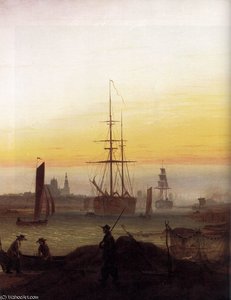
Born in the Baltic port city of Greifswald in 1774, Caspar David Friedrich’s early years were shaped by a profound sense of loss. The deaths of his mother and siblings cast a long shadow over his youth, fostering a sensitivity to mortality that would become a central theme in his work. He began his training under his brother Christian before pursuing art and theology at the University of Leipzig. Though he did not complete either degree, this dual interest in the visual and the spiritual would define his creative path. His technical skills were further honed in Copenhagen, where he was exposed to landscape traditions that he would eventually transform into a medium for expressing inner emotional states.
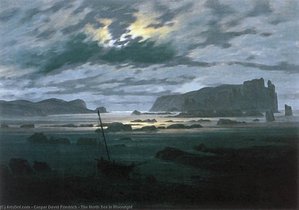
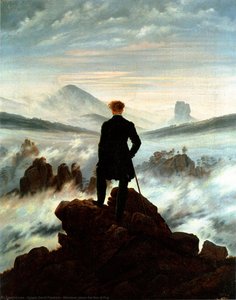
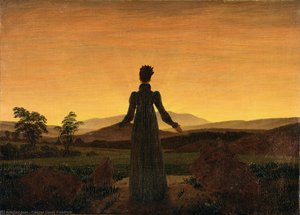
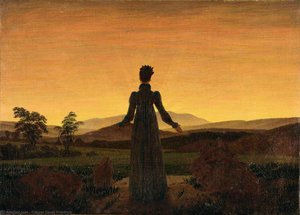
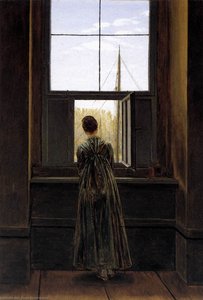
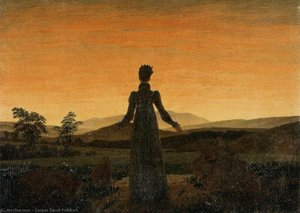
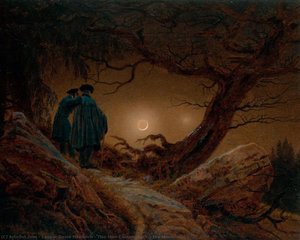
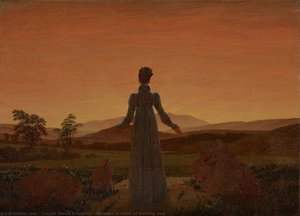
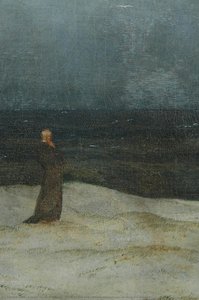
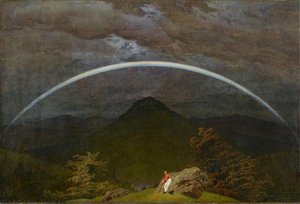
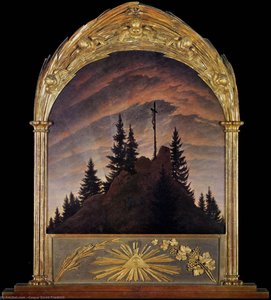
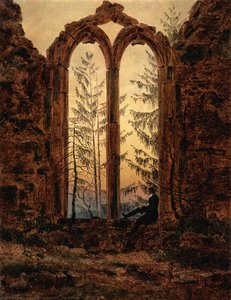
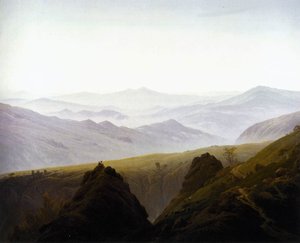
His approach to the landscape moved away from the meticulous detail favored by his predecessors. Instead, he sought to imbue scenery with symbolic meaning, using natural elements to represent the human soul. He often employed Rückenfiguren—figures seen from behind—to invite the viewer to share in a contemplative experience. His palette, frequently composed of muted blues, grays, and browns, enhanced the mood of introspection and solemnity that pervades his oeuvre. He did not merely paint what he saw; he painted the internal weather of the human spirit.
The Language of the Sublime
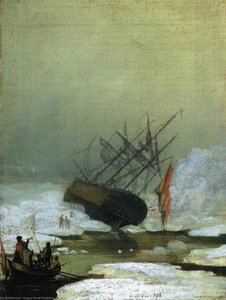
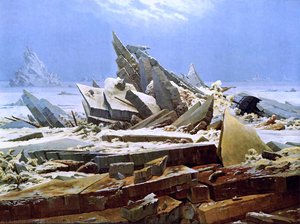
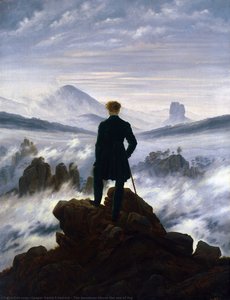
Friedrich’s work emphasizes the sublime, seeking a spiritual connection through the scale of the natural world. His compositions often place solitary figures against a vast, often overwhelming, landscape. In "Wanderer above the Sea of Fog" (c. 1818), the silhouetted figure confronts a swirling sea of mist, embodying the tension between human presence and the infinite. "The Sea of Ice" (1824) presents a chilling Arctic wasteland, a depiction of nature’s immense power and its indifference to human fate. These works reflect a preoccupation with the fragility of existence and the search for meaning within the landscape.
His paintings often utilize specific elements to convey these internal states:
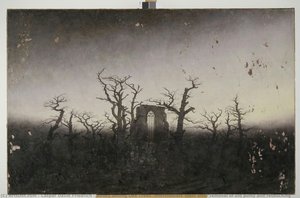
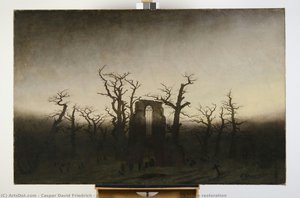
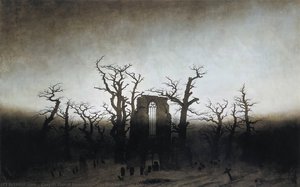
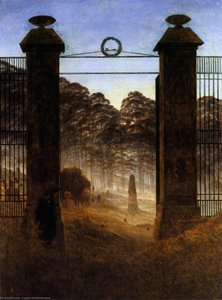
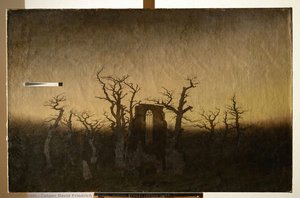
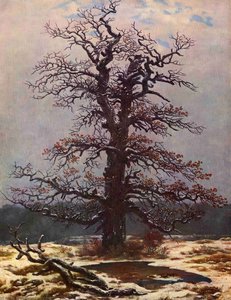
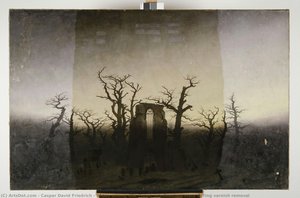
- "The Abbey in the Oakwood" (1809-1810), where a ruined churchyard and bare trees suggest mortality and spiritual decay.
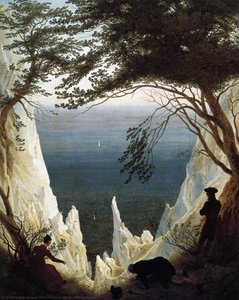
- "Chalk Cliffs on Rügen" (1818), which uses atmospheric light to define the coast.
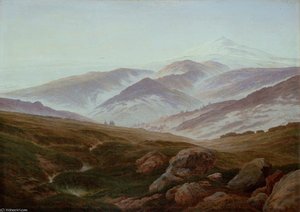
- "The Watzmann," a depiction of mountain majesty.
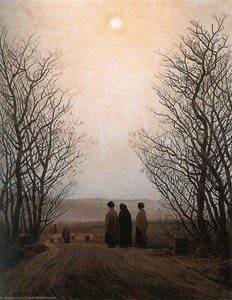
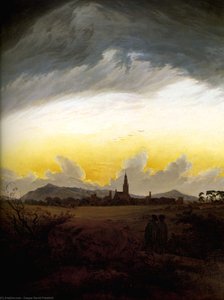
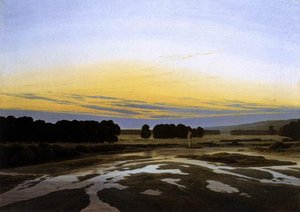
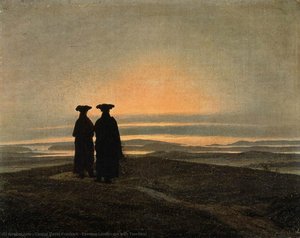
- "Evening Landscape with Two Men" (1830), a quiet scene of twilight contemplation.
Legacy and Rediscovery
The trajectory of Friedrich’s career was not a steady ascent. While he achieved recognition during his lifetime, his popularity waned as artistic tastes shifted toward other movements. He died in Dresden in 1840, and for a time, his name faded from the forefront of the art world. His reputation underwent a significant rediscovery in the late 20th century, as he was recognized as a central figure in German Romanticism. His emphasis on subjective experience and emotional expression paved the way for later movements, including Symbolism and Surrealism.
His influence extended to artists who sought to explore the inner world through visual means. By rejecting Enlightenment rationalism in favor of emotion and imagination, he captured the spirit of an era. His landscapes served as symbols of national identity during a period of political fragmentation in Germany. Today, his work continues to resonate, reminding audiences of the profound connection between humanity and the natural world.
Otázky a odpovede
V akom historickom období tvoril/a Caspar David Friedrich?
Caspar David Friedrich tvoril v období .. Toto obdobie zasazuje umeleckú činnosť umelca do historického kontextu.
V akom meste a v ktorej krajine sa narodil/a Caspar David Friedrich?
Caspar David Friedrich sa narodil v meste Greifswald v krajine Nemecko.