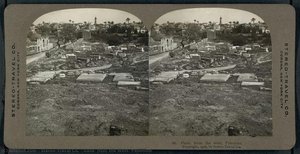
The Visionaries of Depth: The Legacy of Stereo-Travel Co.
In the bustling landscape of early 20th-century photography, few endeavors captured the era's thirst for immersive wonder quite like the work of Stereo-Travel Co. Operating from the vibrant neighborhood of Corona, Queens, New York City, between approximately 1905 and 1916, this studio carved out a specialized niche that transcended mere documentation. While many contemporary photographers were preoccupied with the burgeoning urban portraiture or the gritty realities of city life, Stereo-Travel Co. turned its lens toward the sublime, dedicating much of its creative energy to the monumental grandeur of the American West. Their primary mission was nothing less than the dissemination of the breathtaking vistas of the Grand Canyon, translating the immense scale of nature into a format that could be experienced within the intimacy of a parlor.
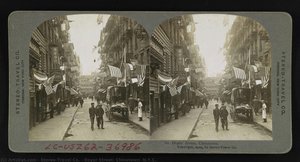
The artistry of Stereo-Travel Co. lay in their mastery of the stereograph, a medium that promised a window into another dimension. By producing meticulously crafted stereoviews—most notably a significant collection of around 38 views produced in 1906—the company utilized the burgeoning technology of stereoscopy to create a three-dimensional illusion. Through the use of two slightly different perspectives mounted on characteristic gray curved mounts, they allowed viewers to peer through a stereoscope and witness the canyon's depths as if standing upon its precipice. This technique was not merely a technical feat but a strategic bridge between scientific exploration and popular entertainment, turning geological wonders into accessible, tactile experiences for a public captivated by the mysteries of the natural world.
A Window to the Wild: Technique and Mass Consumption
The production methods of Stereo-Travel Co. reflected a sophisticated understanding of both art and commerce during the Progressive Era. Their output was thoughtfully structured to cater to various levels of engagement, ranging from individual stereoviews that focused on specific, breathtaking vistas to curated boxed sets designed to offer a sweeping, panoramic journey through the canyon's labyrinthine layers. This approach allowed for a democratization of travel; for those unable to undertake the arduous journey to the American Southwest, these images provided a surrogate expedition. The careful consideration given to the mounting and presentation ensured that the optical illusion remained crisp and profound, maximizing the emotional impact of every shadow and sunlit ridge captured on film.
Beyond the technicalities of light and lens, the work of Stereo-Travel Co. serves as a poignant reflection of the cultural zeitgeist of the early 1900s. Their focus aligned perfectly with a period marked by:
- A profound fascination with geological exploration and the scientific unveiling of the continent's secrets.
- The rise of technological optimism, where new photographic processes promised to bring the distant world closer to home.
- A growing national desire to document and celebrate the grandeur of the American wilderness as a symbol of identity and progress.
Historical Significance and the End of an Era
Though the name Stereo-Travel Co. may not resonate with the same immediate fame as titans like Mathew Brady or the industrial giant Eastman Kodak, their contribution to the history of visual culture is undeniably significant. They were pioneers of a specific type of immersive media that predated modern cinematic experiences, providing a precursor to how we consume landscape photography today. Their work stands as a vital historical record of the Grand Canyon's appearance and the way early 20th-century audiences perceived the scale of the American landscape.
As the years progressed toward the end of the First World War, the era of the stereograph began to wane, eclipsed by new forms of motion pictures and more advanced photographic technologies. However, the legacy of Stereo-Travel Co. remains etched in the gray curved mounts of their surviving collections. They remain a testament to a time when photography was not just about capturing a moment, but about creating a doorway—a way to transport the human spirit from the streets of Queens to the edge of the infinite canyon walls.
Otázky a odpovede
Z ktorej krajiny pochádza Stereo-Travel Co.?
Stereo-Travel Co. sa narodil/a v krajine United States of America.