
The Building and its Architecture
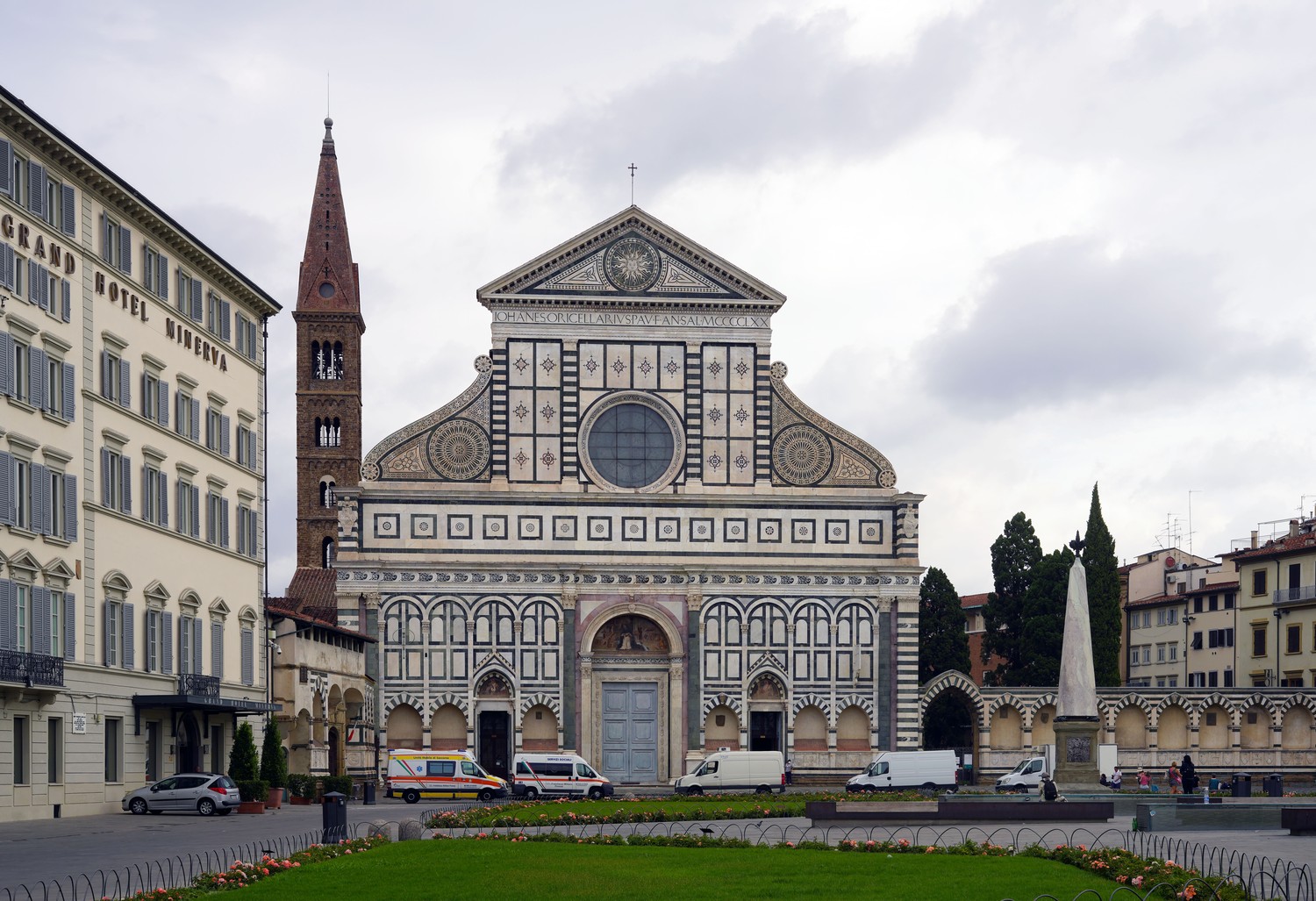
The basilica is considered the most important Romano-Gothic church in Tuscany. Its structure reflects a long period of development, with the lower section of the Romano-Gothic facade having been started in 1350 and finally completed in 1920. The facade itself presents a distinctive appearance through geometric patterns of white and green marble. Large S-shaped scrolls define the corners of each pediment, providing a structural solution to the transition between different floor levels.
Leon Battista Alberti designed the upper part of the facade, which was finished in 1470. This intervention introduced a humanist sensibility into the existing Gothic framework. Inside, the basilica follows a vast, T-shaped Egyptian cross plan. The architecture creates a dialogue between different styles, where the soaring ribbed vaults and polychrome arches direct the gaze upward toward the clerestory windows.
Masterpieces of the Collection
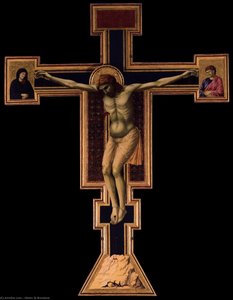
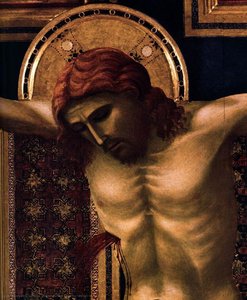
Within the quietude of the basilica, Giotto di Bondone’s Crucifix commands the space. This work, characterized by its tempera technique, uses egg yolk to achieve a specific luminosity in the rendering of flesh and drapery. Nearby, Masaccio’s Trinity, executed about 1425-1427, utilizes linear perspective to create a profound illusion of depth, opening a window into a sacred, spatial realm. These works exist not as mere objects, but as presences that have shaped the trajectory of religious art.
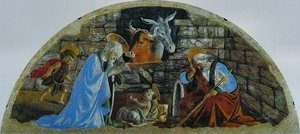
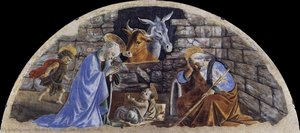
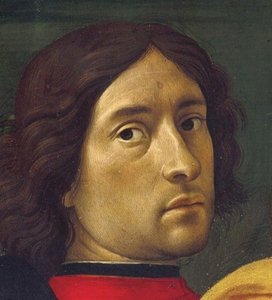
The walls of the Tornabuoni Chapel hold the frescoes of Domenico Ghirlandaio, where the artist’s skill in capturing human character is evident in the detailed portraiture. In another corner, a fresco by Sandro Botticelli depicts a nativity scene, utilizing soft terracotta tones to frame the figures of Mary, Joseph, and the infant Jesus within a stable setting. The atmosphere is one of quiet reverence, supported by the delicate, flowing lines characteristic of the artist's hand.
Sculptural elements provide a tactile dimension to the interior. A marble statue of the Madonna and the Child by Nino Pisano resides within the Rucellai Chapel. Additionally, a polychromed wooden statue, dating from about 1410–15, remains a significant presence among the church's many treasures. These objects, alongside the architectural elements, create a continuous dialogue between the sacred and the material.
Treasures of the Officina Profumo-Farmaceutica
Located at Via della Scala 16 in Florence, the Officina Profumo-Farmaceutica di Santa Maria Novella occupies the historic premises of the convent complex of the Basilica of Santa Maria Novella. This site is recognized as the oldest pharmacy in the world. Its presence is documented as far back as 1508, though it only opened to the public in 1612. The space retains a sense of continuity that links the modern apothecary to its Dominican origins.
The scents within the shop are specific and enduring. Preparations are infused with rose, jasmine, and ambergris. These fragrances emerge from a tradition of cultivating medicinal plants, a practice that began when the Dominican Order settled in the area in 1221. The air carries the weight of these botanical histories through the halls of the pharmacy.