

The Alchemy of Earth and Canvas: Where Science Meets the Sublime
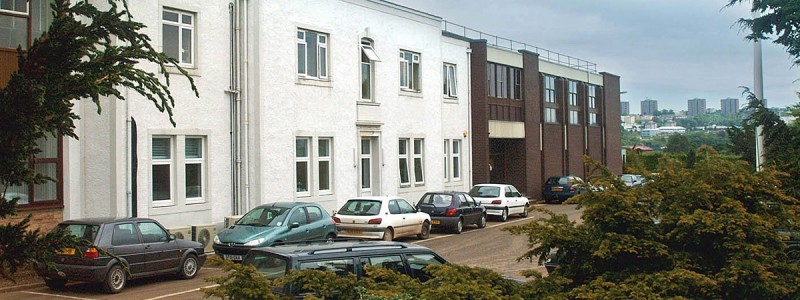
In the heart of Scotland’s industrious landscape, nestled between the vibrant pulse of Dundee and the historic echoes of Aberdeen, lies an institution that defies the traditional boundaries of a research center. The James Hutton Institute is far more than a sanctuary for soil science and agricultural innovation; it is a profound intersection where the empirical rigor of the laboratory meets the evocative power of the visual arts. Named after the legendary "Father of Modern Geology," James Hutton, the Institute embodies the very essence of the Scottish Enlightenment—a period when the pursuit of rational inquiry was inseparable from a deep, aesthetic appreciation for the natural world’s enduring transformations.
To wander through the intellectual corridors of the Institute is to witness a silent dialogue between the geological and the painterly. The legacy of Hutton, whose groundbreaking theories revealed an Earth shaped by infinite time and relentless natural processes, finds its visual counterpart in the meticulous textures of Victorian portraiture. One cannot help but feel the weight of history when contemplating works like Thomas Alexander Ferguson Graham’s oil painting of Sir James Low. In this masterful depiction, the dignified presence of the former Lord Provost is rendered with a precision that mirrors the scientific scrutiny applied to the very land he helped govern. The brushwork does not merely capture a likeness; it captures an era of authority and meticulous detail, much like the careful layers of sediment studied within the Institute’s own research walls.
A Visual Narrative of Scientific Ambition
The collection serves as a visual narrative of scientific ambition, bridging the gap between the seen and the understood. For the discerning collector or interior designer, these pieces offer more than mere decoration; they provide a window into a time when the pursuit of knowledge was viewed as a grand, heroic drama, rendered in the fine oils of the Victorian tradition. A particularly captivating highlight is the 1905 depiction by Henry Brooks , which portrays Sir James Dewar lecturing on liquid hydrogen at the Royal Institution. Here, the atmosphere is thick with the gravity of discovery; Brooks utilizes rich textures and a somber, commanding palette to convey the seriousness of scientific endeavor.
What truly distinguishes The James Hutton Institute is its commitment to a multidisciplinary synthesis, treating scientific discovery and artistic contemplation as two sides of the same coin. Through curated exhibitions that occasionally bring the Institute’s latest environmental findings into direct conversation with fine art, the institution fosters a unique cultural dialogue. It reminds us that beauty enhances comprehension and that the most profound truths about our planet—from the stability of our soils to the volatility of our climate—are best understood when viewed through both the microscope and the lens of human creativity. It is a place where the rugged landscapes of the Scottish Lowlands are not just measured, but truly felt.


