Introduction
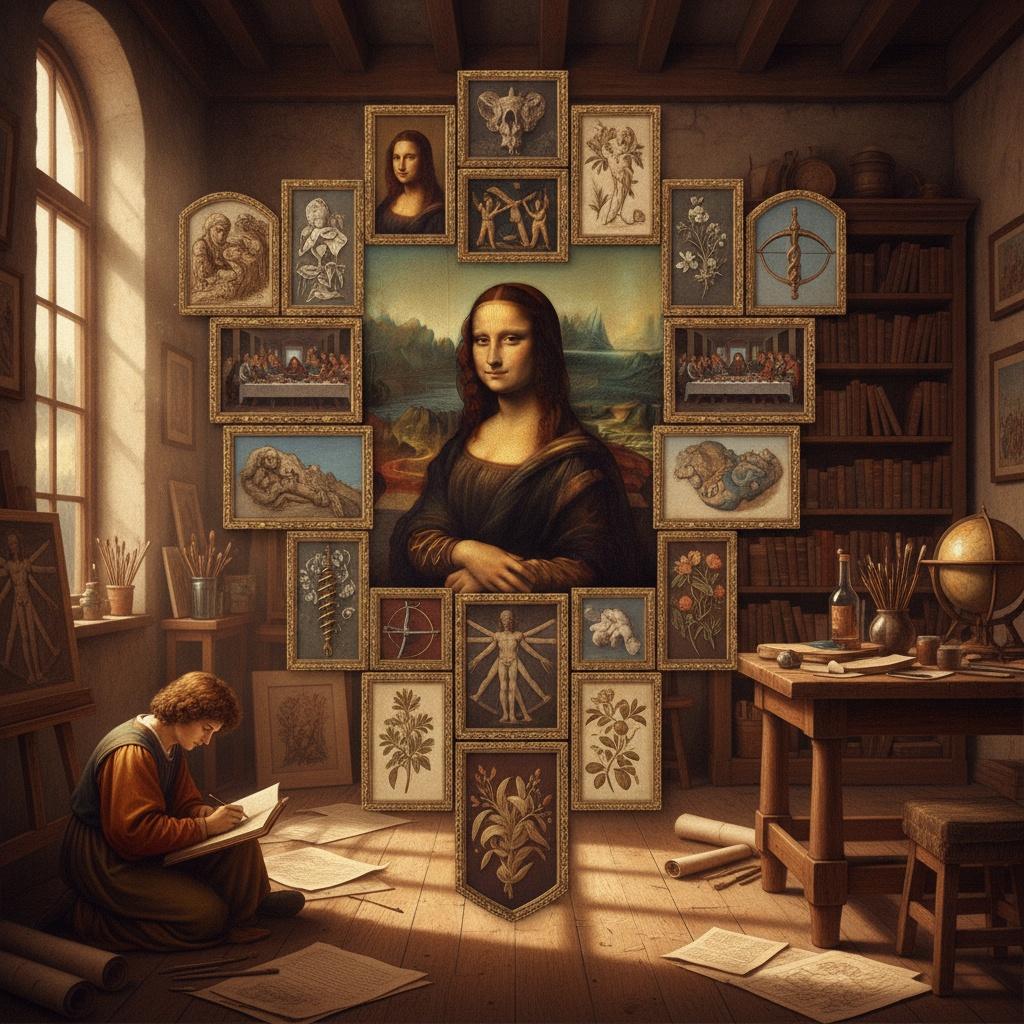
To step into the world of Leonardo da Vinci is to enter a realm where the boundaries between science, engineering, and fine art dissolve into a single, breathtaking vision. He was not merely a painter, but a polymath whose insatiable curiosity allowed him to see the hidden mechanics of the universe—the way light dances on skin, the subtle flow of water, and the profound psychological depths of the human soul. His works are more than just relics of the Italian Renaissance; they are windows into a mind that was centuries ahead of its time, capturing the very essence of human intellect and emotion.
Born in the small village of Vinci and refined in the vibrant workshops of Florence and Milan, Leonardo’s journey took him from the apprenticeship of Verrocchio to the grand courts of Ludovico Sforza. During this era of immense cultural rebirth, he pioneered techniques such as sfumato —the delicate, smoky blurring of edges—and mastered the use of light and shadow to create a sense of three-dimensional life that had never been seen before. His canvases do not just sit on a wall; they breathe with a lifelike vitality that continues to captivate viewers across every continent.
Today, these masterpieces remain profoundly meaningful because they speak to the universal human experience. Whether it is the haunting mystery of a smile or the dramatic tension of a shared betrayal, Leonardo’s art explores the complexities of our existence with an unparalleled anatomical and emotional precision. His ability to blend technical mastery with poetic grace ensures that his legacy remains as vibrant today as it was in the 15th century.
In the following selection, we invite you to journey through a curated collection of his most significant achievements. From monumental frescoes to intimate sketches, this list of the top 25 artworks by Leonardo da Vinci celebrates the enduring power of a genius who taught the world how to truly see.
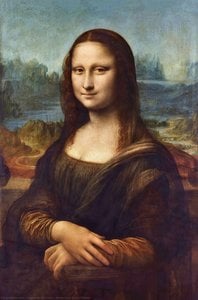
Mona Lisa (La Gioconda) - Leonardo da Vinci
The Mona Lisa stands as the ultimate enigma within the top 25 artworks of Leonardo da Vinci, a portrait that transcends mere paint on wood to become a living psychological study. Her subtle, shifting smile and the way her gaze seems to follow the viewer create an intimate, almost haunting connection that has captivated collectors for centuries. Through the revolutionary use of sfumato —a technique of smoky, seamless transitions—da Vinci eliminated harsh outlines, allowing light to glow softly across her skin like a gentle mist.
This masterpiece embodies the High Renaissance ideal of humanism, blending scientific anatomical precision with an ethereal, atmospheric landscape. In modern interior curation, the muted earthy tones and the profound sense of quiet prestige found in La Gioconda offer a timeless focal point for sophisticated spaces. Whether viewed as a study of nature's harmony or a window into the human soul, her presence remains a powerful cultural touchstone, inviting endless contemplation and emotional resonance in any professional gallery or private collection.
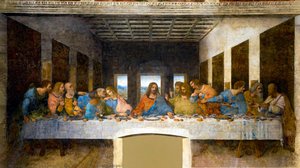
The Last Supper - Leonardo da Vinci
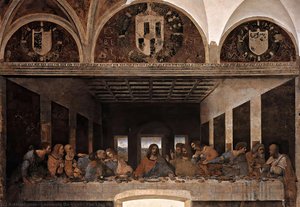
In The Last Supper by Leonardo da Vinci, the lines aren’t merely drawn; they are choreographed . This is not a static composition; it is a dance frozen in time , capturing the precise, seismic moment of betrayal and revelation. As you observe the twelve apostles, you witness a masterclass in psychological drama, where every gesture—from Judas recoiling in shadow to Christ’s calm, central stability—contributes to a profound sense of movement.
Leonardo employs a rigorous one-point perspective that draws the eye toward the vanishing point behind Jesus, creating a three-dimensional depth that pulls the viewer into the refectory. The palette, rich with muted earth tones, ochres, and deep shadows, evokes a somber, contemplative mood that transcends the centuries. This masterpiece stands as a pillar in the top 25 artworks of Leonardo da Vinci because it achieves the impossible: making human chaos feel like perfect harmony. What if your professional or residential space could hold that same balance? What if your walls could breathe rhythm and command the same quiet, monumental authority?
Vitruvian Man - Leonardo da Vinci
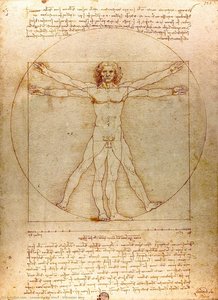 Vitruvian Man - Leonardo da Vinci
In the Vitruvian Man by Leonardo da Vinci, we encounter a profound masterclass in geometric equilibrium. The composition is anchored by the striking intersection of the circle and the square, two fundamental shapes that frame the human form with mathematical certainty. Da Vinci uses precise, delicate pen-and-ink lines to map the limbs across these overlapping boundaries, creating a visual rhythm that feels both structurally rigid and organically fluid. This structural harmony achieves a sense of timeless perfection, making it an essential pillar among the top 25 artworks of Leonardo da Vinci.
The balance found within this study transcends its Renaissance origins; there is a striking parallel between Da Vinci’s pursuit of proportion and the principles of modern minimalist design. The clean, centered focus and the absence of unnecessary ornamentation allow the work to ground a contemporary aesthetic, offering a sophisticated focal point for any curated space. Through this drawing, the artist captures the eternal tension between the earthly square and the divine circle, inviting us to see the human body as the ultimate measure of cosmic order.
The Baptism of Christ - Leonardo da Vinci
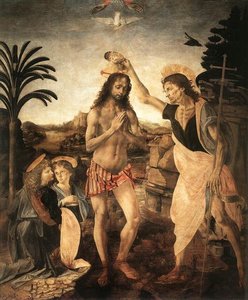 The Baptism of Christ - Leonardo da Vinci
There is a profound, quiet sanctity in The Baptism of Christ , a moment where the divine intersects with the earthly through the gentle flow of water and light. This masterpiece stands among the top 25 artworks of Leonardo da Vinci because it captures the very dawn of his genius. Created during his apprenticeship under Verrocchio, the painting reveals the emergence of Leonardo’s signature atmospheric depth and anatomical precision. The ethereal glow on the angel's face and the luminous, layered landscapes showcase an early mastery of light that would later define the High Renaissance.
The work breathes with a sense of spiritual transformation, utilizing a harmonious palette of earthy tones and soft blues to evoke reverence. At Mus3ums.com, we honor this historical significance through our hand-painted oil reproductions. Our artists meticulously recreate the visible brushstrokes and rich textures of this Renaissance treasure, allowing you to integrate the profound emotional resonance and timeless beauty of Da Vinci’s early brilliance into your own professional or private space.
Lady with an Ermine - Leonardo da Vinci
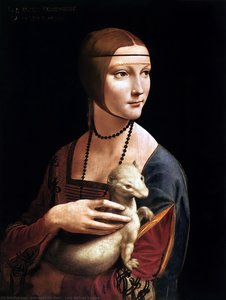 Lady with an Ermine - Leonardo da Vinci
In Lady with an Ermine , the viewer is immediately drawn to the breathtaking tactile reality of Leonardo da Vinci’s mastery. One can almost feel the contrast between the soft, luminous skin of Cecilia Gallerani and the bristling, meticulous texture of the ermine’s fur. This work stands as a cornerstone of the top 25 artworks of Leonardo da Vinci due to his revolutionary use of sfumato —a technique of smoky, seamless transitions that eliminates harsh outlines, allowing light to wrap around the subject with an ethereal glow.
The subtle gradations of shadow and the delicate layering of oil glazes create a profound psychological depth, capturing a moment of quiet, intelligent alertness. At Mus3ums.com, our mission is to preserve this three-dimensional quality for your collection. Our hand-painted oil reproductions utilize authentic brushstrokes and heavy impasto techniques to ensure that the physical soul, the light, and the sculptural movement of Da Vinci’s original masterpiece are tangibly present in your space, far beyond the flat limitations of a mere print.
Annunciation - Leonardo da Vinci
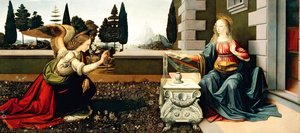 Annunciation - Leonardo da Vinci
Acquiring a reproduction of the Annunciation by Leonardo da Vinci is an investment in unparalleled legacy and refined taste for any discerning collector. As one of the most significant works within the top 25 artworks of Leonardo da Vinci, this early masterpiece showcases the profound technical evolution of the Renaissance master. Painted during his apprenticeship under Verrocchio, the work demonstrates a breathtaking command of sfumato , using subtle, smoky transitions to breathe life into the celestial figure of Gabriel and the serene Virgin Mary.
The composition is a triumph of High Renaissance elegance, where a vibrant palette of deep reds and blues meets a meticulously rendered landscape. Every detail—from the symbolic Madonna lily representing purity to the atmospheric perspective of the distant mountains—serves to elevate the spiritual narrative. For the modern professional decorating high-end corporate spaces or luxury hospitality suites, this piece offers immense aesthetic authority. A high-quality, hand-painted oil reproduction carries the same prestige and status as the original, providing a focal point of profound peace and historical weight that resonates perfectly within contemporary, sophisticated interiors.
The Virgin and Child with Saint Anne - Leonardo da Vinci
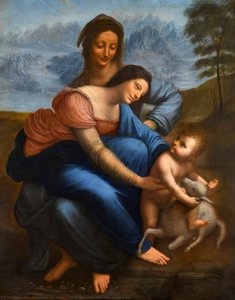 The Virgin and Child with Saint Anne - Leonardo da Vinci
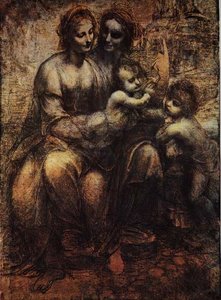
What story does the misty, receding landscape in The Virgin and Child with Saint Anne by Leonardo da Vinci tell? Beyond the figures, the background reveals a masterclass in atmospheric perspective, where distant mountains dissolve into a soft, blue haze, creating an infinite sense of space. This work stands as a pillar among the top 25 artworks of Leonardo da Vinci because it perfectly captures the High Renaissance transition from rigid forms to organic, flowing grace.
The composition utilizes a stable pyramidal structure, weaving Saint Anne, the Virgin Mary, and the Christ Child into a single, tender movement. Through his signature sfumato technique, Leonardo eliminates harsh outlines, allowing light and shadow to merge with smoky subtlety. For the modern collector or interior designer, this painting offers more than mere decoration; it provides a curated escape. The somber blues and rich, earthy tones evoke a profound sense of historical depth and divine tranquility, making it an ideal centerpiece for those seeking to infuse a professional space with timeless, soulful elegance.
Virgin of the Rocks - London - Leonardo da Vinci
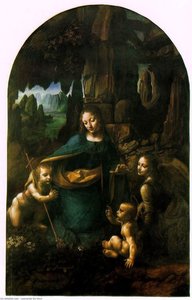 Virgin of the Rocks - London - Leonardo da Vinci
In the Virgin of the Rocks - London , Leonardo da Vinci invites us into a secluded, mystical sanctuary where the boundaries between the divine and the natural world dissolve. This masterpiece stands as a cornerstone among the top 25 artworks of Leonardo da Vinci due to its profound psychological depth and the seamless integration of sacred figures within a rugged, primordial landscape. Through his pioneering sfumato technique, Leonardo creates a smoky, atmospheric haze that softens the contours of the Virgin Mary, the infant Christ, and John the Baptist, enveloping them in a gentle, divine illumination.
The composition utilizes a stable pyramidal structure, offering a sense of eternal balance that resonates deeply with modern minimalist aesthetics. The interplay of light and shadow within the rocky grotto evokes a contemplative mood, making it a powerful focal point for sophisticated, curated interiors. As we observe the delicate textures of skin and stone, the painting remains a relevant cultural touchstone, reminding contemporary viewers of the enduring harmony between human emotion and the untamed beauty of the natural world.
Portrait of an Unknown Woman (La Belle Ferroniere) - Leonardo da Vinci
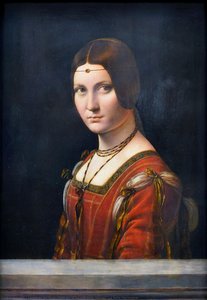 Portrait of an Unknown Woman (La Belle Ferroniere) - Leonardo da Vinci
In the quiet corridors of art history, few works possess the enigmatic allure of La Belle Ferronnière . Painted around 1490 during Leonardo da Vinci’s Milanese period, this masterpiece is a masterclass in psychological depth and technical precision. The subject, shrouded in mystery, gazes outward with a directness that feels both intimate and challenging, her presence anchored by the luminous textures of her silk attire and delicate gold ornaments.
Leonardo utilizes his signature sfumato technique here, layering thin glazes to create a smoky, seamless transition between light and shadow. This soft, ethereal glow breathes life into the subject’s features, making the skin appear supple and the gaze profoundly human. The dark, atmospheric background serves to pull the viewer into her immediate orbit, highlighting the meticulous detail of her braided hair and the subtle modeling of her face. Owning a reproduction of this Da Vinci classic is more than an aesthetic choice; it is an inheritance of Renaissance refinement, bringing a lineage of timeless taste and quiet prestige directly to your walls.
Map of Tuscany and the Chiana Valley - Leonardo da Vinci
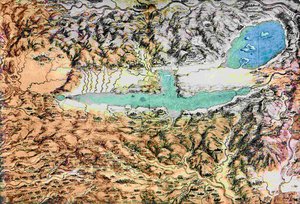 Map of Tuscany and the Chiana Valley - Leonardo da Vinci
In the Map of Tuscany and the Chiana Valley , the tactile essence of Leonardo da Vinci’s genius is revealed through the delicate, granular texture of chalk on paper. To observe this work is to witness the master’s hand translating topographical reality into a rhythmic dance of light and shadow; the subtle shading of the mountains creates a palpable sense of relief, while the meandering rivers possess a fluid, organic vitality. This piece stands firmly within the top 25 artworks of Leonardo da Vinci because it represents the perfect intersection of scientific cartography and fine art, showcasing his unparalleled ability to map both terrain and human intellect.
At Mus3ums.com, we strive to preserve this profound materiality for collectors and decorators alike. Our hand-painted oil reproductions capture the very soul of such masterpieces, recreating the visible depth of Leonardo’s strokes and the atmospheric nuances of the Renaissance landscape. We bring the three-dimensional quality of these historical documents into your professional or residential spaces, ensuring that the intricate textures and scientific precision of the original are rendered with museum-grade fidelity on premium cotton canvas.
Salvator Mundi - Leonardo da Vinci
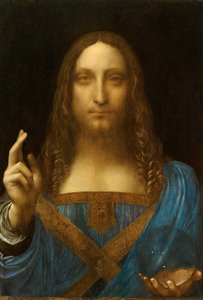 Salvator Mundi - Leonardo da Vinci
In the Salvator Mundi , the viewer is met with a gaze that is both profoundly serene and hauntingly enigmatic. Leonardo da Vinci captures a moment of divine stillness, where the soft, hazy edges of his signature sfumato technique allow the figure of Christ to emerge from the shadows with an almost ethereal glow. The subtle play of light across the transparent rock crystal orb and the rich, deep blues of the Renaissance robes create a sense of weightless majesty.
As one of the most significant pieces in our collection of the top 25 artworks of Leonardo da Vinci , this painting serves as a universal mirror of spiritual peace and cosmic order. The psychological depth achieved through layered glazes invites a quiet, contemplative state. Integrating a high-quality reproduction of this masterpiece into your professional or private space can transform a room into a sanctuary for profound reflection, bringing the quiet prestige and timeless calm of the High Renaissance directly to your walls.
Saint John the Baptist - Leonardo da Vinci
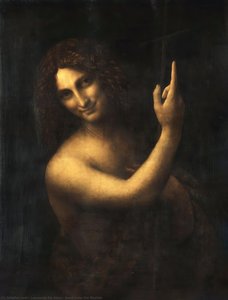 Saint John the Baptist - Leonardo da Vinci
In the quiet shadows of Leonardo da Vinci’s final years, Saint John the Baptist emerges as a profound meditation on divinity and the enigmatic human spirit. This masterpiece, often cited among the top 25 artworks of Leonardo da Vinci , transcends traditional religious iconography through its hauntingly beautiful use of sfumato . The soft, smoky transitions of light and shadow wrap around the figure, creating a sense of depth that feels almost tactile, as if the saint is emerging from the darkness itself.
The painting’s power lies in its psychological mystery; the Saint’s subtle, knowing smile—reminiscent of the Mona Lisa —invites viewers into a private moment of spiritual revelation. As he points toward the heavens, the composition balances earthly texture with celestial longing. In modern interior curation, this work serves as a powerful focal point for spaces seeking a sense of quiet prestige and intellectual depth. Its interplay of deep chiaroscuro and luminous skin tones continues to influence contemporary aesthetics, making it a timeless cornerstone of Renaissance mastery that resonates in any sophisticated collection.
Reverse side of the portrait of Ginevra de' Benci - Leonardo da Vinci
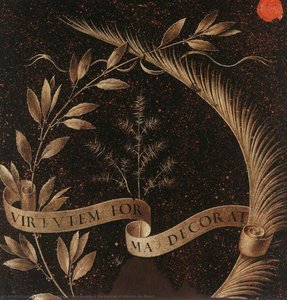 Reverse side of the portrait of Ginevra de' Benci - Leonardo da Vinci
The Reverse side of the portrait of Ginevra de' Benci by Leonardo da Vinci exists as a whispered secret, a monochrome shadow cast from the back of a masterpiece to reveal the profound intellectual depth of the Renaissance. This work is immortalized among the top 25 artworks of Leonardo da Vinci because it transcends mere likeness, offering instead a symbolic emblem of virtue and resilience. Through the delicate, velvety textures of drypoint etching, Da Vinci weaves a tapestry of Latin inscriptions and intricate foliage that breathes life into the concept of moral beauty.
The composition evokes a sense of solemnity, where the muted shades of brown and beige create a contemplative atmosphere, perfect for adding a layer of historical sophistication to a modern study or gallery space. As you observe the fine, incised lines and the heraldic arrangement of branches, you feel the pulse of an era defined by the pursuit of wisdom. It is not just a drawing; it is a tactile fragment of history that brings a quiet, scholarly elegance to any contemporary interior.
St Jerome - Leonardo da Vinci
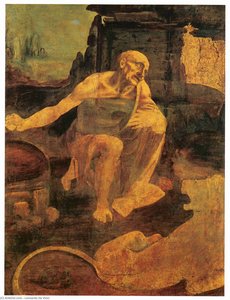 St Jerome - Leonardo da Vinci
In the shadows of the Pinacoteca Vaticana, St Jerome emerges not merely as a religious figure, but as a profound study of human vulnerability and intellectual rigor. As you stand before this unfinished masterpiece, you are witnessing Leonardo da Vinci at the height of his anatomical inquiry. The light does not simply strike the aged, sinewy neck of the saint; it is composed by Leonardo to reveal the very tension of spiritual penance. Through his revolutionary sfumato technique, the boundaries between the rugged, rocky wilderness and Jerome’s contemplative form begin to dissolve into a hazy, atmospheric dreamscape.
Every stroke of the monochrome underpainting serves as a window into the artist's soul, capturing the raw texture of skin and stone. The presence of the lion and the stark, desolate landscape invite you into a moment of eternal solitude. This work is essential to the top 25 artworks of Leonardo da Vinci because it captures the precise intersection of scientific observation and divine mystery, offering a hauntingly beautiful portal of inspiration for any collection.
Madonna Litta - Leonardo da Vinci
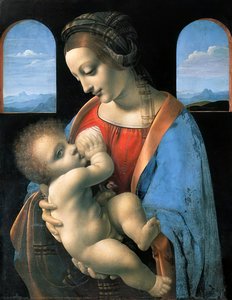 Madonna Litta - Leonardo da Vinci
To stand before a masterpiece is to witness the precise moment where human divinity meets earthly grace. In the Madonna Litta by Leonardo da Vinci, we encounter this intersection through a scene of profound, quiet intimacy. Created around 1490 during his influential Milanese period, this work is an essential inclusion in our exploration of the top 25 artworks of Leonardo da Vinci because it showcases the early mastery of his revolutionary techniques.
The painting breathes with the soft, hazy transitions of sfumato , where light and shadow dissolve sharp edges to create an ethereal atmosphere. As you observe the Virgin Mary cradling the Christ child, the subtle textures of her blue garments and the delicate, translucent glazes evoke a sense of living flesh and spirit. The composition, framed by architectural arches that lead the eye toward a distant, misty landscape, provides a rhythmic depth that was unprecedented. Through the symbolic presence of the goldfinch and the tender gaze between mother and child, Leonardo captures an emotional resonance that transcends centuries. This work remains a timeless testament to how art can transform a space into a sanctuary of contemplation.
Sala delle Asse, detail of Monochrome during the restoration (2012-2015) - Leonardo da Vinci
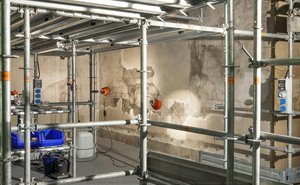 Sala delle Asse, detail of Monochrome during the restoration (2012-2015) - Leonardo da Vinci
A profound silence resides within the Sala delle Asse, detail of Monochrome during the restoration (2012-2015) by Leonardo da Vinci , where the very breath of the Renaissance was rediscovered beneath centuries of concealment. This work earns its place among the top 25 artworks of Leonardo da Vinci not merely as a painting, but as a miraculous archaeological revelation. The monochrome study captures the muscular, raw energy of mulberry roots intertwining with shattered stone, showcasing the master's early command over texture and organic form.
To witness this detail is to feel the dampness of the earth and the grit of the rock, rendered with a precision that precedes his famous sfumato technique. The restoration process itself—peeling back layers of lime and whitewash—serves as a metaphor for uncovering truth. In modern high-end interiors, such profound historical depth offers an unparalleled sense of intellectual sophistication and architectural gravity, bringing the disciplined, scientific beauty of Da Vinci’s anatomical and natural observations into the contemporary living space.
Female head (La Scapigliata) - Leonardo da Vinci
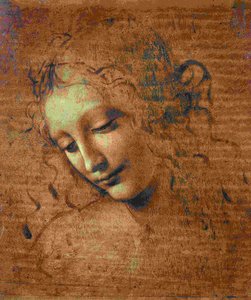 Female head (La Scapigliata) - Leonardo da Vinci
In the quiet shadows of La Scapigliata , a single moment of introspection is frozen in time, capturing the ethereal essence of Leonardo da Vinci’s unparalleled genius. As one of the most profound entries in our collection of the top 25 artworks of Leonardo da Vinci, this portrait transcends mere paint on wood; it is a masterclass in the sfumato technique , where soft, smoky transitions blur the lines between reality and dream. The subject’s downward gaze and flowing, unbound hair evoke a sense of melancholic beauty and psychological depth that remains strikingly modern.
The palette, rich with subtle umbers and luminous whites, creates a tactile sensation of light sculpting form from the darkness. For the discerning decorator or collector, integrating a reproduction of this masterpiece into a contemporary space introduces an atmosphere of quiet prestige and intellectual calm. Its delicate textures and mysterious aura serve as a sophisticated focal point, bringing the timeless elegance of the Italian Renaissance into the heart of modern architectural design.
The Madonna of the Carnation (detail) - Leonardo da Vinci
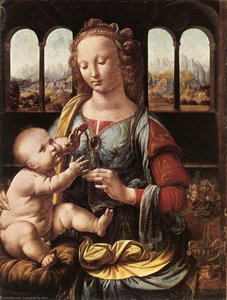 The Madonna of the Carnation (detail) - Leonardo da Vinci
Imagine a moment of profound stillness, where the frantic pace of the world dissolves into a single, tender breath of maternal devotion. In this detail of The Madonna of the Carnation , Leonardo da Vinci invites us into the intimate sanctuary of the High Renaissance. The soft, luminous skin of the Christ child and the gentle, protective gaze of Mary create an atmosphere of unparalleled serenity, captured through his early mastery of light and shadow.
This work earns its place among the top 25 artworks of Leonardo da Vinci because it transcends mere religious iconography; it is a masterclass in human connection. Through the delicate symbolism of the carnation—representing purity and compassion—Leonardo weaves a narrative of divine grace that remains deeply relatable. As we navigate our modern, high-pressure lives, bringing such timeless imagery into our professional or personal spaces can serve as a powerful anchor, evoking a sense of peace, stability, and historical depth that enriches any architectural environment.
Recto: The heart, bronchi and bronchial vessels. Verso: A sketch of the heart and great vessels - Leonardo da Vinci
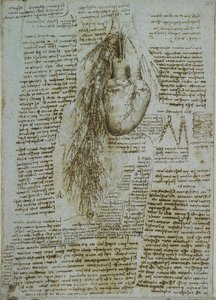 Recto: The heart, bronchi and bronchial vessels. Verso: A sketch of the heart and great vessels - Leonardo da Vinci
While many recognize Leonardo da Vinci for the ethereal smile of the Mona Lisa , his true genius often resided in the shadows of dissection. In 1511, far from the finished canvases of the Renaissance, Leonardo produced “Recto: The heart, bronchi and bronchial vessels. Verso: A sketch of the heart and great vessels,” a work that serves as a visceral window into his anatomical obsession. This study transcends mere illustration; it is a profound scientific inquiry where the artist’s hand meets the surgeon's precision.
Using fine drawing media, Leonardo meticulously charted the branching bronchial tree and the intricate architecture of the heart valves. He did not merely record what he saw; he used empirical observation to challenge the medical dogmas of his era, rejecting long-held myths about circulation through sheer intellectual rigor. The subtle shading and delicate cross-hatching create a sense of living volume that is breathtakingly tactile. For the modern professional, displaying such a masterpiece in a home office or study invokes an atmosphere of deep focus and relentless curiosity, inspiring a space dedicated to precision, innovation, and the pursuit of excellence.
A deluge - Leonardo da Vinci
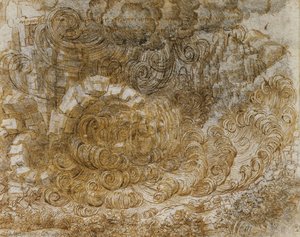 A deluge - Leonardo da Vinci
In the swirling, monochromatic depths of A Deluge , we encounter Leonardo da Vinci at his most visceral. Created around 1518, this masterwork is far more than a mere study of weather; it is a profound immersion into the raw, unbridled fury of the natural world. Through a masterful command of pen and ink, Da Vinci utilizes intricate hatching and cross-hatching to sculpt a vortex of water that seems to pulse with life.
The composition pulls the viewer into a chaotic dance of chiaroscuro , where dark, ominous clouds collide with fragmented architectural ruins. As you observe the tumbling stone blocks and the torrential descent of rain, you feel the fragility of human civilization against the overwhelming power of the elements. This piece serves as a haunting window into the artist's late-life introspection, capturing a sense of cosmic instability. To possess a reproduction of such a tempestuous vision is to invite the sublime energy of the Renaissance into your own space, transforming a simple wall into a gateway for contemplating the eternal forces of nature.
A study of a horse - Leonardo da Vinci
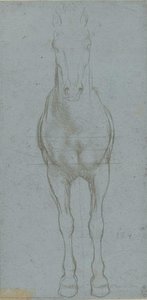 A study of a horse - Leonardo da Vinci
To witness A Study of a Horse is to step directly into the quiet, focused mind of Leonardo da Vinci. Created around 1490, this intimate ink sketch transcends mere anatomical drawing; it is a profound meditation on the mechanics of life. Through delicate hatching and masterful cross-hatching, Leonardo captures the powerful musculature and rhythmic vitality of the equine form, using a monochromatic palette of sepia and grey that feels both timeless and deeply grounded.
The texture of the paper, marked by subtle blueish undertones, provides a cool, atmospheric backdrop to the warm, precise lines of the horse’s chest and head. There is a palpable sense of motion held in stillness, an exploration of nature governed by mathematical elegance. In a modern interior, such a piece serves as a sophisticated anchor for reflection. Its understated tonal range and organic shapes bring a sense of academic prestige and calm, making it an ideal selection for those looking to inspire creativity and intellectual depth within a professional or residential space.
Madonna Litta, ca Tempera on canvas, trans - Leonardo da Vinci
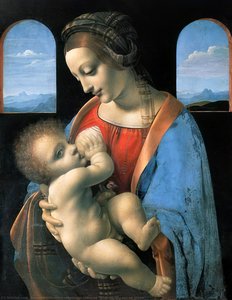 Madonna Litta, ca Tempera on canvas, trans - Leonardo da Vinci
The Madonna Litta stands as a profound testament to the tender intersections of divinity and human emotion. In this exquisite work, Leonardo da Vinci captures the sacred bond between mother and child through a lens of unparalleled intimacy. The composition is anchored by a soft, diffused light that bathes the figures in a gentle glow, highlighting the delicate textures of skin and the vibrant, symbolic reds and blues of the Madonna’s attire. This interplay of light and shadow—a precursor to his mastery of sfumato —creates a sense of breathing life within the frame.
Beyond its historical significance, the painting’s visual language resonates deeply with modern aesthetic preferences for serene, minimalist, and emotionally resonant decor. The tranquil landscape visible through the arched windows provides a spatial depth that invites contemplation, making it a centerpiece for curated spaces seeking quiet prestige. As one of the top 25 artworks of Leonardo da Vinci , this piece transcends its 15th-century origins, offering a timeless dialogue on purity, protection, and the enduring grace of maternal love that remains a powerful cultural talking point in contemporary interior design.
Drapery for a seated figure - Leonardo da Vinci
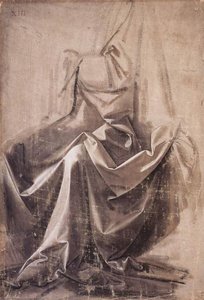 Drapery for a seated figure - Leonardo da Vinci
In the vast canon of the Renaissance, Drapery for a Seated Figure stands as a profound testament to Leonardo da Vinci’s ability to find the infinite within the infinitesimal. While not a grand narrative like his more famous commissions, this work secures its place among the top 25 artworks of Leonardo da Vinci through its sheer technical mastery of texture and light. The painting invites us into a quiet, sensory experience, where the heavy, elegant folds of fabric cascading over a seated figure become a study in weight, shadow, and grace.
Da Vinci’s meticulous rendering of the cloth demonstrates his scientific approach to art, capturing how light interacts with every crease and contour. This piece transcends mere drapery; it is an exploration of presence and the tactile beauty of the physical world. For the modern collector or professional decorator, such a work offers a timeless elegance, providing a sophisticated focal point that brings a sense of historical depth and quiet contemplation to any curated space or corporate environment.
Recto: The skeleton. Verso: The muscles of the face and arm, and the nerves and veins of the hand - Leonardo da Vinci
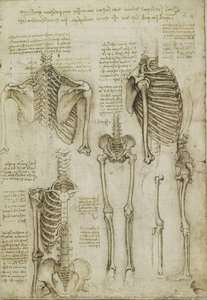 Recto: The skeleton. Verso: The muscles of the face and arm, and the nerves and veins of the hand - Leonardo da Vinci
While many recognize Leonardo da Vinci for the ethereal beauty of the Mona Lisa , his true genius often resided in the shadows of dissection. In creating Recto: The skeleton. Verso: The muscles of the face and arm, and the nerves and veins of the hand , Leonardo moved beyond the canvas to perform the role of a scientist, meticulously mapping the architecture of life itself. This 1510 study is not merely an anatomical record; it is a profound conceptual leap where art meets empirical truth. Through precise black ink lines, he captured the stark structural elegance of the skeleton on one side and the intricate, pulsing network of nerves and musculature on the other.
The technical mastery required to render such delicate veins and bone density reflects a relentless pursuit of perfection. This level of disciplined observation and intellectual depth makes this piece a cornerstone among the top 25 artworks of Leonardo da Vinci . Integrating such a profound study into a modern home office or professional study serves as a powerful reminder of the focus and analytical rigor necessary to achieve greatness, fostering an atmosphere of sophisticated productivity and timeless inspiration.
Head studies - Leonardo da Vinci
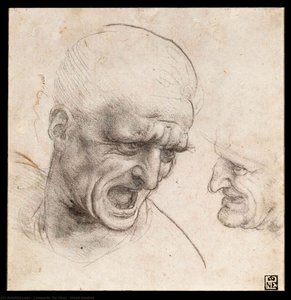 Head studies - Leonardo da Vinci
What secrets lie within the silent, meticulous lines of Head Studies by Leonardo da Vinci? Created around 1504, these profound anatomical investigations offer more than just a glimpse into the High Renaissance; they provide an intimate window into the very mechanics of human thought and form. Rather than a finished narrative, this work presents two symmetrical profiles, rendered with such scientific precision that the boundary between art and anatomy dissolves. Through masterful hatching and fine ink strokes, Da Vinci captures the subtle interplay of bone, muscle, and skin, reflecting his relentless pursuit of knowledge as both an artist and a scientist.
In modern interior design, integrating such raw, intellectual pieces allows for a sophisticated 'escape' into history. These studies bring a sense of academic depth and quiet contemplation to corporate spaces or private collections, serving as a foundational pillar among the top 25 artworks of Leonardo da Vinci . For the discerning decorator, this work evokes an atmosphere of timeless curiosity, transforming a wall into a portal of Renaissance discovery.
Conclusion
To walk through the legacy of Leonardo da Vinci is to trace the very pulse of human curiosity and the profound depths of the soul. These twenty-five masterpieces are far more than mere relics of the Renaissance; they are living presences that continue to breathe life into our modern existence. When we bring these works into our homes, we are not simply hanging canvas and pigment upon a wall; we are inviting an eternal dialogue into our private sanctuaries. The subtle sfumato of a portrait or the dramatic tension of a sacred scene serves as a quiet reminder of our shared capacity for wonder, emotion, and intellect.
As the light fades on this exploration of his genius, we find that Da Vinci’s brushstrokes continue to shape the way we perceive beauty and the way we curate our personal environments. His ability to capture the fleeting movement of a smile or the heavy weight of betrayal remains an unmatched inspiration for designers, collectors, and dreamers alike. These works bridge the gap between the historical past and our contemporary interiors, turning everyday spaces into galleries of profound human connection. We invite you to continue this journey and find your own piece of history within our full collection , where the timeless spirit of the Master lives on, ready to transform your world.