Introduction
There is a specific kind of magic found in the quiet moments between heartbeats—the stillness of a late-night diner, the way sunlight stretches across an empty office, or the profound solitude of a lonely street corner under a streetlamp. To step into the world of Edward Hopper is to enter a beautifully composed cinematic universe where light does not just illuminate; it tells stories of longing, introspection, and the quiet dignity of modern life. As you prepare to journey through these top 25 masterpieces, imagine yourself walking through a gallery where every shadow holds a secret and every window offers a glimpse into the American soul.
Born in New York at the turn of the 20th century, Hopper emerged as a master chronicler of the American Scene. While his contemporaries were often preoccupied with the frantic energy of a growing nation, Hopper turned his gaze inward. He captured the essence of an era defined by urban expansion and industrial shifts, finding deep emotional resonance in the mundane. His work is not merely about what we see, but how it feels to be present in those spaces. Through his precise use of light and shadow, he transformed ordinary architecture into stages for psychological drama, making him one of the most influential figures in American Realism.
Why do these works continue to move us so deeply today? In our hyper-connected, often noisy modern world, Hopper’s exploration of isolation and stillness feels more relevant than ever. He reminds us that there is beauty in solitude and a certain poetic truth in the moments when we are alone with our thoughts. His paintings act as mirrors for our own experiences of urban life—the feeling of being part of a crowd yet entirely singular.
In the following selection, we will explore twenty-five of his most iconic works. From the hauntingly famous Nighthawks to the evocative landscapes of his early years, each piece serves as a window into Hopper's unique vision. Whether you are an avid collector or someone discovering his work for the first time through our curated collections, we invite you to linger in these scenes, observe the interplay of light on canvas, and discover the timeless, quiet power of Edward Hopper.
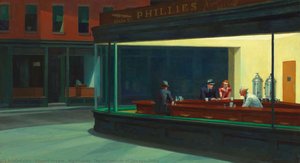
Nighthawks, The Art Institute of Chicago, Chica - Edward Hopper
In Nighthawks by Edward Hopper, the composition achieves a breathtaking structural harmony that anchors its place among the top 25 artworks of Edward Hopper. The painting is a masterclass in geometric precision, where strong horizontal lines and sharp, angular architectural forms create a sense of profound stability amidst the urban night. This careful balance of light and shadow—the warm, artificial glow of the diner pressing against the deep, cool shadows of the street—guides your eye through a landscape of quiet tension.
There is an enduring appeal in how Hopper uses these clean, decisive shapes to frame a story of modern solitude. Much like the principles of modern minimalist design , the artwork’s lack of unnecessary clutter allows the emotional weight of the scene to breathe, making it a perfect inspiration for contemporary interiors seeking a grounded, sophisticated aesthetic. As you gaze through that seamless glass window, you aren't just looking at a diner; you are experiencing a timeless study of light, form, and the beautiful, haunting stillness of the human condition.
Sunday - Edward Hopper
 Sunday - Edward Hopper
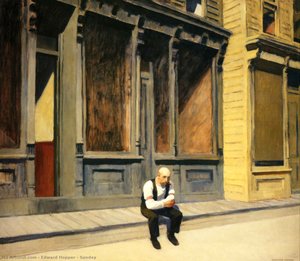
There is a profound, heavy stillness found in the moments between the city's breaths, a quietude that feels both peaceful and hauntingly lonely. This evocative atmosphere is perfectly captured in Sunday by Edward Hopper . Painted in 1926, this masterpiece stands as a cornerstone of his exploration into urban alienation and the beauty of introspection.
As you gaze upon the canvas, you are drawn to a solitary figure seated on a wooden bench, dwarfed by the geometric shadows of closed storefronts. Hopper utilizes a restrained palette of muted browns, grays, and earthy beiges, punctuated only by a subtle pop of light blue from the man's shirt and a striking red door. The visible brushwork adds a weathered texture to the architectural facades, while the interplay of diffused morning light creates a sense of deep, cinematic stillness. This work is essential among the top 25 artworks of Edward Hopper because it distills the complex emotions of the American experience into a single, silent moment. Bringing such a piece into your home does more than decorate a wall; it invites a contemplative, soulful energy that transforms any room into a sanctuary for reflection.
Automat - Edward Hopper
 Automat - Edward Hopper
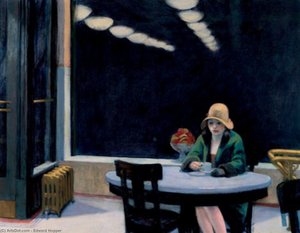
In Automat , the lines of urban life aren’t merely drawn; they are choreographed . This 1927 masterpiece is not just a composition of a late-night diner; it is a dance frozen in time , where the stillness of a solitary woman meets the sharp, geometric rhythm of the city. As you gaze upon this iconic piece from our collection of the top 25 artworks of Edward Hopper, you feel the weight of the quietude. The deep, nocturnal blues and the stark, directional light create a stage for introspection, turning a simple moment of dining into a profound study of American solitude.
The way the light spills across the table, illuminating a single bowl of fruit against the dark shadows, invites us to find beauty in the lonely corners of modern existence. What if your living room could hold that same balance? What if your walls could breathe rhythm and evoke such soulful contemplation? Bringing this sense of cinematic drama into your home allows you to embrace the evocative power of light and shadow, transforming a space into a sanctuary of quiet thought.
Gas - Edward Hopper
 Gas - Edward Hopper
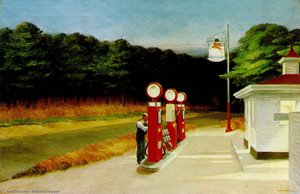
There is a stillness in Gas by Edward Hopper that follows you—not with judgment, but with understanding . This 1940 masterpiece doesn't just depict a roadside stop; it acts as a mirror for the quiet moments of introspection we all experience. As you gaze upon the vibrant red of the pumps set against muted earthy greens and a soft, blue-gray sky, you feel the weight of a moment frozen in time.
Hopper’s mastery of light and shadow creates an atmosphere where the vast, open American landscape feels both tranquil and deeply solitary. The way the light diffuses across the station suggests an overcast afternoon, casting subtle shadows that add a layer of beautiful melancholy to the scene. When you imagine this piece in your own home, it doesn't just decorate a wall; it reminds you that even in moments of isolation, there is profound beauty. It is a powerful inclusion in any collection of the top 25 artworks of Edward Hopper , inviting you to find peace within the quietude.
Chop Suey - Edward Hopper
 Chop Suey - Edward Hopper
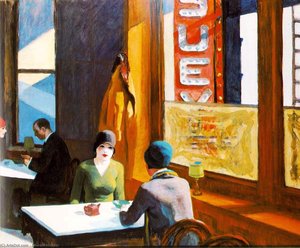
Step into the warm, amber-hued glow of 1929 with Chop Suey , a cinematic window into the heart of urban life. In this captivating piece, Edward Hopper invites us to sit among the patrons of a bustling café, where the air feels thick with both social energy and quiet introspection. The composition is a masterful dance of light and geometry; a vibrant neon sign casts a dramatic, golden radiance across the scene, illuminating the figures while casting deep, evocative shadows that are hallmarks of his American Realism.
The palette is strikingly rich, blending saturated yellows and energetic reds with cool, modern blues, creating an atmosphere that feels both Art Deco-inspired and deeply human. As you observe the subtle interplay of light through large windows, you feel the pulse of the city—a moment of connection caught in a stylized, dreamlike state. Bringing a work like Chop Suey into your home offers more than just decor; it introduces a soulful focal point that inspires reflection and adds a layer of sophisticated, historical storytelling to any modern living space.
Office at Night - Edward Hopper
 Office at Night - Edward Hopper
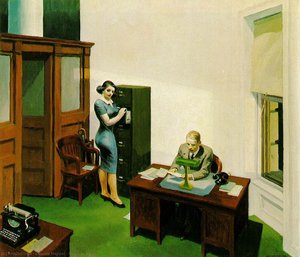
There is a quiet, rhythmic pulse in Office at Night by Edward Hopper that follows you—not with judgment, but with understanding . As you step into this mid-century workspace, you aren't just observing a moment of bureaucratic routine; you are stepping into a mirror of our own shared moments of focus and solitude.
Hopper masterfully uses a muted palette of deep greens, earthy browns, and somber grays to ground the scene, yet it is the striking blue of the woman’s dress that pulls your heart toward the center of the composition. The artificial light casts long, thoughtful shadows across the wooden desks and filing cabinets, creating an atmosphere where the soft click of a typewriter feels almost audible. Within this structured, geometric world, there is a profound emotional depth—a sense of being alone yet deeply connected to the stillness of the era. This painting’s spot in our top 25 artworks of Edward Hopper is a testament to its power to make the invisible visible. Now, imagine that contemplative gaze in your own home, reminding you : even in the quietest hours, you are part of a much larger, beautiful story.
Summertime - Edward Hopper
 Summertime - Edward Hopper
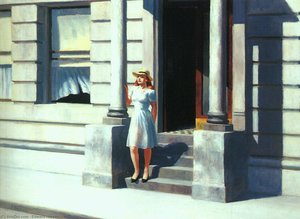
In Summertime by Edward Hopper, we encounter a moment of profound stillness, where the gaze of a solitary woman on sun-drenched steps seems to hold the weight of an entire afternoon. Painted in 1943, this masterpiece captures more than just a summer day; it encapsulates a sense of quiet anticipation and the subtle, beautiful melancholy of being alone amidst the grandeur of urban architecture. The way Hopper uses light—casting sharp, dramatic shadows against the classical stone facade—creates a visual rhythm that is both soothing and deeply evocative.
As one of the top 25 artworks of Edward Hopper , this piece serves as a universal mirror for our own moments of introspection. The soft blue of her dress and the textured warmth of the sunlight invite you to slow down. Bringing this powerful emotional resonance into your home can transform a personal sanctuary into a space for profound reflection or calm, turning a simple wall into a window onto a world of quiet prestige and timeless thought.
Sunlight in a Cafeteria - Edward Hopper
 Sunlight in a Cafeteria - Edward Hopper
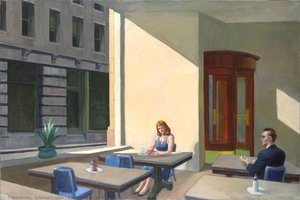
While many associate Edward Hopper with the nocturnal glow of diners, Sunlight in a Cafeteria (1958) captures a different kind of intensity: the piercing, midday clarity of urban isolation. There is a profound, quiet drama in how Hopper uses light not just to illuminate, but to divide. In this masterpiece, a single, brilliant beam of sun cuts through the muted beige and gray tones of the cafe, creating a sharp chiaroscuro effect that physically separates the two figures.
The technical genius lies in his ability to make the atmosphere feel heavy with unspoken narratives; despite their physical proximity, the man and woman remain islands of private thought. The geometric precision of the tables and the stark, diagonal shadows evoke a sense of structured loneliness that is hauntingly beautiful. This painting stands as one of the top 25 artworks of Edward Hopper because it transforms a mundane setting into a psychological landscape. Bringing such a piece into your home—perhaps as a large-scale canvas print in a study—introduces a sophisticated, contemplative energy, turning a modern workspace into a sanctuary for deep focus and quiet prestige.
People in the Sun - Edward Hopper
 People in the Sun - Edward Hopper
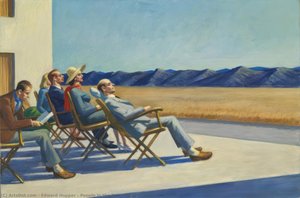
In People in the Sun , Edward Hopper masterfully orchestrates a composition defined by striking geometric clarity and rhythmic balance. The painting utilizes a strong horizontal orientation, where the structured lines of wooden chairs and the seated figures create a grounded foreground that contrasts beautifully against the vast, arid landscape and an expansive blue sky. This structural harmony—a careful interplay of rectangular forms and soft, rounded silhouettes—achieves a sense of timeless perfection that secures its place among the top 25 artworks of Edward Hopper .
The artwork’s internal equilibrium mirrors the core principles of modern minimalist design ; its clean edges and uncluttered spatial arrangement provide a calming anchor for contemporary interiors. Bathed in bright, directional sunlight, the scene uses sharp shadows to define depth, while a palette of earthy tones and soft blues evokes a profound sense of quietude. For the discerning collector, this piece is more than a depiction of repose; it is a sophisticated study of light and solitude that brings an atmosphere of contemplative peace to any curated space.
Cape Cod Morning - Edward Hopper
 Cape Cod Morning - Edward Hopper
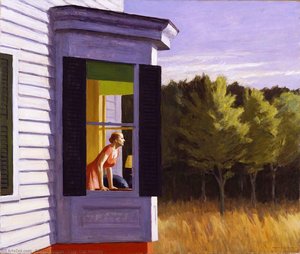
Owning Cape Cod Morning by Edward Hopper isn’t merely a purchase; it is an inheritance of a profound, quiet moment captured in time. As one of the most evocative entries in our collection of the top 25 artworks of Edward Hopper, this piece serves as a lineage of taste for any discerning collector. The scene unfolds with a breathtaking sense of stillness: a woman in a striking red dress stands at an open window, her gaze lost in the expansive, sun-drenched landscape of New England. Hopper masterfully uses light to bridge the gap between the private interior and the lush, wild exterior, where soft purples and vibrant greens meet under a morning sky.
The painting breathes with a sense of introspection and longing, using geometric structures and horizontal lines to ground the viewer in a moment of pure contemplation. Whether you are drawn to the tactile texture of his brushstrokes or the way the light illuminates the scene, bringing this masterpiece into your home allows you to live alongside a legacy of American realism. It is more than decor; it is a window into the soul of modern solitude.
Rooms for Tourists - Edward Hopper
 Rooms for Tourists - Edward Hopper
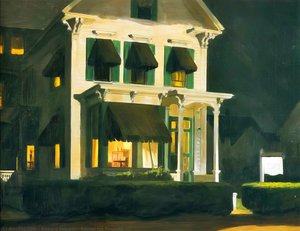
Stepping into the world of Edward Hopper is like entering a quiet, shared dream, and Rooms for Tourists (1945) serves as one of his most evocative invitations. This masterpiece of American Realism captures a two-story Victorian house nestled in the profound stillness of night. As you gaze upon it, you aren't just looking at a building; you are witnessing a masterclass in light and shadow. The way warm, golden glows spill from the windows against a backdrop of deep, midnight blues creates a striking contrast that feels both comforting and hauntingly solitary.
For those decorating with intention, this piece brings a sense of nostalgia and architectural grace to any room. The structured lines of the porch and the soft, atmospheric depth invite you to imagine the stories hidden behind those illuminated panes. Owning such a work isn't merely a purchase; it is an inheritance of taste, allowing you to bring Hopper’s signature mood of quiet anticipation into your own home. It is a soulful addition for anyone looking to anchor their space with a legacy of American art history.
New York Movie - Edward Hopper
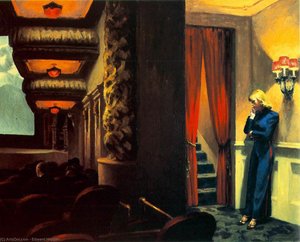 New York Movie - Edward Hopper
In New York Movie , Edward Hopper captures a single, breathless moment where the glow of the silver screen meets the profound silence of the human soul. This 1939 masterpiece stands as a cornerstone in our collection of the top 25 artworks of Edward Hopper because it perfectly encapsulates that bittersweet ache of urban solitude. The composition is a masterclass in contrast: the striking, cinematic red of the theater curtain pulls your gaze toward a lone woman, whose quiet contemplation creates a window into her private world amidst the public space.
The interplay of light and shadow—Hopper’s signature—shapes the room, casting a moody, atmospheric glow that feels both nostalgic and timeless. The scattered chairs and the rhythmic presence of clocks evoke a sense of suspended time, inviting viewers to pause and reflect. For the modern decorator, bringing this piece into a home offers more than just a beautiful focal point; it introduces a sophisticated, soulful energy. Whether displayed as a large-scale oil reproduction or a curated print, its ability to spark conversation and emotional depth makes it an essential element for any meaningful interior design.
Drug Store - Edward Hopper
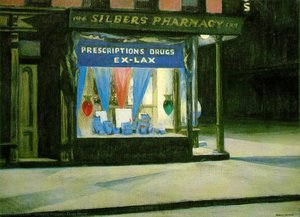 Drug Store - Edward Hopper
What story does the frozen, silent streetscape in Drug Store by Edward Hopper tell us about the beauty of solitude? Painted in 1927, this masterpiece captures a hushed winter moment where the brightly lit pharmacy window acts as a warm beacon against a bleak, snow-covered urban landscape. As one of the top 25 artworks of Edward Hopper, this piece stands out for its ability to transform an everyday American scene into a profound exploration of modern isolation and quietude.
Hopper masterfully uses a cool palette of blues, greys, and whites, punctuated by the inviting reds and yellows of the shop's display, creating a visual rhythm that draws the eye inward. For those looking to curate a meaningful space in their own homes, this painting offers more than just decor; it provides a soulful escape into a world of stillness and reflection. Bringing a reproduction of Drug Store into your living room or study invites that same sense of cinematic atmosphere and historical depth, making it a perfect anchor for a sophisticated, contemplative interior.
Two Comedians - Edward Hopper
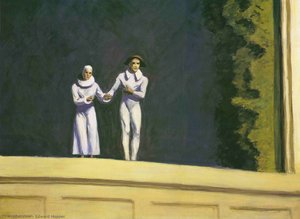 Two Comedians - Edward Hopper
In the twilight of his career, just a year before his passing, Edward Hopper gifted us Two Comedians (1965), a hauntingly beautiful meditation on the quiet drama behind the curtain. This piece is far more than a depiction of performers; it is a masterclass in the New Realism movement, capturing that unmistakable Hopperesque tension between public persona and private solitude. The scene unfolds on a dimly lit stage, where two figures in stark white costumes stand against a deep, velvety backdrop of midnight blues and muted greens.
As you observe the subtle interplay of light and shadow, you feel the weight of the unseen; the way the light catches the crisp fabric of their attire while leaving much of the world in mystery. There is a profound, cinematic stillness here—a moment of introspection caught between acts. Owning a piece like Two Comedians isn’t merely a purchase; it is an inheritance of a legacy of taste. It allows you to bring that same evocative, soulful atmosphere into your own home, turning a simple wall into a window onto the American psyche.
Summer Evening - Edward Hopper
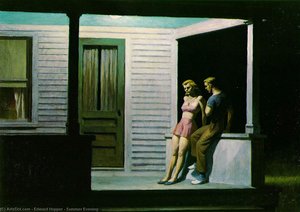 Summer Evening - Edward Hopper
In Summer Evening , Edward Hopper captures a breath of stillness, freezing a moment of profound quietude that feels as intimate today as it did in 1947. This masterpiece earns its place among the top 25 artworks of Edward Hopper through its haunting ability to turn a simple porch scene into a universal meditation on human connection and solitude. As you gaze upon the composition, the muted palette of deep blues and earthy browns whispers of twilight, while the warm glow from the porch lamp sculpts the figures against the encroaching shadows.
The man in his blue shirt and the woman in her soft pink dress stand close, their silent exchange framed by the stark, realistic textures of the wooden porch and empty chairs. Hopper’s masterful use of light creates a cinematic tension, making the scene feel like a memory caught between intimacy and isolation. For the modern collector, bringing this piece into a home offers more than just decor; it introduces a sophisticated, contemplative atmosphere, inviting a sense of calm, thoughtful depth to any contemporary living space.
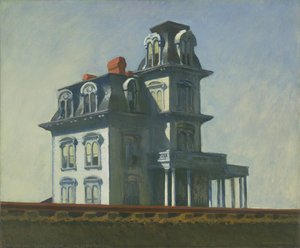
Lighthouse HIll - Edward Hopper
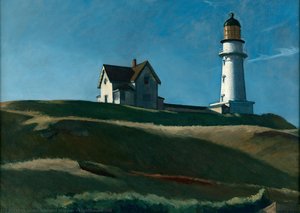 Lighthouse HIll - Edward Hopper
In Lighthouse Hill , the magic lies in the deliberate, controlled brushwork that defines Edward Hopper’s mastery of American realism. When you look closely at this 1927 masterpiece, you can almost feel the weight of the muted greens and earthy browns as they are sculpted by light. Hopper doesn't just paint a landscape; he uses precise, textured strokes to create a sense of architectural stillness, where the lighthouse stands as a silent sentinel against an expansive, cloudless blue sky. The way the light hits the hillside creates a palpable depth, turning a simple coastal scene into a profound study of solitude and quiet contemplation.
At Mus3ums.com, we believe this tactile, three-dimensional quality is what makes Hopper’s work so moving. Our hand-painted oil reproductions are meticulously crafted on 100% cotton canvas to preserve those visible brushstrokes and the emotional depth of the original. We aim to bring the soul of these top 25 artworks of Edward Hopper into your home, ensuring that the interplay of light and shadow remains a vivid, textured experience for every admirer of fine art.
First Row Orchestra - Edward Hopper
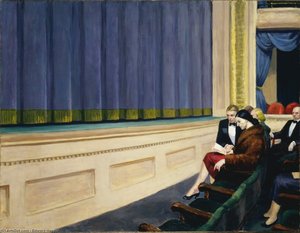 First Row Orchestra - Edward Hopper
In First Row Orchestra , the mastery of Edward Hopper is felt through the stark, dramatic interplay of light and shadow that defines this 1951 masterpiece. When examining a high-end reproduction, one can truly appreciate the way the artist’s precise lines and tonal gradations create a palpable sense of stillness. The texture of the formal attire and the heavy, atmospheric darkness of the auditorium are not merely seen but felt, as if the weight of the silence in the room is physically present on the canvas.
This piece earns its place among the top 25 artworks of Edward Hopper by capturing the profound psychological tension of mid-century American life—the feeling of being surrounded by others yet profoundly alone. At Mus3ums.com, our mission is to preserve this tactile, three-dimensional quality for your home. Through our hand-painted oil reproductions, we recreate every intentional brushstroke and light-drenched detail, ensuring that the soulful, cinematic essence of Hopper’s realism remains a vivid, textured centerpiece in your personal collection.
Second Story Sunlight, , Whitney Museum of Ameri - Edward Hopper
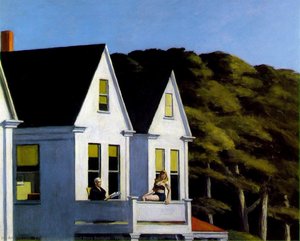 Second Story Sunlight, , Whitney Museum of Ameri - Edward Hopper
There are moments in art where the absence of color allows a deeper, more profound truth to emerge. In Second Story Sunlight by Edward Hopper , we find ourselves suspended in such a moment. Painted in 1960, this monochrome masterpiece is a cornerstone of his legacy, capturing the quietude and psychological depth that define his most iconic works. The scene presents two figures on a porch swing, their backs turned to us, creating an immediate sense of unspoken longing and emotional distance.
Hopper’s mastery of light is breathtaking; he uses stark contrasts between sun-drenched walls and deep, impenetrable shadows to sculpt the very air around the subjects. The rhythmic geometry of the house and the weathered textures of the porch are rendered with a precise realism that feels both intimate and hauntingly detached. As one of the top 25 artworks of Edward Hopper , this piece serves as a powerful anchor for any modern interior. It does more than decorate a wall; it invites a contemplative stillness, transforming a contemporary room into a sanctuary of reflection and timeless grace.
Hotel room - Edward Hopper
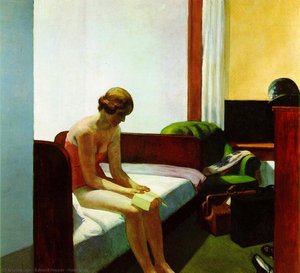 Hotel room - Edward Hopper
Step into the quiet sanctuary of Edward Hopper’s 1931 masterpiece, Hotel Room , where the bustling world outside seems to vanish, leaving only a profound, cinematic stillness. The scene captures a deeply intimate moment: a lone woman perched on the edge of a bed, lost in the pages of a book. Through Hopper's expert command of light and shadow, we feel the weight of her solitude. The palette is masterfully restrained , utilizing warm yellows, soft creams, and earthy browns to illuminate the textures of the linens and the solitary suitcase resting on the floor.
This work stands out among the top 25 artworks of Edward Hopper because it transforms a simple interior into a psychological landscape. The interplay of light doesn't just reveal the room; it evokes the bittersweet beauty of transience. For those looking to curate a meaningful home, this painting offers a sophisticated anchor for a space dedicated to reflection. Its muted tones and contemplative mood can inspire a sense of calm and intellectual depth in any modern living area or study.
untitled (7096) - Edward Hopper
 untitled (7096) - Edward Hopper
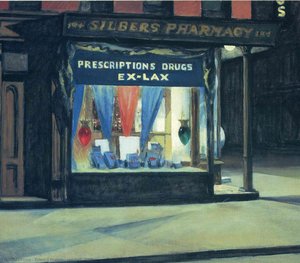
In untitled (7096) , Edward Hopper does not merely paint a pharmacy storefront; he composes a nocturne of quietude. As you stand before this piece, notice how the light acts as a silent protagonist. It is not just illumination; it is a language . The way the exterior glow spills across the blue awning of "Siblers Pharmacy," casting long, melancholic shadows into the darkened interior, feels less like a snapshot and more like a carefully conducted sonata of light and shadow.
This work captures the very essence of Hopper’s mastery over chiaroscuro . The arrangement of chairs and the solitary table suggest an unspoken invitation to pause, yet the heavy atmosphere of isolation remains palpable. There is a profound, cinematic mystery in how the light sculpts the bottles and furniture, turning a mundane urban corner into a portal of introspection. It is this ability to invent emotion through light that secures its place among the top 25 artworks of Edward Hopper . Imagine this evocative mood spilling into your own living space, transforming a simple wall into a window onto the beautiful, quiet mysteries of the American night.
Room in Brooklyn - Edward Hopper
 Room in Brooklyn - Edward Hopper
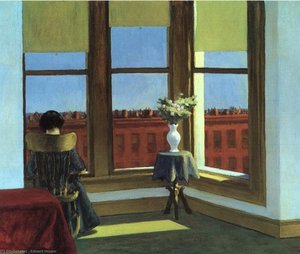
There is a profound, quiet magic in Room in Brooklyn that speaks to anyone who has ever found themselves lost in thought while watching the world drift by. In this 1932 masterpiece, Edward Hopper captures more than just an interior; he paints the very texture of solitude. As we gaze upon the woman seated by the window, bathed in a soft, pale light, we feel the weight of her silent contemplation. The muted palette of grays and browns, punctuated by the organic touch of potted plants, creates a sanctuary of stillness amidst the sprawling urban landscape visible outside.
This work earns its place among the top 25 artworks of Edward Hopper because of its unparalleled ability to turn a private moment into a universal emotion. It is a masterclass in using light and shadow to explore the human psyche. At Mus3ums, we believe such evocative moods belong in your personal sanctuary. Our hand-painted oil reproductions are meticulously crafted to preserve every subtle brushstroke and tonal depth, allowing you to bring Hopper’s iconic sense of peace and introspection into your own home.
The Cat Boat - Edward Hopper
 The Cat Boat - Edward Hopper
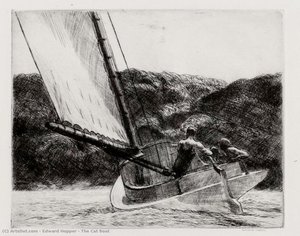
In The Cat Boat , Edward Hopper captures a profound sense of quietude that transcends its monochromatic simplicity. As one of the most evocative pieces in our collection of the top 25 artworks of Edward Hopper , this 1922 etching serves as a masterclass in using light and shadow to evoke emotion. Without the distraction of color, Hopper relies on intricate hatching and cross-hatching to sculpt the textures of the New England coast, creating a rhythmic interplay between the solid structure of the sailboat and the fluid, restless surface of the water.
The composition, featuring a striking diagonal sail, pulls the viewer into a moment of suspended animation—a peaceful yet slightly melancholic scene of maritime leisure. For the modern decorator, this piece offers a sophisticated way to introduce American Modernism into a contemporary home. Its grayscale palette and atmospheric stillness pair beautifully with minimalist interiors or moody, textured wall arrangements, providing a focal point of quiet prestige and timeless contemplative depth.
Blackwell - Edward Hopper
 Blackwell - Edward Hopper
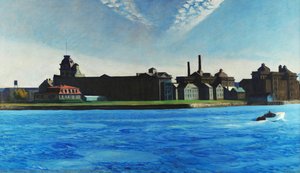
In Blackwell , Edward Hopper masterfully orchestrates a symphony of light and shadow that defines his status as one of the top 25 artworks of Edward Hopper. The painting is a profound study in tonal gradation, where the muted, silvery light of a cloudy New York sky filters through the urban landscape, casting soft, melancholic shadows across the harbor and distant clock tower. This command of chiaroscuro does more than just define the architecture; it breathes life into the stillness, capturing that uniquely Hopper-esque sense of American modernism and quiet introspection.
The way light interacts with the textures of brickwork and water creates a cinematic depth that has secured this piece's place in art history. When brought into a contemporary home through a high-quality handmade oil reproduction, the subtle interplay of grays and beiges adds an unparalleled layer of sophisticated luxury. The visible brushstrokes and rich tonal range transform a simple wall into a window of contemplative beauty, offering a serene, museum-quality focal point that invites viewers to linger in its peaceful, urban solitude.
night windows - Edward Hopper
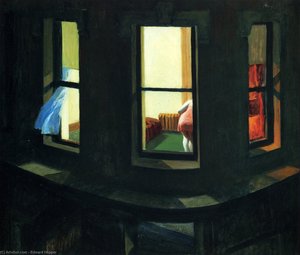 night windows - Edward Hopper
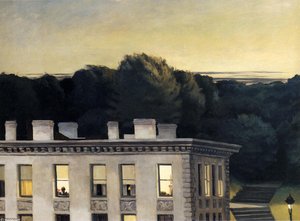
Imagine a midnight hour where the world falls into a profound, heavy hush, leaving you alone with nothing but your own thoughts and the soft glow of a single lamp. This is the evocative atmosphere of Edward Hopper’s Night Windows . In this hauntingly beautiful composition, two windows act as portals between a quiet interior and an unseen, sprawling darkness. A solitary figure sits anchored in the center of the room, caught in a moment of deep introspection that feels both intensely private and universally relatable.
Created in 1942, amidst the global anxieties of World War II, this piece captures the psychological tension of an era defined by uncertainty. It earns its place among the top 25 artworks of Edward Hopper because of its masterful use of light and shadow to communicate the bittersweet beauty of solitude. The muted palette and stark chiaroscuro effect do more than depict a room; they mirror the human soul seeking refuge from external chaos. Bringing a piece like this into your home allows you to embrace that same sense of contemplative serenity, turning a modern living space into a sanctuary for reflection and quiet meaning.
Eleven AM - Edward Hopper
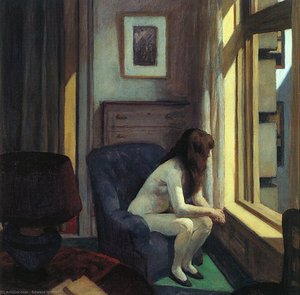 Eleven AM - Edward Hopper
In Eleven AM by Edward Hopper, a deep, contemplative blue dominates the scene, casting a mood of profound stillness and quiet introspection. This particular shade, draped over the woman’s armchair and woven into the shadows of the room, sets a soulful tone that is quintessential to Hopper's mastery of American realism. As one of the top 25 artworks of Edward Hopper , this piece earns its place through a brilliant, restrained palette of muted reds, earthy browns, and stark whites, all sculpted by a dramatic, directional light that feels almost like a character itself.
For those looking to curate a meaningful home, this painting offers incredible inspiration. The somber yet beautiful color scheme is perfect for creating an atmosphere of calm in a modern study or a sophisticated dining room. By incorporating the soft, light-drenched textures found in this masterpiece, you can introduce a sense of urban solitude and elegant peace to your space, turning a simple wall into a window of emotional depth and timeless storytelling.
Conclusion
As we step away from these quiet corners of the American landscape, we realize that Edward Hopper’s work offers much more than a window into the past; it provides a mirror to our own shared human experience. His mastery lay in his ability to capture the profound beauty found within stillness, turning a solitary diner or a sun-drenched window into a stage for deep, emotional resonance. These masterpieces are not merely historic treasures locked behind museum glass; they are living presences that continue to breathe life into our modern spaces, shaping the mood of our homes and inviting us to pause in an increasingly hurried world.
Every brushstroke Hopper laid upon the canvas carries a timeless conversation, a gentle whisper between the artist’s vision and the admirer’s soul. To bring one of these works into your own sanctuary is to invite that same sense of wonder and introspection into your daily life, bridging the centuries through the shared language of light and shadow. Whether you are drawn to the cinematic tension of his urban scenes or the peaceful melancholy of his coastal views, there is a piece of this enduring legacy waiting to be discovered. We invite you to continue your journey of exploration and find your own connection within our full collection , where the quiet magic of Hopper’s world remains eternally present.