Introduction
The decade of the 1910s in the United States marked a profound period of transition, where the traditionalism of the previous century collided with the raw, kinetic energy of a modernizing nation. As the country moved toward a global stage, its art reflected a tension between the serene, light-drenched landscapes of the American Impressionists and the gritty, visceral realism of the Ashcan School. This era captured a nation in flux, moving from the quietude of pastoral life and the elegance of high society into the crowded, bustling streets of an urbanizing society.
During this time, artists were increasingly preoccupied with the truth of the human condition. While some masters sought to capture the fleeting effects of light and atmosphere, others turned their gaze toward the social realities of city life, documenting the struggles and vitality of the working class. This period saw a departure from strictly academic idealism, favoring instead a more direct, expressive approach to subject matter that paved the way for the radical shifts of the coming decades.
These works remain vital today because they serve as a visual diary of a culture redefining itself. They offer a window into the aesthetic debates that shaped modern American identity, balancing the pursuit of beauty with the necessity of social observation. By examining these pieces, one gains an understanding of how American painters moved beyond European influence to establish a distinct, powerful visual language.
The following selection highlights ten significant works from this transformative decade, featuring the diverse perspectives of masters such as Childe Hassam, George Bellows, and Mary Cassatt, each representing a unique facet of the American spirit during the 1910s.
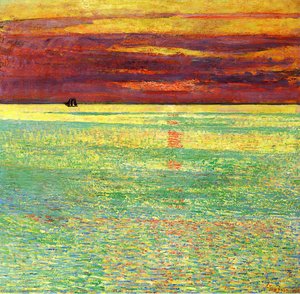
Sunset at Sea - Childe Hassam
Upon first glance, the eye is immediately captured by the dramatic interplay of light and color in Sunset at Sea. The canvas is dominated by a vibrant, high-contrast palette where fiery oranges and reds in the sky collide with the deep greens and turquoise of the ocean. This luminous seascape, characterized by thick, impastoed brushstrokes, creates a tactile surface that seems to vibrate with the energy of the setting sun. Small boats scattered across the horizon provide a sense of scale, emphasizing the vastness of the maritime landscape while adding a subtle human presence to the tranquil scene.
Created in 1911, this work is a quintessential representative of American artworks of the 1910s, specifically showcasing the peak of the American Impressionism movement. Childe Hassam utilizes a loose, gestural application of oil paint to prioritize atmosphere and the fleeting effects of light over rigid realism. By focusing on the ephemeral qualities of a twilight horizon, Hassam captures the essence of a specific moment in time, a hallmark of the stylistic evolution occurring in the United States during this decade.
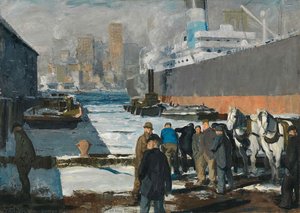
Men of the Docks - George Bellows
Created in 1912, Men of the Docks serves as a powerful testament to the American Realism that defined the 1910s. George Bellows, renowned for capturing the raw energy of urban life, presents a wintry, bustling New York City dockyard where the grit of manual labor meets the scale of industrial progress. The composition is anchored by strong horizontal lines of the docks and ships, contrasted by the verticality of masts and urban architecture, creating a sense of purposeful chaos.
Bellows utilizes an impressionistic approach, employing loose, expressive brushwork and a heavy impasto technique to build tactile texture across the canvas. This method prioritizes the immediate sensation of movement and atmosphere over precise detail, effectively capturing the fleeting energy of a working port in inclement weather. The palette is dominated by muted, cool tones—primarily grays and blues—that reflect the overcast skies and snow-covered ground. Through this somber yet dynamic application of oil paint, the work reflects the social realities of the era, immortalizing the resilience of the working class amidst the rapid industrialization of the early twentieth century.
Wild Horse Hunters - Charles Marion Russell
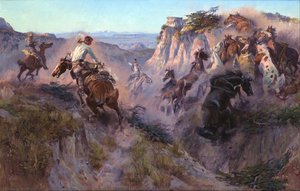 Wild Horse Hunters - Charles Marion Russell
Created in 1913, Wild Horse Hunters stands as a quintessential example of American Western Realism from the 1910s. Charles Marion Russell captures a high-stakes pursuit across a rugged, expansive landscape, where cowboys on horseback drive a herd of wild horses through rocky terrain. This work exemplifies the decade's fascination with the untamed spirit of the frontier, moving away from idealized imagery toward a more visceral, narrative-driven approach to the American West.
The composition is defined by powerful diagonal lines and a sense of kinetic energy, as the charging horses and leaning riders create a palpable feeling of motion. Russell’s technical mastery is evident in his use of impasto and visible brushstrokes, which lend a tactile quality to the horses' manes and the textured, rocky cliffs. His palette is dominated by earthy tones—ochres, tans, and rosy browns—contrasted by the soft blues of the sky and the hazy atmospheric perspective of the distant, rolling hills. Through this sophisticated layering of color and light, Russell evokes the dust, grit, and raw drama of frontier life, cementing his legacy as a master of the genre.
Betalo Rubino, Dramatic Dancer - Robert Henri
 Betalo Rubino, Dramatic Dancer - Robert Henri
In this 1916 masterpiece, Robert Henri captures the raw vitality that defined the American Realism movement during the 1910s. Betalo Rubino, Dramatic Dancer serves as a profound testament to Henri's commitment to the Ashcan School's ethos, moving away from idealized subjects to embrace the grit and psychological truth of urban life. The Spanish-born dancer stands with an unyielding, theatrical presence, her hands resting on her hips in a gesture of immense confidence. She occupies the center of the frame, meeting the viewer's gaze with an intensity that bridges the gap between performer and observer.
The canvas is alive with energetic, impasto-like brushwork, where thick applications of oil paint create a tangible texture in her garments. A dramatic play of light, spilling from the upper left, carves out the contours of her form, contrasting the deep blues of her skirt against the warm ochre and orange of her bodice. Set against a mottled, atmospheric green background, the composition emphasizes movement and the restless energy of New York City, cementing Henri's role in shaping the visual language of early 20th-century American art.
A Bronc Twister - Charles Marion Russell
 A Bronc Twister - Charles Marion Russell
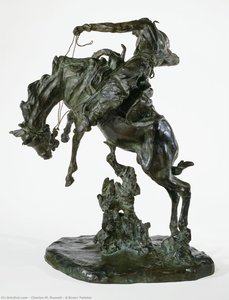
Created in 1911, A Bronc Twister stands as a quintessential example of the dynamic Western realism that defined American art during the 1910s. Charles Marion Russell, a master of capturing the rugged spirit of the frontier, utilizes this bronze sculpture to freeze a moment of intense, kinetic energy. The work depicts the visceral struggle between a cowboy and a bucking bronco, with the composition driven by powerful diagonal lines that convey a sense of sudden, explosive movement.
The sculpture is a testament to Russell's ability to translate the grit of frontier life into a permanent, tactile medium. Through meticulous modeling, the artist has achieved profound anatomical precision, highlighting the straining musculature of both horse and rider. The surface texture, characterized by a rough, organic quality, evokes the dust and weathered leather of the American West. By focusing on this high-stakes interaction between man and beast, Russell captures the very essence of the era's fascination with the untamed wilderness and the bravery required to navigate it. This piece remains a significant representation of the era's dedication to representational excellence and the celebration of Western Americana.
The Stampede - Frederic Remington
 The Stampede - Frederic Remington
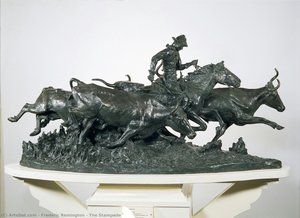
Frederic Remington’s “The Stampede” serves as a visceral embodiment of the American frontier, capturing a moment of raw, kinetic energy that defines the era. Created in 1910, this bronze sculpture exemplifies the shift in American art during the 1910s, moving away from idealized romanticism toward a more gritty, muscular realism. Rather than presenting a static portrait of the West, Remington captures the chaotic essence of a cattle drive, where the boundaries between man and beast blur in a surge of motion.
The composition is masterfully arranged along a dynamic diagonal, leading the eye from the powerful, central bull through a complex intersection of riders and horses. Remington’s anatomical precision is evident in the tension of the musculature and the frantic folds of clothing, conveying an urgent sense of danger. Through the use of lost-wax casting, the bronze surface achieves a rich, earthy patina that highlights the sculptural depth and the textured realism of the scene. This work stands as a poignant chronicle of a vanishing way of life, immortalizing the struggle and exhilaration of the Old West through a lens of profound, dramatic power.
The Germans Arrive - George Bellows
 The Germans Arrive - George Bellows
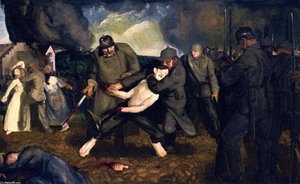
George Bellows' 1918 work, The Germans Arrive, serves as a visceral testament to the American artistic shift toward gritty realism during the 1910s. As a prominent figure of the Ashcan School, Bellows transitioned from his signature high-energy boxing scenes and urban landscapes to confront the brutal, dehumanizing reality of World War I. This painting is a stark departure from romanticized military portraiture, opting instead for a chaotic and claustrophobic tableau of combat.
The composition is dominated by a tangle of soldiers locked in desperate struggle, their forms rendered with a sense of overwhelming density. Bellows utilizes a somber, limited palette of earthy browns, muddy greens, and heavy grays to evoke the grime of the battlefield. His technique is characterized by loose, expressive brushwork and short, choppy strokes that capture the frantic immediacy of violence. By eschewing idealized heroism in favor of this raw, dynamic energy, Bellows captures the profound exhaustion and chaos inherent in modern warfare, marking a significant moment in the evolution of American realism.
The Broncho Buster - Frederic Remington
 The Broncho Buster - Frederic Remington
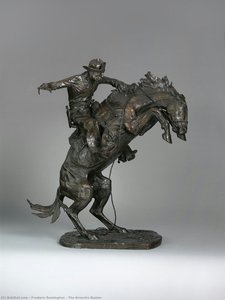
The eye is immediately drawn to the violent, kinetic energy of a cowboy locked in a desperate struggle with a bucking horse. This bronze sculpture captures a singular, high-stakes moment of movement: the rider’s arms are outstretched in a frantic attempt to maintain balance, while the horse is depicted mid-buck, its legs splayed and head thrown back in a powerful display of raw strength. The composition utilizes a low perspective to emphasize the height and untamed power of the animal, creating a visceral sense of tension and drama.
As a quintessential work from the 1910s, this piece reflects the era's fascination with the closing of the American frontier. Frederic Remington, a preeminent American realist, moved away from purely romanticized legends to document the gritty realities of Western life. By focusing on the intense, physical relationship between man and beast, the work serves as a profound emblem of the rugged individualism that defined the United States during this transformative decade. The textured, earthy bronze surface enhances the realism, immortalizing the spirit of the Old West through a lens of dramatic, muscular action.
Baby Lying on His Mother s Lap, reaching to hold a scarf - Mary Cassatt
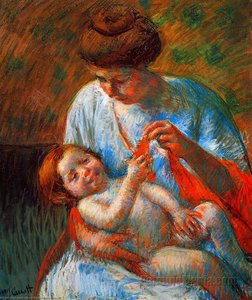 Baby Lying on His Mother s Lap, reaching to hold a scarf - Mary Cassatt
Mary Cassatt’s 1914 work, Baby Lying on His Mother’s Lap, reaching to hold a scarf, serves as a profound testament to the American Impressionist focus on the intimate domestic sphere. This piece belongs to the 1910s through its sophisticated handling of light and its departure from the more rigid portraiture of previous eras, favoring instead the spontaneous, fleeting emotions of maternal connection. The composition centers on a tender, quiet interlude where a child’s small hand reaches toward the soft texture of a scarf, a gesture that captures the essence of curiosity and nurturing.
The artist utilizes a palette of serene blues and natural greens, suggesting a peaceful outdoor setting where sunlight filters through the background foliage. Cassatt’s brushwork is visible and purposeful, lending a tactile immediacy to the woman’s elegant blue dress and the soft skin of the infant. By elevating this private, everyday moment into a scene of high art, Cassatt reflects the decade's shift toward capturing the psychological depth of human relationships through a lens of warmth and quiet prestige.
Summer Clouds - Charles Courtney Curran
 Summer Clouds - Charles Courtney Curran
Executed in 1917, Summer Clouds serves as a quintessential example of American Impressionism during the 1910s. Charles Courtney Curran, an artist renowned for his captivating depictions of leisure, utilizes this piece to explore the delicate interplay between light, atmosphere, and the vastness of the natural world. The composition centers on four women positioned atop a cliff, their white garments acting as luminous focal points against the darker, textured tones of the terrain and the sea. This deliberate use of high-contrast color highlights the serene and tranquil mood of the scene.
The technical mastery of the work is evident in how Curran captures a fleeting moment of harmony. As the figures gaze out toward the ocean, the artist employs a palette that emphasizes the soft, ethereal quality of the sky and the rhythmic movement of the water. A solitary handbag resting on the ground and a distant figure to the left add a sense of lived-in reality to this idealized landscape. Through his expert handling of light and color, Curran transforms a simple moment of seaside contemplation into a profound study of peace and connection, characteristic of the era's aesthetic sensibilities.
Conclusion
The American art of the 1910s represents a pivotal era of transition, where the soft, light-drenched impressions of the previous century met the raw, gritty energy of a modernizing nation. From the atmospheric landscapes of Childe Hassam to the muscular, urban realism of George Bellows, these works capture a country in flux, oscillating between the serene beauty of the natural world and the turbulent spirit of the industrial age. Each piece in this collection serves as a window into a transformative decade, offering a diverse visual language that defined the American aesthetic for a generation.
At Mus3ums.com, we invite you to bring this vibrant history into your own living space. Whether you are drawn to the delicate textures of an Impressionist landscape or the bold, dramatic brushstrokes of an Ashcan School masterpiece, our museum-quality, hand-painted oil reproductions allow you to live with these iconic works every day. Explore our full collection to find the perfect piece for your home or gallery.