Origins and History of Kirkcaldy Galleries
The foundations of Kirkcaldy Galleries lie in a dedicated effort to create a town memorial to the Great War. The site itself was established upon the grounds of the former Balsusney House. Following the conflict, the museum and art gallery was first opened in 1925. This establishment was made possible through funding provided by the linoleum manufacturer John Nairn, who provided the means in memory of his son killed during the war.
The institution has undergone significant evolution since its inception. In 2013, the site underwent a £2.5 million refurbishment. This project successfully brought together the Kirkcaldy Museum & Art Gallery and the Kirkcaldy Central Library under one roof. The current configuration of Kirkcaldy Galleries reflects this integration of civic and cultural functions.
The Building and its Architecture
The Kirkcaldy Galleries occupy a long, two-storey building that is B-listed. Designed by the architects Heiton and McKay, the structure was built in a plain Classical style. The site was chosen as part of an integrated scheme to serve as a town memorial to the Great War, and the building was funded by linoleum manufacturer John Nairn in memory of his son who was killed in the war.
In 1928, the Kirkcaldy Library was constructed as an extension to the existing Museum and Gallery building. This addition was designed to match the architectural language of the original structure, maintaining the established Classical aesthetic across the site. The entire complex underwent a £2.5 million refurbishment between 2012 and 2013 to modernize the facilities while preserving the historical integrity of the premises.
Major Art Collections and Departments
The fine art collection held here is of national importance. It contains significant groups of works by two central figures in Scottish art: William McTaggart and Samuel John Peploe. The Peploe collection includes 38 oils that span the length of his career. Alongside these, the McTaggart collection comprises 27 oils. These holdings represent a substantial portion of the artists' public output.
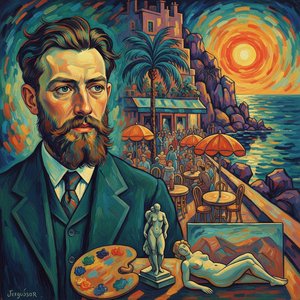
The galleries also hold paintings by the Glasgow Boys and works by several other notable artists, including John Henry Lorimer, J.D. Fergusson, and G.L. Beyond the fine art galleries, the institution functions as a multi-purpose cultural hub. It houses a library, a museum, and a local and family history room. Visitors can also access a cafe, a gift shop, and dedicated children's areas.
- Dolce Far Niente, about 1880 - John William Waterhouse
- Still Life with Fruit, 1875 - Henri Fantin-Latour
- The Fisherman - Léon Augustin Lhermitte
- Gathering Seaweed - Jean Charles Cazin
- Port de Portrieux, 1873 - Eugène Louis Boudin
Exhibitions and Recent Projects
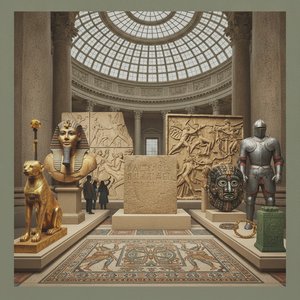
The ground floor of the building houses a permanent exhibition dedicated to local history. This collection provides a continuous record of the area's development and social character. Alongside these permanent displays, the venue maintains a changing programme of temporary exhibitions designed to bring new perspectives to the galleries.
The institution is preparing to celebrate 100 years of Kirkcaldy Galleries with a specific display of modern art inspired by Scotland. This upcoming project will feature works by several significant painters and include a brand-new acquisition by Caroline Walker. These exhibitions continue the long-standing tradition of presenting art that engages with the Scottish landscape and identity.