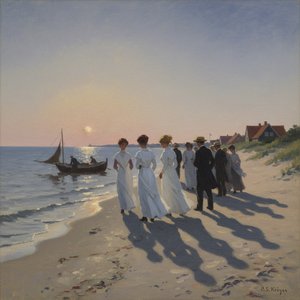
The Quiet Presence of Harald Brun
The life of Harald Brun remains a subtle chapter in the history of Norwegian art. Born in 1873, he moved through the creative landscape of the early twentieth century, leaving behind a footprint that is measured rather than loud. His existence coincided with a period of significant transition in the North, yet his own contribution is defined by a certain restraint. He passed away in 1927, leaving a body of work that invites a quiet contemplation of the era's aesthetic sensibilities.
His presence in the art world is marked by a specific, localized significance. While the broader movements of his time often sought to disrupt or redefine, Brun’s work suggests a different kind of engagement with his surroundings. The records of his life are sparse, yet they point to a man who was part of a specific cultural fabric, contributing to the visual language of his time through a focused and deliberate practice.
A Legacy in Detail
To look at the work associated with Brun is to encounter the specificities of the early 1900s. His artistic output is not characterized by grandiosity, but by a commitment to the visual truth of his subjects. The historical significance of his work lies in its ability to offer a window into the creative spirit of a bygone period, providing a sense of the atmosphere that once defined the Norwegian artistic community.
The surviving evidence of his output suggests a painter who understood the importance of the individual image. His work does not attempt to overwhelm the viewer; instead, it offers a steady, composed perspective. This approach allows for a nuanced understanding of the textures and tones that defined his era, making his paintings a quiet part of the historical record.
Soru ve Cevaplar
Harald Brun hangi ülkede doğdu?
Harald Brun, Norway doğumludur.
Harald Brun başka hangi isimlerle tanınır?
Harald Brun, Харальд Брун isimleriyle de tanınmaktadır.
Harald Brun nerede ve ne zaman doğdu?
Harald Brun, 1873 yılında Christiania şehrinde doğdu.