


The History and Origins of Musée Masséna
The presence of Musée Masséna in Nice is rooted in a significant act of generosity that occurred in 1919. During this year, André Masséna ceded the property to the city of Nice. This transfer of ownership was not a simple gift, but was made under specific conditions. The agreement required that the site be transformed into a museum and that the surrounding garden be opened to the public.
Following this transition, the site underwent preparation to fulfill its new purpose. On January 28, 1921, the museum was inaugurated in a grand manner. This opening marked the beginning of its life as a municipal museum dedicated to the history and art of the region. The establishment of the institution ensured that the private residence would become a permanent space for the local community to encounter the history of the Riviera.
The Architecture and Beautiful Villa
Located at 65, rue de France in Nice, the museum occupies one of the final prestige villas of the 19th century on the Promenade des Anglais. This Belle Époque architectural jewel was built by Victor Masséna, the grandson of André Masséna, during the late 1800s. The design originated from the plans of the Danish architect Hans-Georg Tersling. Between 1898 and 1902, the construction was supervised by the local architect Aaron Messiah. The structure possesses a neo-classical character, drawing inspiration from the Villa Rothschild in Cannes and the Italian villas of the First Empire.
The physical presence of the estate is protected by historical designations. Since 1975, the facades and roofs of the villa have been inscribed as historical monuments. This protection extends to the entirety of the grounds, including the north courtyard, the south garden, and the concierge pavilion. The villa remains a significant example of the architectural style that defined the era of the Belle Époque on the Riviera.
Collections of Art and Local History
The museum brings together nearly 15,000 pieces that trace the history of the Riviera from the end of the 18th century through the conclusion of the Belle Époque. This collection examines the evolution of the territory through an artistic prism, utilizing furniture, paintings, sculptures, and various objects of art to reflect the changing social landscape. The presence of these items offers a way to observe the 19th and 20th centuries as they unfolded in Nice.
The holdings focus on local art and history, providing a sense of the era when the region became a prominent destination. Beyond the permanent collection, the museum hosts a variety of temporary exhibitions that expand upon these historical themes. These rotating displays allow for a deeper examination of specific periods or subjects within the broader context of the local heritage.
- Portrait of Giuseppe Garibaldi, about 1860 - Carlo Garacci
- Portrait of Maria-Letizia Bonaparte-Wyse, 1858 - Carlo Garacci
- Avenue de la Gare in Nice - Louis Beroud
- Mountainous Landscape, the Gorges d'Ollioules, 1784 - Hubert Robert
Masterpieces and Notable Artworks
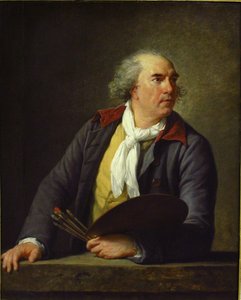
The presence of Antoine-Jean Gros's 1808 portrait of Empress Joséphine offers a moment of stillness within the collection. Nearby, the landscape of the Gorges d'Ollioules, painted by Hubert Robert about 1784, captures the rugged terrain through a precise, observational lens. These works exist alongside significant portraiture that defines the era's social landscape. Carlo Garacci provides two such studies: a portrait of Giuseppe Garibaldi and a depiction of Maria-Letizia Bonaparte-Wyse from about 1858.
The collection also turns its attention to the changing face of the local landscape. Louis Béroud’s Avenue de la Gare in Nice provides a specific visual record of the city's development. Each piece remains a distinct entity, inviting a quiet observation of the brushwork and the subjects that once occupied these spaces. The works reside in a setting where the art and the history of the Riviera are inseparable.


