Introduction
The grandeur of seventeenth-century France found its visual soul in a movement defined by drama, movement, and a profound sense of theatricality. As the nation emerged as a central pillar of European power, its artists moved away from the rigid constraints of the Renaissance to embrace the Baroque style—a way of seeing that utilized deep shadows, sweeping diagonals, and intense emotional lighting to pull the viewer directly into the scene. This era was not merely about decoration; it was a cultural explosion where art served to elevate the spirit, whether through the quiet, candlelit intimacy of a domestic scene or the sweeping, sun-drenched landscapes of the French countryside.
During this golden age, French painters mastered the art of the chiaroscuro, using the interplay of light and dark to create a sense of three-dimensional volume and psychological depth. This period saw the development of a distinct national aesthetic that balanced the intense realism of the Caravaggisti with a refined, classical elegance that would eventually define the French Academy. These masters were the architects of visual storytelling, capturing everything from the divine light of religious devotion to the opulent splendor of the royal court.
Today, these works remain vital because they capture the very essence of human emotion and the sublime beauty of nature. The mastery of light and composition found in these canvases continues to influence how we perceive depth and drama in modern visual media. By studying these masters, we gain a deeper understanding of how light can transform a simple subject into a monumental moment of grace or tension. The following selection explores ten essential figures who shaped this magnificent era, from the masters of light and shadow to the poets of the landscape.
Nicolas Poussin
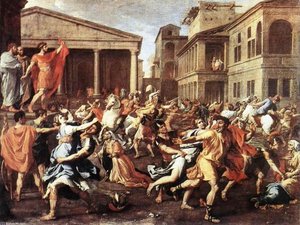 The Rape of the Sabine Women - Nicolas Poussin
In his 1637 masterpiece, The Rape of the Sabine Women, Nicolas Poussin captures a pivotal moment of Roman legend through a lens of intense, theatrical energy. This work exemplifies the dramatic essence of the French baroque movement, utilizing a crowded, high-stakes composition to depict the abduction of the Sabine women. Through a sophisticated use of chiaroscuro, Poussin creates a profound sense of urgency and depth, pulling the viewer into the chaotic struggle of the figures.
Born in 1594 in Les Andelys, Normandy, Poussin’s journey from his early training in Rouen to the intellectual heart of Paris laid the groundwork for a career defined by rigorous structure. His move to Rome in 1624 marked a transformative shift; he moved away from the soft, sensuous influences of Venice toward a more disciplined, logical approach to composition. This intellectualism, bolstered by his studies in Latin, allowed him to translate classical texts into visual narratives. As a central figure of the French baroque, his style bridged the gap between raw emotion and the structured clarity of classicism, often employing earthy tones and dynamic movement to bring historical and mythological scenes to life with unparalleled gravity.
Georges de la Tour
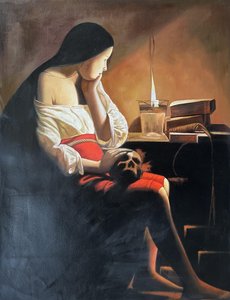
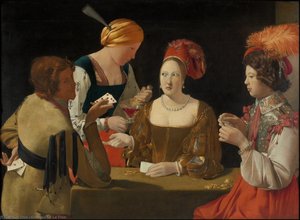
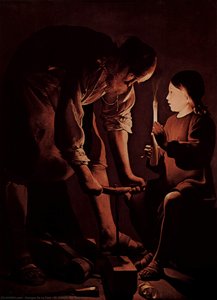
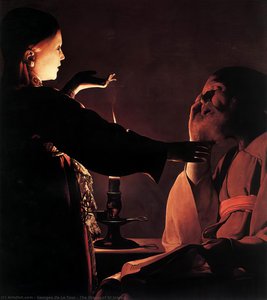
A master of the nocturnal and the intimate, Georges de La Tour stands as a quintessential figure among French baroque painters. While much of his life was spent navigating the shifting borders of the Duchy of Lorraine, his artistic soul was deeply rooted in the dramatic tension characteristic of the seventeenth century. He achieved significant prestige, eventually earning the title of "Painter to the King" under Louis XIII, a testament to his ability to capture the profound realities of his era.
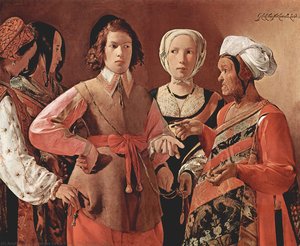
His work is defined by a masterful use of chiaroscuro, where light does not merely illuminate but actively shapes the narrative through deep, velvety shadows. In his 1635 masterpiece, The Fortune-Teller, this technique reaches a peak of theatricality. The scene captures a moment of intense social interaction, where the soft glow of candlelight pierces through the darkness to reveal the intricate textures of traditional attire and the contemplative expressions of the figures. By utilizing these strong diagonals of light and shadow, La Tour exemplifies the Baroque movement's ability to transform a quiet, everyday exchange into a scene of profound mystery and emotional depth.
Claude Lorrain
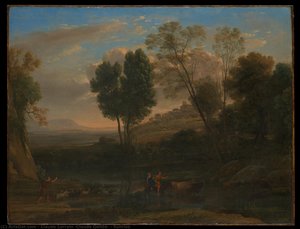 Sunrise - Claude Lorrain
Born in the Duchy of Lorraine around 1600, Claude Lorrain emerged as a transformative figure within the French Baroque movement, even as his career reached its zenith in Italy. His journey from a potentially humble apprenticeship to becoming a leading landscapist in Rome allowed him to infuse the dramatic sensibilities of the Baroque era with a unique, luminous tranquility. Unlike the heavy shadows often associated with the period, Lorrain’s contribution to the movement was his revolutionary mastery of light and atmosphere.
His work is defined by an idealized vision of the Roman countryside, where classical ruins and mythological themes coexist in perfect harmony. In his celebrated 1646 masterpiece, Sunrise, we see the pinnacle of his ability to capture the fleeting, ethereal quality of dawn. Through the use of atmospheric perspective, he creates a sense of infinite depth, inviting the viewer into a pastoral Arcadia. By blending the structural grandeur of classical antiquity with a soft, poetic light, Lorrain redefined the landscape genre, ensuring his place as a master of the Baroque's most luminous and serene expressions.
Hyacinthe Rigaud
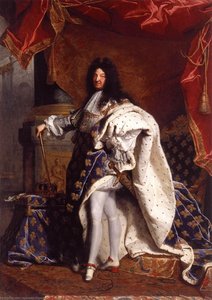 Portrait of Louis XIV - Hyacinthe Rigaud
Hyacinthe Rigaud stands as a monumental figure among French baroque painters, having mastered the art of theatrical portraiture to define the visual identity of the French monarchy. His work is characterized by a profound sense of movement and a dramatic flair that epitomizes the Baroque era, utilizing rich textures and a sophisticated interplay of light and shadow to convey power. Rigaud’s style was deeply informed by the masters of the previous century; he drew upon the dynamic compositions of Peter Paul Rubens, the elegant portraiture of Anthony van Dyck, and the vibrant color palettes of Titian to create his signature aesthetic.
His most iconic achievement, the Portrait of Louis XIV, serves as a definitive example of his ability to blend meticulous detail with grandiosity. In this masterpiece, Rigaud captures the Sun King in a display of absolute sovereignty, using precise brushwork to render the intricate embroidery of coronation robes and the luxurious sheen of fabrics. By elevating the portrait from a mere likeness to a theatrical spectacle of status and majesty, Rigaud secured his legacy as a premier chronicler of 18th-century nobility.
Charles Le Brun
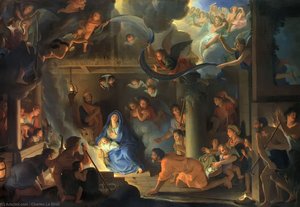 Adoration of the Shepherds - Charles Le Brun
As a central figure of the French Baroque movement, Charles Le Brun (1619–1690) transformed the visual language of his era through a masterful blend of classical structure and theatrical intensity. His journey through the artistic landscape began in the studio of Simon Vouet and was profoundly deepened during a formative four-year residency in Rome, where he studied under Nicolas Poussin. This synthesis of French elegance and Italian grandeur allowed him to become the preeminent voice of the Baroque in France, eventually serving as First Painter to Louis XIV and shaping the very aesthetic of the Palace of Versailles.
His ability to command both historical narrative and emotional depth is vividly realized in his monumental work, Adoration of the Shepherds. In this piece, Le Brun utilizes the dramatic sweep characteristic of the Baroque, employing a theatrical arrangement of figures and a sophisticated use of light to guide the viewer's gaze. The composition creates a sense of divine movement, where the earthly and the celestial converge through rich colors and meticulous detail. By capturing such intense spiritual weight and dynamic human posture, Le Brun exemplifies the grand, expressive style that defined the peak of French Baroque artistry.
Simon Vouet
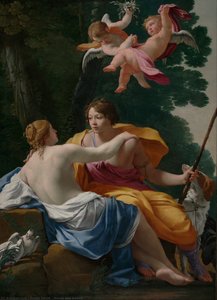 Venus and Adonis - Simon Vouet
Simon Vouet stands as a transformative figure in the history of French art, acting as the primary bridge between the stylized elegance of Mannerism and the high drama of the Baroque. His career was defined by a pivotal thirteen-year sojourn in Rome, where he moved beyond his early training in Paris to absorb the most vital currents of the Italian seventeenth century. By synthesizing the dramatic tenebrism of Caravaggio with the vibrant, expansive color palettes of Paolo Veronese, Vouet developed a sophisticated visual language that would redefine the French aesthetic upon his return to Paris.
His place among the French Baroque painters is cemented by this ability to infuse French subjects with Italianate energy and emotional depth. This mastery is vividly captured in his 1642 work, Venus and Adonis. In this piece, Vouet utilizes strategic lighting to pull the viewer into a poignant mythological encounter, showcasing the fluid brushwork and anatomical precision that became his hallmark. Through his command of composition and light, Vouet transitioned the French school into a more dynamic, theatrical era, ensuring his legacy as a pioneer of the movement.
Nicolas de Largillière
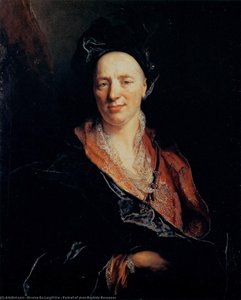 Portrait of Jean-Baptiste Rousseau - Nicolas de Largillière
Nicolas de Largillière stands as a quintessential figure of the French Baroque movement, a master who bridged the gap between the Flemish traditions of his youth and the refined elegance of the Parisian court. His work is instantly recognizable by its ability to capture the intersection of immense wealth and quiet dignity. A visitor to his oeuvre will notice a sophisticated command of texture—the sheen of silk, the weight of velvet, and the luminous quality of skin—all rendered with a meticulous attention to detail that reflects his training under Sir Peter Lely in London. His style is defined by a dramatic use of light against deep, dark backgrounds, a hallmark of the Baroque era that focuses the viewer's attention entirely on the character and status of the sitter.
In his 1710 masterpiece, Portrait of Jean-Baptiste Rousseau, Largillière demonstrates this technical brilliance. By placing the subject against an almost impenetrable black background, he employs the dramatic chiaroscuro typical of the period to isolate the philosopher's intellectual presence. The painting is a triumph of layered glazes, creating a sense of depth and light that transforms a simple likeness into a profound statement of Enlightenment-era composure and aristocratic grace.
Alexandre François Desportes
 NATURE MORTE A L'AIGUIERE - Alexandre François Desportes
In Nature Morte à l'Aiguière, we encounter the very essence of Desportes’ ability to marry the natural world with aristocratic splendor. This exquisite still life presents a symphony of abundance, where a golden ewer and silver vessels rest amidst a lush cascade of peaches, grapes, and verdant foliage. The composition utilizes the dramatic interplay of light and shadow to elevate simple objects into a theatrical display of texture and luxury.
Alexandre François Desportes (1661–1743) stands as a vital figure among French baroque painters due to his mastery of the era's penchant for opulent, highly detailed, and dramatic compositions. While his early training under Nicasius Bernaerts focused on portraiture, a transformative period in Poland shifted his gaze toward the animal kingdom. This evolution allowed him to become the preeminent painter of royal hunts, capturing the vitality of the natural world for the courts of Louis XIV and Louis XV. His work often features a rich, deep palette—frequently utilizing phthalo greens and warm, golden tones—to depict hunting scenes and still lifes that embody the elegance and theatricality central to the French Baroque aesthetic.
Pierre Mignard I
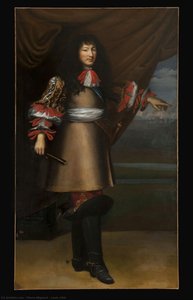 Louis 14th - Pierre Mignard I
Pierre Mignard I stands as a cornerstone of the French Baroque movement, a master who successfully synthesized the theatricality of the Italian style with the refined elegance characteristic of the French court. His artistic identity was forged through a rigorous education, beginning with the Mannerist influences of Jean Boucher and evolving through the classical traditions of Simon Vouet. However, it was his twenty-two years in Rome that truly defined his contribution to the Baroque era. During this period, he mastered the use of dramatic light and shadow, creating delicate, charming religious scenes that earned him the affectionate nickname "mignardises."
His ability to balance grandiosity with grace is perfectly encapsulated in his 1660 portrait, Louis XIV. This work exemplifies the Baroque penchant for spectacle and the construction of power. Rather than a static likeness, Mignard presents a tableau vivant, utilizing a rich palette of deep reds and creams to highlight the opulent textures of royal attire. Through masterful chiaroscuro and a commanding three-quarter pose, Mignard captures the calculated authority and regal presence required by the 17th-century French court, cementing his legacy as a premier chronicler of Baroque splendor.
Eustache Le Sueur
 The Muses: Melpomene, Erato and Polyhymnia - Eustache Le Sueur
Eustache Le Sueur (1616–1655) stands as a cornerstone of the French Baroque movement, bridging the gap between dramatic theatricality and a refined, neoclassical sensibility. Apprenticed to the influential Simon Vouet, Le Sueur absorbed the essential lessons of composition and draftsmanship that defined the era's grand style. His ascent within the Parisian art world was marked by his role as a founding member of the prestigious French Academy of Painting and Sculpture, cementing his status among the elite masters of his time.
His work is characterized by a remarkable ability to imbue religious and mythological narratives with a sense of tranquil, intellectual grace. In his representative masterpiece, The Muses: Melpomene, Erato and Polyhymnia (1652), Le Sueur demonstrates the sophisticated poise central to his Baroque expression. Set within a lush, detailed forest, the painting captures the goddesses with an astonishing realism. Whether depicting the tragic weight of Melpomene or the lyrical serenity of Erato, Le Sueur utilizes a controlled, luminous touch that elevates the viewer from mere observation to a state of contemplative joy. His legacy remains a testament to the era's pursuit of both emotional depth and classical precision.
Conclusion
The grandeur of the French Baroque movement lies in its ability to balance intense theatricality with a refined, classical elegance. From the soft, glowing candlelight of Georges de la Tour to the sweeping, royal compositions of Charles Le Brun, these masters transformed the visual language of Europe, using light and shadow to command the viewer's attention. Whether through the serene landscapes of Claude Lorrain or the dramatic, swirling energy of the courtly portraits, these artists captured a sense of movement and emotion that remains breathtaking centuries later.
Bringing this era of drama and light into your own home allows you to connect with a period of unparalleled artistic confidence. At Mus3ums.com, we help you bridge the gap between the museum and your living space through our full collection of exquisite works. You can experience the tactile beauty of these masterpieces firsthand through our museum-quality, hand-painted oil reproductions, each meticulously crafted by skilled artists to preserve the soul and texture of the original Baroque spirit.