A Florentine Legacy: The Life and Art of Agnolo Gaddi
Agnolo Gaddi, born in Florence around 1350, occupies a fascinating, pivotal position in the history of Italian painting. He wasn’t merely an artist; he was the inheritor of a powerful lineage, the son of Taddeo Gaddi, himself a devoted and gifted pupil of the revolutionary Giotto di Bondone. This familial connection immediately placed Agnolo within the epicenter of artistic innovation that Florence had become in the 14th century. While often described as the last great Florentine painter directly descended from Giotto’s style, to label him simply as an imitator would be a profound disservice. Gaddi wasn't just continuing a tradition; he was subtly transforming it, bridging the gap between the late Gothic sensibilities and the burgeoning promise of the Early Renaissance. His life, though relatively undocumented compared to some of his contemporaries, reveals a man deeply embedded in the artistic and commercial fabric of Florence, a city brimming with creative energy and economic prosperity. He wasn’t solely dedicated to painting; records suggest he engaged in mercantile pursuits as well, particularly later in life, demonstrating a pragmatic side often unseen in the biographies of celebrated artists.From Giotto's Shadow: Artistic Development and Influences
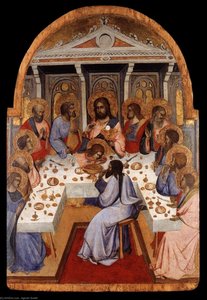
The influence of Giotto is undeniable in Gaddi’s early work. The monumental figures, the emotional resonance, and the narrative clarity that characterized Giotto’s frescoes are all present in Agnolo’s initial paintings. However, Gaddi quickly developed a style distinctly his own. Where Giotto often favored robust simplicity, Gaddi embraced a more refined elegance, incorporating intricate details and a heightened sense of decorative flourish. The Gothic influence is particularly noticeable in his work – a love for dramatic lighting effects, richly textured fabrics, and an overall emphasis on ornate beauty. This isn’t to say he abandoned the naturalism pioneered by Giotto; rather, he layered it with a sophisticated aesthetic sensibility that reflected the evolving tastes of Florentine society. He wasn't afraid to experiment with color, employing vibrant hues and delicate gradations to create visually arresting compositions. Consider *The Last Supper*, painted in 1395 – a scene imbued with both solemnity and exquisite detail. It stands as a testament to Gaddi’s mastery of Giottesque principles while simultaneously elevating them to new heights of artistic expression. His training under his father also instilled in him a profound understanding of fresco technique, which would become central to many of his most enduring commissions.Masterpieces in Stone and Paint: Key Works and Commissions
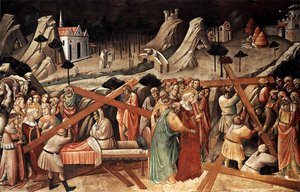
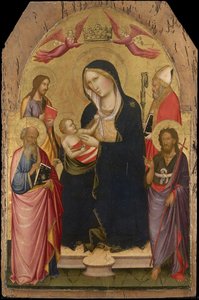
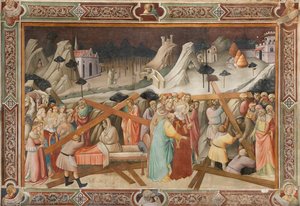
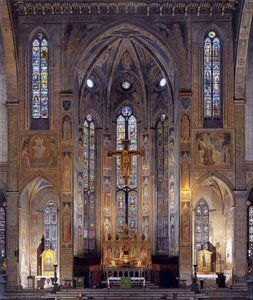
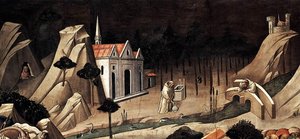
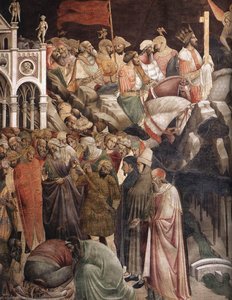
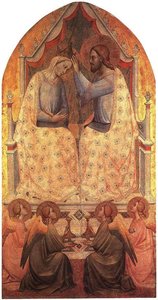
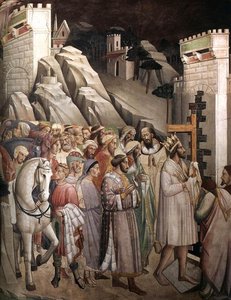
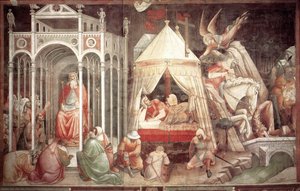
Agnolo Gaddi’s artistic reputation rests largely on his monumental frescoes within the Basilica di Santa Croce in Florence. These ambitious undertakings represent the pinnacle of Florentine Gothic art and showcase Gaddi's unparalleled skill as a narrative painter. The *Legend of the True Cross* cycle spans eight canvases, meticulously depicting pivotal moments from Christ’s journey to Jerusalem and culminating in the crucifixion itself. Each fresco is populated with figures rendered with remarkable anatomical accuracy and imbued with palpable emotion – a hallmark of Giotto’s legacy that Gaddi skillfully perpetuated. Beyond Santa Croce, Gaddi undertook commissions for altarpieces and devotional panels that further solidified his artistic prowess. Notably, *The Coronation of the Virgin*, housed in the National Gallery of Art in Washington D.C., exemplifies Gaddi's ability to synthesize Gothic grandeur with Early Renaissance refinement. The luminous depiction of Mary accepting the crown from angels is executed with breathtaking precision and imbued with a serene spiritual atmosphere. Furthermore, his involvement in designing trefoils for the Loggia dei Lanzi demonstrates his versatility as an artist extending beyond painting into decorative arts—a reflection of Florence’s flourishing artistic environment during his lifetime.A Teacher and a Legacy: Gaddi’s Impact on Italian Art
Agnolo Gaddi wasn't merely a painter; he was a dedicated educator, shaping the artistic sensibilities of younger generations in Florence. Among his pupils stood Cennino Cennini – an influential art theorist whose *Il Libro dell’Arte* became a foundational text for artists throughout Italy and beyond. This mentorship underscores Gaddi’s commitment to preserving and transmitting artistic traditions—a crucial element in ensuring the continuity of Florentine artistic excellence. Although overshadowed by his father and grandfather, Taddeo and Giovanni Gaddi respectively – both equally devoted pupils of Giotto – Agnolo Gaddi nonetheless secured his place within the annals of Italian art history as a pivotal figure who skillfully navigated the transition between Gothic and Renaissance styles. His enduring influence can be seen in subsequent artists who embraced his refined aesthetic sensibilities and incorporated elements of Gothic ornamentation into their own compositions.Further Exploration
- Museums & Collections: Admire Gaddi’s masterpieces at the Lindenau-Museum (Germany), the National Gallery of Art (Washington D.C.), and the Galleria degli Uffizi (Florence).
- Online Resources: Delve deeper into his life and art through Wikipedia (https://en.wikipedia.org/wiki/Agnolo_Gaddi) and the National Gallery of Art website (https://www.nga.gov/artists/1327-agnolo-gaddi).
- Contextual Study: To fully appreciate Gaddi’s artistic achievements, investigate the broader context of Florentine art during the fourteenth century—a period characterized by unprecedented innovation and cultural dynamism.
Запитання та відповіді
У якому місті та країні народився/народилася Агноло Гадді?
Агноло Гадді народився/народилася у Флоренція, Італія.
Звідки родом Агноло Гадді?
Агноло Гадді народився у Італія.
Де і в якому році народився/народилася Агноло Гадді?
Агноло Гадді народився/народилася в Флоренція у 1350 році.


![Madonna And Child With Saints Andrew, Benedict, Bernard, And Catherine Of Alexandria With Angels [entire Triptych] — Агноло Гадді](/media/artworks/images-thumb/a9/1b/a91b3e80225f997a9d1ffe3065b5a1b1.jpg)
