Early Life and Training
Andrea del Sarto, a name synonymous with the quiet elegance of Florentine High Renaissance painting, was born in Florence on July 16, 1486, within the family of a tailor – hence his moniker, “del Sarto.” His early years were marked by apprenticeships that laid the foundation for his distinctive artistic style. Initially, he learned the craft of a goldsmith, followed by training under the skilled woodcarver and painter, Gian Barile. Later, he honed his skills under the tutelage of Piero di Cosimo and Raffaellino del Garbo, absorbing the techniques and philosophies of these prominent figures. These formative experiences exposed him to the prevailing artistic trends of the time, including Leonardo da Vinci’s innovative sfumato technique and Raphael’s harmonious compositions – influences that would subtly shape his own approach to painting.Artistic Career and Notable Works
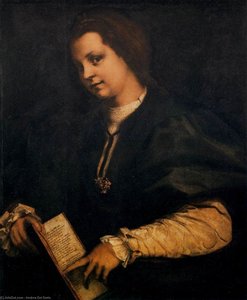
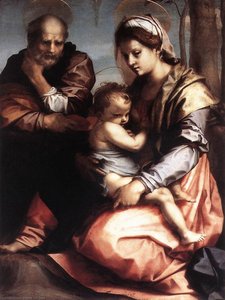
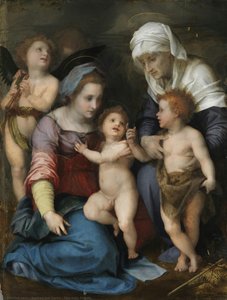
Andrea del Sarto's career blossomed through a series of collaborations and commissions that showcased his versatility as a painter, decorator, and portraitist. A pivotal moment in his artistic development came with his partnership with Franciabigio, resulting in the creation of the *Baptism of Christ* for the Compagnia dello Scalzo in Florence – a groundbreaking work characterized by its monochromatic grisaille technique. This marked the beginning of a long series of monochrome frescoes, demonstrating his mastery of subtle tonal variations and atmospheric effects. His most celebrated achievement is undoubtedly the *Cenacolo di Andrea del Sarto*, or “Last Supper,” a monumental fresco spanning over 40 square meters at the Museo del Cenacolo in Florence. This masterpiece captures the drama and emotion of the biblical scene with remarkable skill, employing a unique blend of realism and expressive intensity. Furthermore, he created *The Holy Family* for Zanobi Strozzi’s villa in Rovezzano, now housed in the Pinacoteca Nazionale di Arte Antica in Rome, and a series of frescoes depicting the miracles of Saint Filippo Benizzi for the Loggia dei Servi Maria, showcasing his early talent for monochromatic grisaille.Style and Influences
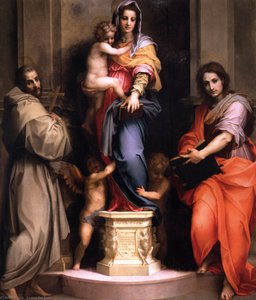
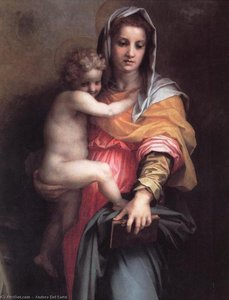
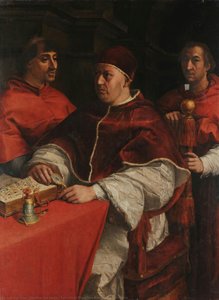
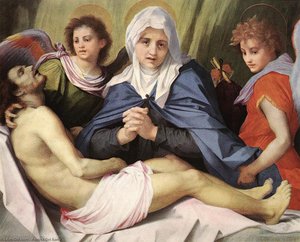
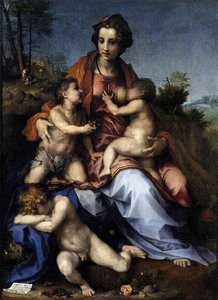
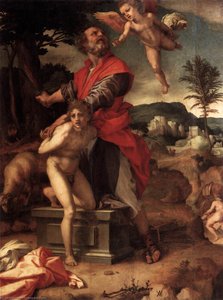
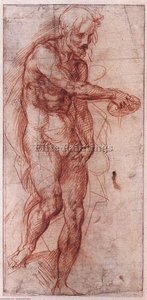
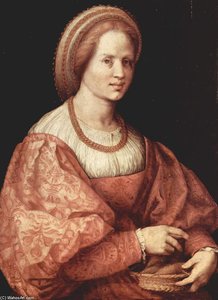
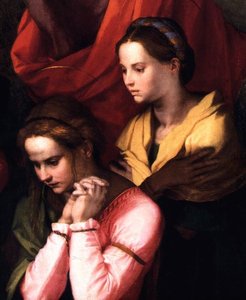
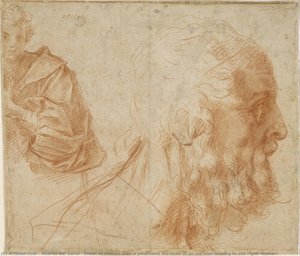
Andrea del Sarto’s artistic style is often described as a harmonious blend of High Renaissance ideals and nascent Mannerist tendencies. While deeply rooted in the classical traditions championed by Leonardo da Vinci and Raphael, he introduced a distinctive approach characterized by an emphasis on color, atmosphere, and subtle informality. Unlike his contemporaries who favored dramatic contrasts and exaggerated forms, del Sarto cultivated a more restrained and nuanced aesthetic – a quality that resonated with the humanist sensibilities of the era. His figures possessed a remarkable sense of poise and grace, while his use of color was both vibrant and sophisticated. He skillfully blended elements from various artistic influences, creating a unique visual language that reflected the complexities of Florentine society during his time.Legacy and Historical Significance
Despite being overshadowed by the towering reputations of Leonardo da Vinci, Michelangelo, and Raphael in the immediate aftermath of his death, Andrea del Sarto’s contribution to the history of art remains significant. His work embodies a crucial transitional phase between the High Renaissance and Mannerism, representing a shift towards greater emotional depth and expressive intensity within Florentine painting. His legacy is evident not only in his surviving masterpieces but also in the influence he exerted on subsequent generations of artists. Andrea del Sarto’s ability to seamlessly integrate color, form, and atmosphere—a hallmark of his distinctive style—continues to inspire admiration and study today. He stands as a testament to the enduring power of artistic innovation and the subtle yet profound impact of a single, dedicated artist.Запитання та відповіді
До якого історичного періоду належить творчість Андреа дель Сарто?
Андреа дель Сарто працював у період — Відродження. Цей період визначає місце творчості митця в історії.
У якому місті та країні народився/народилася Андреа дель Сарто?
Андреа дель Сарто народився/народилася у Флоренція, Італія.
Які псевдоніми або інші імена має Андреа дель Сарто?
Андреа дель Сарто також відомий/відома як Андреа дАгноло ди Франческо ді Лука, Дель Сарто.