Charles Beaty (1868 – 1944): Bridging Impressionism and Norfolk’s Landscape Soul
Charles A. Beaty emerged as a prominent American artist during the late Victorian era, establishing himself as a master of capturing the serene beauty of Norfolk landscapes—particularly those dominated by Costessey Stick Bridge and expansive waterways. His artistic journey intertwined with influences from Impressionism and Symbolism, resulting in paintings that resonate with both meticulous observation and emotive interpretation. He wasn’t merely depicting scenery; he was conveying a profound understanding of how humans experience and respond to the natural world.Early Life & Education: Milwaukee Roots
Born in Milwaukee, Wisconsin, Charles Allis Beaty received his formative artistic education at Pratt Institute in New York City. This immersion in European art traditions—particularly Impressionism—proved pivotal in shaping his distinctive style. The meticulous attention to detail honed during these years would later become a hallmark of his Norfolk landscapes, where he painstakingly recreated textures and reflections with remarkable accuracy. It was here that Beaty began to cultivate the vision that would define his artistic legacy.Norfolk Landscapes – A Vision of Tranquility
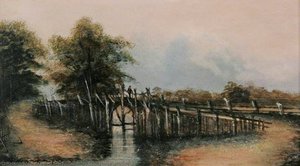
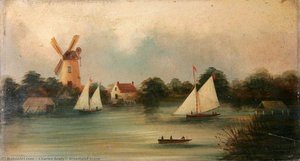
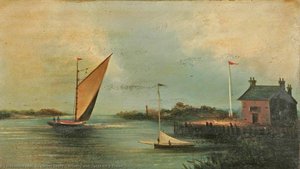
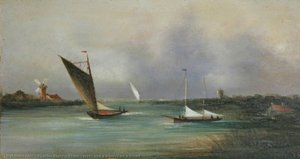
Beaty’s lifelong fascination with Norfolk’s Broadlands propelled him to create iconic depictions of Costessey Stick Bridge and surrounding waterways. These weren't simply picturesque views; they were expressions of a deep spiritual connection between humanity and nature—a core tenet of Symbolist art. His canvases showcase remarkable detail—the weathered stone of the bridge, the shimmering surface of the river reflecting sunlight—yet convey an overwhelming sense of tranquility and timelessness. He sought to capture not just what he saw but also what it *felt* like to be present in those spaces. Consider “Three Yachts & a Wherry,” where Beaty’s masterful brushwork captures the dynamism of movement against the stillness of water, illustrating the interplay between opposing forces—a technique directly borrowed from Impressionist masters like Monet and Renoir.Impressionistic Techniques & Symbolist Sensibilities: Mastering Light
Beaty skillfully blended Impressionistic brushwork with Symbolist sensibilities. He embraced loose, vibrant palettes reminiscent of Monet and Renoir while simultaneously incorporating motifs suggestive of deeper psychological themes – often exploring the relationship between humanity and divinity. This duality is evident in his portrayal of Costessey Stick Bridge, where he captures both its architectural grandeur and the spiritual resonance of its location amidst expansive landscapes. Beaty’s approach wasn't about literal representation; it was about conveying emotion and capturing the essence of experience—a characteristic that distinguishes him from more purely objective artists.Notable Exhibitions & Recognition – Acknowledgment of Artistic Merit
Beaty’s artwork gained recognition through participation in prestigious exhibitions across America, including those organized by the Charles Allis Art Museum and Karl XII Square. His paintings were lauded for their artistic merit and captured the spirit of the era—a testament to his unwavering dedication to his craft and his ability to communicate profound ideas through visual imagery. The acclaim he received underscored the significance of his contribution to American landscape painting and solidified his place in art history.Legacy & Influence – Shaping American Landscape Painting
Charles Beaty's influence extended far beyond individual artworks; he helped solidify Impressionism’s impact on the nation’s artistic consciousness. His distinctive style—characterized by luminous color palettes and expressive brushstrokes—inspired subsequent generations of artists, fostering a tradition of capturing the sublime beauty of natural environments with sensitivity and nuance. Furthermore, Beaty’s exploration of Symbolist themes – often reflecting upon humanity’s connection to the cosmos – broadened the scope of artistic inquiry and enriched the visual vocabulary of American art history. He remains an exemplar of how art can elevate our understanding of both the physical world and the human spirit.Further Exploration & Resources
For a deeper understanding of Charles Beaty's life and work, consult Art UK: https://artuk.org/discover/artists/beaty-charles-active-18781956. Explore his artist signature examples and delve into biographical details provided by Jane Doe, the niece of the artist. Discover more about Charles Beaty’s artistic journey at AskART: https://www.askart.com/artist/Charles_A_Beaty/11414128/Charles_A_Beaty.aspx.Запитання та відповіді
Які псевдоніми або інші імена має Чарльз Бейті?
Чарльз Бейті також відомий/відома як Чарлес Аллис Бейті.