The Academic Legacy of Clemente Alberi
In the heart of the nineteenth-century Italian art scene, few figures embodied the transition from classical rigor to refined portraiture as gracefully as Clemente Alberi. Born in 1803, with roots tracing back to either Rimini or Bologna, Alberi was a child of the Academy. His artistic journey began under the watchful and expert eye of his father, Francesco, a distinguished professor at the Academy of Fine Arts of Bologna. This intimate apprenticeship within the halls of the Accademia Clementina provided him with more than just technical skill; it instilled in him a profound reverence for the masters of the Renaissance and Baroque eras, a devotion that would define much of his professional output.
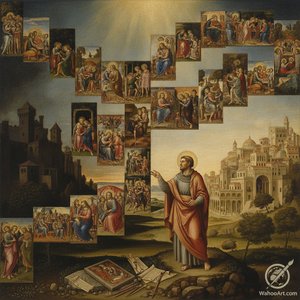
Alberi’s early years were marked by a rapid ascent through the ranks of academic excellence. His talent was not merely theoretical but demonstrated through prestigious accolades, such as the Premio Curlandese in 1825, earned for his scientifically precise depiction of Pythagoras. As he matured, his brushwork began to move beyond the strictures of pure geometry, absorbing the subtle, elegant influences of contemporary masters like Ingres. This evolution allowed him to soften the inherent rigidity of academic training with a certain refined grace, making his work particularly appealing to the high society and ecclesiastical authorities of his time.
A Master of Portraiture and Mimicry
While Alberi was a formidable talent in original composition, he achieved widespread renown as a master of the portrait and a celebrated copyist. His ability to inhabit the styles of the past allowed him to breathe new life into the works of legends such as Agostino Carracci, Guido Reni, and even Raphael. These were not mere imitations but profound dialogues with history; his copies for sacred spaces, such as the church of San Girolamo della Certosa, demonstrated a technical virtuosity that commanded respect from both clergy and connoisseurs alike.
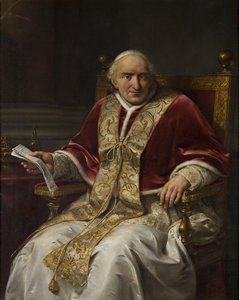
In the realm of portraiture, Alberi became the preferred chronicler of the Italian elite and international royalty. His subjects were a tapestry of power and nobility, ranging from the solemn presence of Pope Pius VII and Pope Pius VIII to the delicate elegance of Countess Giulia Tomasi Amiani. His reach even extended beyond the borders of Italy, as evidenced by his commissions for figures as formidable as Tsar Nicholas I. In these portraits, Alberi excelled at capturing more than just a likeness; he captured status, character, and the quiet dignity of his sitters, blending local Bolognese traditions with a sophisticated, modern sensibility.
The Twilight of an Academic Career
The later years of Alberi’s life were characterized by both professional prestige and personal isolation. In 1839, he reached a pinnacle of academic achievement by succeeding his father as a professor at the Academy in Bologna, a position he held with distinction until 1860. However, this period was not without its shadows. The complexities of academic politics and whispers of nepotism regarding his appointment occasionally clouded his reputation among his peers. This professional friction eventually led to his departure from the spotlight of the Bolognese art scene.
Despite the shifting political tides of a unifying Italy—themes which he occasionally addressed in his historical works—Alberi remained a steadfast guardian of the classical tradition. His death in Bologna in 1864 marked the end of an era for the Accademia Clementina. Today, his legacy survives through the enduring quality of his portraits and the meticulous care with which he preserved the visual language of the Baroque and Renaissance masters, ensuring that their brilliance continued to resonate through the nineteenth century.
Запитання та відповіді
У якому місті та країні народився/народилася Clemente Alberi?
Clemente Alberi народився/народилася у Rimini, Italy.
Де і в якому році народився/народилася Clemente Alberi?
Clemente Alberi народився/народилася в Rimini у 1803 році.
До якого історичного періоду належить творчість Clemente Alberi?
Clemente Alberi працював у період 19th Century. Цей період визначає місце творчості митця в історії.